
The pursuit of domestic efficiency and the maintenance of personal property have long been cornerstones of responsible homeownership. Recent assessments of household management strategies suggest that the most significant improvements in daily quality of life often stem not from major renovations or intensive deep-cleans, but from the implementation of brief, high-frequency maintenance habits. Specifically, two distinct tasks—the weekly clearing of garage debris and the systematic removal of interior vehicle clutter—have emerged as high-return investments in both time and psychological well-being. By dedicating approximately twenty minutes per week to these specific areas, homeowners can mitigate the "maintenance debt" that typically leads to long-term property degradation and increased stress.
The Framework of Modern Household Management
In the contemporary era, the management of a household has transitioned from manual checklists to sophisticated digital integration. The use of task-management software, such as Todoist, allows homeowners to institutionalize recurring chores, ensuring that minor tasks do not escalate into major projects. This shift reflects a broader trend in "micro-maintenance," where the objective is to maintain a baseline of cleanliness and order through short, manageable bursts of activity.
Data from home organization studies indicate that the average homeowner spends significantly more time on "emergency cleaning"—clearing massive amounts of accumulated debris before an event or after a season—than they would if they employed a "low-tide" strategy. The low-tide strategy involves performing small tasks at a frequency that prevents the "tide" of clutter and dirt from ever rising to a problematic level. The two chores identified as having the highest return on investment (ROI) are the garage blowout and the vehicle interior sweep.
The Garage Blowout: Transforming Storage into Utility
Historically, the American garage served primarily as a storage space for vehicles and lawn equipment. However, a 2023 survey on home utilization trends revealed that nearly 45% of homeowners now use their garage for secondary purposes, including home gyms, workshops, or hobby spaces. This transition from a passive storage area to an active living space necessitates a higher standard of cleanliness.
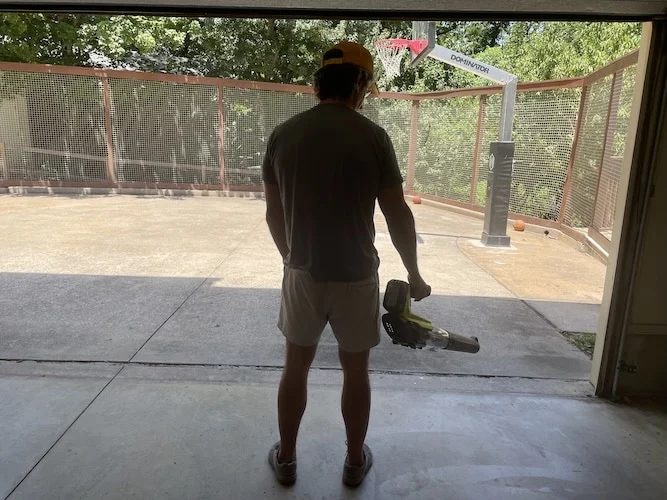
The "garage blowout" involves using a high-velocity electric leaf blower to expel leaves, dust, insects, and outdoor debris that naturally accumulate whenever the garage door is opened. For those utilizing the space for physical exercise, such as weightlifting or high-intensity interval training, the presence of airborne dust and floor-level grit can be a significant deterrent to consistent use.
Chronology of a Weekly Garage Maintenance Routine:
- Preparation (Minutes 1-2): Clearing the floor of any loose items that are not secured, such as light sports equipment or loose papers.
- The Blowout (Minutes 3-8): Starting from the furthest interior point and moving toward the garage door, the operator uses a leaf blower to push all loose particles onto the driveway.
- Detailing (Minutes 9-10): Addressing stubborn debris or cobwebs in corners. While a blower handles 90% of the material, a shop vacuum is typically deployed biannually for deep-seated grime in crevices.
Experts in environmental psychology note that the garage often serves as the primary threshold of the home. Passing through a cluttered, dusty environment upon returning from work can subconsciously increase cortisol levels, whereas entering through an orderly space facilitates a smoother transition into a domestic "relaxation" state.
Vehicle Interior Sanitation: Mitigating the "Rolling Garbage Can" Effect
The second high-ROI chore is the weekly interior cleaning of the family vehicle. Given that the average American spends approximately 17,600 minutes behind the wheel each year, the condition of the vehicle’s interior has a direct correlation with daily mental clarity and operational efficiency.
Vehicles frequently become catch-all environments for consumer waste, including food wrappers, beverage containers, and discarded receipts. Furthermore, for families with children, the backseat often becomes a secondary storage unit for school supplies, clothing, and electronics.
The Impact of Interior Neglect:
Neglecting the interior of a vehicle does more than create an aesthetic nuisance; it can lead to permanent damage. Accumulated grit and sand can wear down carpet fibers and leather seating through abrasion. Furthermore, the presence of organic waste can lead to persistent odors and the growth of bacteria, which are exacerbated by the greenhouse effect of a parked car in sunlight.
A systematic weekly cleanout involves three primary phases:
- Waste Removal: Discarding all trash and recyclables.
- Relocation: Removing items that belong inside the home (shoes, backpacks, books) and returning them to their proper storage locations.
- Vacuuming: Utilizing a high-powered shop vacuum to remove crumbs and dust from floor mats and seat crevices.
Supporting Data on Habit Formation and Maintenance
Research conducted by the University College London suggests that it takes an average of 66 days for a new behavior to become automatic. By integrating these two ten-minute tasks into a Saturday or Sunday morning routine, homeowners can automate the maintenance of their two most utilized "utility" spaces.
Statistical analysis of property values and vehicle resale rates also supports the economic benefits of these chores. Vehicles that are kept consistently clean inside tend to have higher resale values, as the materials (dashboards, upholstery, and carpets) are preserved from the corrosive effects of dirt and UV-activated chemical breakdowns of organic spills. Similarly, a well-maintained garage is a key selling point in real estate, signaling to potential buyers that the overall property has been cared for with attention to detail.
Professional Perspectives and Reactions
Efficiency consultants and professional organizers have lauded the "ten-minute rule" for home maintenance. "The primary barrier to a clean home isn’t a lack of effort, but a lack of frequency," states a representative from a leading national organization firm. "When a task like cleaning the garage is done once a year, it is a four-hour ordeal. When it is done once a week, it is a ten-minute breeze. The psychological weight of the former is immense, while the latter is barely a blip on the schedule."
Furthermore, automotive detailers suggest that a weekly "touch-up" by the owner can reduce the cost of professional detailing by up to 50% over the life of the vehicle. By preventing stains from setting and sand from becoming embedded in the carpet pile, the homeowner maintains the "like-new" condition of the vehicle far longer than the average consumer.
Broader Implications for Homeownership and Mental Health
The broader implications of these two chores extend into the realm of mental health and lifestyle design. The concept of "environmental mastery"—one’s ability to manage and mold their environment to suit their needs—is a key component of psychological well-being. When a homeowner feels in control of their garage and their vehicle, that sense of agency often spills over into other areas of life, such as professional productivity and physical fitness.
The "broken windows theory," often applied to urban planning, can be adapted to the micro-environment of the home. This theory suggests that visible signs of disorder or neglect (like a trash-filled car or a cobweb-ridden garage) encourage further neglect. Conversely, maintaining a high standard in these utility spaces reinforces a culture of care and order within the household.
Conclusion: The Compounding Interest of Small Efforts
While the act of blowing out a garage or vacuuming a car seat may seem trivial in isolation, the cumulative effect of these actions is substantial. For a total investment of twenty minutes per week—roughly the time it takes to watch a single sitcom episode—a homeowner can ensure that their most frequent transitions (leaving the house and entering the car) are marked by order rather than chaos.
The "Surprisingly Big Payoff" mentioned in the title refers to the compounding interest of these small efforts. Over the course of a year, these twenty minutes prevent the accumulation of hundreds of pounds of debris and thousands of items of clutter. In the final analysis, the most successful homeowners are not those who perform Herculean feats of cleaning once a year, but those who master the art of the ten-minute maintenance cycle. This disciplined approach to property management ensures that the home remains a place of refuge and the vehicle remains a tool of efficiency, rather than sources of perpetual stress.

0 Comments