
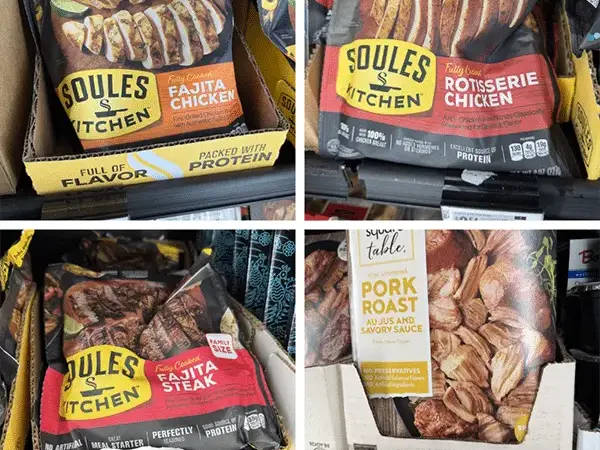
In an era defined by fluctuating work-life boundaries and increasing demands on personal time, the traditional concept of "meal prepping"—spending several hours on a Sunday batch-cooking for the week—is facing a logistical challenge. While the nutritional benefits of home-cooked meals are well-documented, a growing segment of the population is finding it difficult to maintain the consistency required for manual preparation. Consequently, a hybrid approach known as "no-prep meal prep" has emerged as a viable solution for maintaining dietary standards without the associated time investment. This strategy leverages the evolution of the retail food industry, specifically the rise of high-quality, pre-cooked proteins and flash-frozen produce, to create macro-balanced meals in under five minutes.
The Shift Toward Health-Oriented Convenience
The global ready-to-eat (RTE) meals market was valued at approximately $170 billion in 2023 and is projected to expand at a compound annual growth rate (CAGR) of over 5% through 2030. Historically, convenience food was synonymous with high sodium, processed preservatives, and poor macronutrient profiles—epitomized by the "TV dinners" of the late 20th century. However, consumer demand for "clean label" products has forced a pivot in the industry. Modern retailers now stock options that prioritize lean proteins, complex carbohydrates, and minimal additives, catering to the "macro-tracking" demographic that includes athletes, fitness enthusiasts, and health-conscious professionals.

The "no-prep" strategy is built on two primary pillars: the assembly of high-quality store-bought components and the utilization of specialized meal delivery services. Both methods prioritize metabolic health and caloric control while bypassing the labor-intensive stages of washing, chopping, marinating, and cooking.
Chronology of the Meal Preparation Evolution
To understand the current landscape of no-prep meal prep, one must look at the timeline of consumer food behavior:
- 1950s–1980s: The Rise of Industrial Convenience. The focus was on shelf-stability and speed. Nutritional density was often sacrificed for flavor enhancers and long-term storage capabilities.
- 1990s–2000s: The Fresh Revolution. Grocery stores began offering pre-cut vegetables and "rotisserie" programs, marking the first move toward fresh, ready-to-eat whole foods.
- 2010s: The Subscription Era. Companies like Blue Apron and HelloFresh introduced the "meal kit" concept. While this reduced shopping time, it still required 30–45 minutes of active cooking.
- 2020–Present: The "Ready-to-Heat" (RTH) Dominance. The post-pandemic landscape accelerated the demand for premium, fully cooked meals. Technologies like sous-vide (low-temperature, long-time cooking) moved from high-end restaurants to the grocery aisle, allowing for pre-packaged meats that retain moisture and flavor without heavy preservatives.
Option 1: The Assembly Strategy and Component Selection
The most cost-effective version of no-prep meal prep involves "assembling" rather than "cooking." This method utilizes three distinct categories of food items found in standard grocery outlets such as Walmart, Target, or Kroger.

High-Quality Precooked Proteins
Protein is the most difficult component to prepare quickly from scratch. The current market offers several sophisticated workarounds:
- Sous-Vide Prepared Meats: Brands like Kevin’s Natural Foods utilize the sous-vide method, where meat is vacuum-sealed and cooked in a water bath. This ensures the protein is fully cooked and pasteurized while remaining tender.
- Ready-to-Eat Strips: Products from Hormel or Soules Kitchen offer pre-sliced fajita chicken or steak. These are often used by individuals tracking "macros" (macronutrients) because the nutritional information is precisely calculated per serving.
- Rotisserie Staples: The rotisserie chicken remains a foundational element of the no-prep strategy. For those focused on fat loss, removing the skin significantly reduces the caloric density while providing a high-volume source of lean protein.
Optimized Starches and Complex Carbohydrates
The second component of a balanced meal is the starch. Traditional boiling of potatoes or rice can take 20 to 40 minutes. The no-prep alternative utilizes flash-frozen or parboiled technology:
- Frozen Diced Sweet Potatoes: These are often flash-frozen at the peak of freshness, preserving their micronutrient content.
- Steam-in-Bag Grains: Frozen brown rice or quinoa bags can be microwaved in three minutes, providing the fiber and complex carbohydrates necessary for sustained energy.
- Canned Legumes: Beans and chickpeas serve as a dual-purpose component, offering both fiber and a secondary protein source.
Micronutrient-Dense Frozen Vegetables
Scientific analysis has frequently shown that frozen vegetables can be more nutrient-dense than "fresh" produce that has spent days in transit and on store shelves. Flash-freezing immediately after harvest locks in vitamins and minerals. For the busy professional, these bags provide the "volume" of a meal—increasing satiety without a significant caloric load.

Option 2: The Rise of Macro-Friendly Delivery and Premium Frozen Meals
When even the assembly method is precluded by time constraints, the secondary strategy involves the use of specialized meal services. Unlike traditional frozen dinners, these are designed with specific nutritional ratios in mind.
- Retail-Based Macro Meals: Brands such as Counter (found in Target) have developed frozen entrees that prioritize high protein counts (often 30g or more per serving) while keeping caloric totals between 350 and 500. This fills the gap between "junk food" and "home-cooked meals."
- Direct-to-Consumer (DTC) Services: Companies like Factor and Ice Age Meals have seen significant growth by offering subscription-based models. Factor provides fresh, never-frozen meals that are delivered weekly, while Ice Age Meals focuses on Paleo-inspired, nutrient-dense frozen options.
Economic Analysis: The "Time-Money Trade-off"
A critical aspect of the no-prep meal prep strategy is the cost-benefit analysis. Traditional meal prepping is undeniably the most economical choice. A home-prepped chicken and rice meal may cost as little as $1.25 to $3.50 per serving.
In contrast:

- The Assembly Method costs between $3.50 and $6.00 per meal.
- Subscription Delivery Services range from $11.00 to $15.00 per meal.
From a journalistic and economic perspective, this is viewed as "trading money for time." For a professional whose hourly earning potential exceeds the cost of the meal premium, the "return on investment" (ROI) is positive. Furthermore, the cost of these premium convenience options is still significantly lower than the cost of frequenting fast-casual restaurants or ordering via delivery apps, which often include service fees and tips.
Industry Responses and Expert Perspectives
Nutritionists and metabolic health experts have begun to weigh in on the efficacy of these convenience-based strategies. Dr. Michael Greger and other dietary researchers have noted that the "barrier to entry" for healthy eating is often the complexity of preparation. By lowering this barrier, individuals are more likely to remain consistent with their health goals.
"The greatest enemy of a healthy diet is not a lack of knowledge, but a lack of preparation," says industry analyst Sarah Miller. "When a person is tired and hungry after a 10-hour workday, they will choose the path of least resistance. If the path of least resistance is a pre-portioned, macro-friendly meal in the fridge, they stay on track. If it’s an empty fridge, they turn to high-calorie fast food."

Retail giants like Walmart have responded to this trend by expanding their "Great Value" line to include more sophisticated frozen produce and pre-cooked meats, recognizing that the "middle-class time crunch" is a permanent fixture of modern life.
Broader Impact and Implications for Public Health
The long-term implications of the no-prep meal prep trend suggest a permanent shift in how households function. As the "middle-skill" of cooking becomes less of a daily necessity and more of a hobbyist pursuit, the reliance on high-quality food processing will increase.
While some critics argue that this leads to a "de-skilling" of the population regarding culinary arts, public health officials suggest that the trade-off is worth the improvement in obesity and metabolic disease rates. If the average consumer can replace a 1,200-calorie fast-food meal with a 500-calorie, high-protein assembled meal, the aggregate effect on national health could be substantial.

Conclusion: The Strategic "Back Pocket" Option
No-prep meal prep is not necessarily intended to replace traditional cooking entirely. Instead, it serves as a "fail-safe" for the modern lifestyle. By maintaining a stock of pre-cooked proteins, frozen starches, and macro-friendly frozen entrees, individuals can navigate "high-friction" periods—such as intense work weeks or travel schedules—without compromising their nutritional integrity. In the hierarchy of health investments, the ability to maintain consistency during stressful periods offers the highest long-term ROI, making the premium cost of convenience a justifiable expense in the pursuit of longevity and performance.

0 Comments