
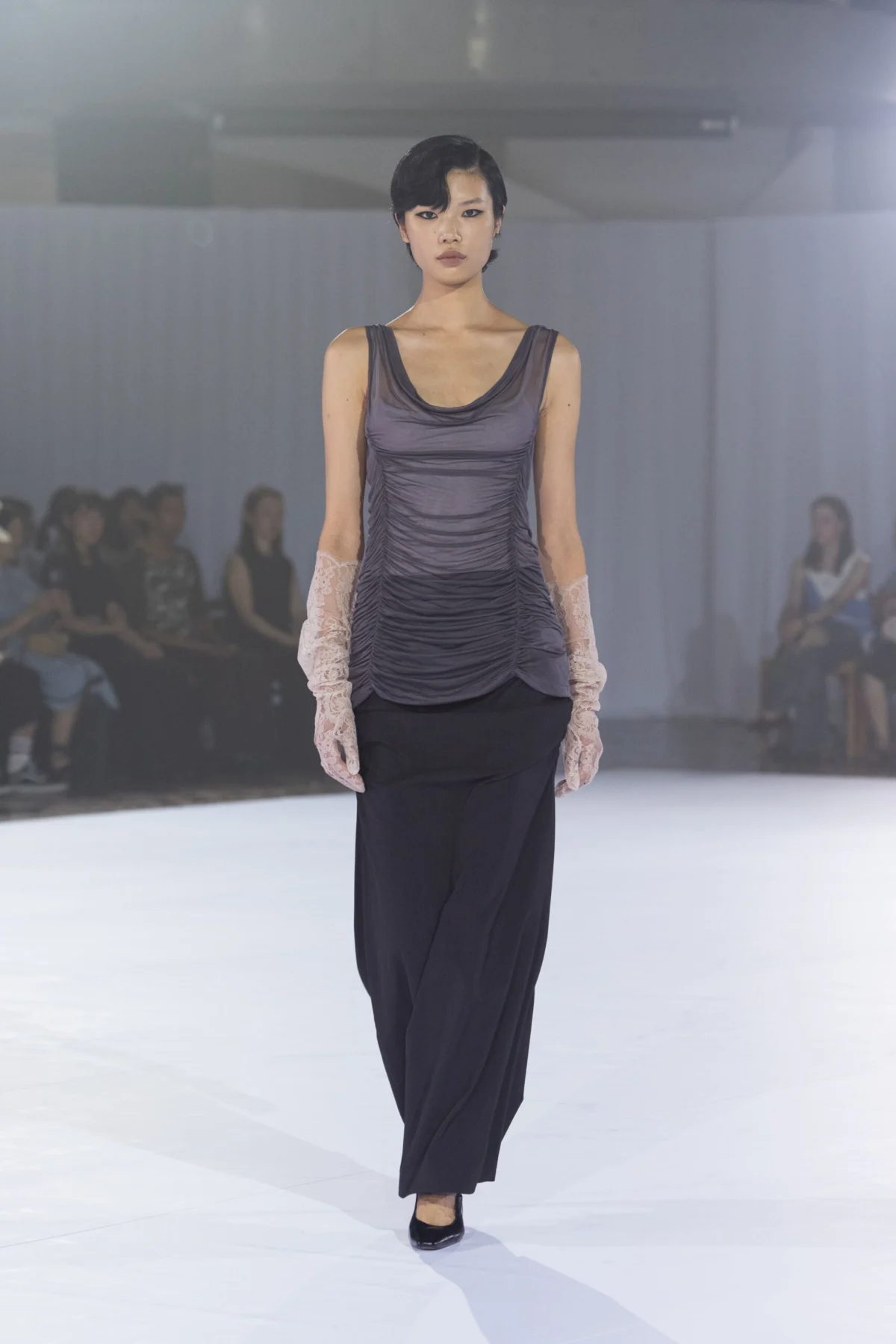
The presentation of the Fetico Spring/Summer 2025 collection marked a significant pivot for designer Emi Funayama, who utilized the misty, ethereal atmosphere of Tokyo’s Yodobashi Church to unveil a vision defined by soft edges and sartorial nuance. Moving away from the high-contrast, strictly structured provocations of previous seasons, this collection introduced a gentler, loosened-up expression of the brand’s signature aesthetic. The show served not only as a display of new seasonal garments but as a definitive statement on the evolution of the label, which has rapidly ascended within the Japanese fashion landscape since its inception in 2021. By focusing on the interplay between translucent textiles and rigorous tailoring, Funayama explored the concept of "ambiguity," suggesting that the obscured and the suggested are often more compelling than the explicit.
Architectural Backdrop and the Atmospheric Vision
The choice of the Yodobashi Church as a venue provided a stark, modernist contrast to the romantic fluidity of the garments. Known for its minimalist lines and the way it manipulates natural light, the church was transformed into a misty-lit hall that mirrored the "hazy atmosphere" Funayama sought to evoke. This setting was instrumental in communicating the collection’s core theme: the beauty of the unclear. The lighting was engineered to create a cinematic quality, where models emerged from a veil of fog, allowing the textures of the clothing to catch the light before the silhouettes became fully defined.
This atmospheric approach is a departure from the traditional runway format, leaning instead into an immersive experience that aligns with the brand’s narrative-driven design process. Industry observers noted that the venue choice underscored a growing trend among Tokyo-based designers to utilize non-traditional, architecturally significant spaces to provide historical and emotional weight to contemporary collections. The Yodobashi Church, with its sacred and serene undertones, provided the perfect canvas for a collection that sought to balance "sartorial seduction" with a sense of quietude and grace.
The Sarah Moon Influence: Aesthetic Ambiguity as a Design Principle
Central to the creative direction of this collection was the work of legendary French photographer Sarah Moon. Funayama, a long-term admirer of Moon’s painterly, blurred, and highly stylized imagery, cited a deep resonance between the photographer’s dreamlike aesthetics and her own design goals for the season. Moon’s influence was visible in the "beautiful interplay between transparency and shadow," a recurring motif throughout the runway show.
By incorporating fabrics with a supple drape and soft tactile quality, Funayama aimed to recreate the visual texture of a Moon photograph. The use of sheer materials allowed for a layering effect that obscured the body while simultaneously highlighting its movement. In her post-show statements, Funayama emphasized that not seeing things clearly invites the viewer to use their imagination, a psychological element she integrated into the construction of the garments. This philosophy of "nuanced world-building" suggests that Fetico is moving toward a more intellectualized version of sexiness—one that relies on suggestion and the sophisticated use of materials rather than overt exposure.
Structural Evolution: Tailoring and the New Brand Staples
While the collection was characterized by its softness, it was anchored by a renewed commitment to formal tailoring. Funayama introduced voluminous, nip-waisted suits designed to become permanent staples of the Fetico brand. These pieces represent a strategic expansion of the label’s offerings, catering to a demographic that seeks both avant-garde design and functional, high-end workwear.
The tailoring featured several distinctive elements:
- Proportional Contrasts: The juxtaposition of oversized shoulders with extreme cinching at the waist created a silhouette that referenced mid-century couture while remaining firmly modern.
- Detailing: Statement-cuffed shirts with sharp, pointy collars provided a structured counterpoint to the fluid, asymmetric camisole dresses.
- Cutout Artistry: Petal-shaped cutouts were strategically placed to flash "slivers of bare skin," maintaining the brand’s reputation for provocative design while adhering to the season’s theme of subtle revelation.
The integration of leather and lace in the closing looks served to solidify the collection’s range. The leather pieces added a grounded, almost armor-like quality to the lineup, while the lace elements reinforced the romanticism inspired by Sarah Moon. This balance of hard and soft materials is a technical challenge that Funayama executed with precision, demonstrating her growth as a designer capable of handling complex textile combinations.
Contextualizing Fetico within the Global Fashion Landscape
Since Emi Funayama founded Fetico in 2021, the brand has become a focal point of the "New Wave" of Japanese designers. Funayama, who gained experience at major Japanese labels before launching her own, won the prestigious JFW Next Brand Award in 2023. This accolade provided the brand with the momentum and financial support necessary to scale its operations and increase its visibility on the international stage.
The Spring/Summer 2025 collection arrives at a time when the global fashion industry is witnessing a shift toward "quiet luxury" and "soft power" dressing. Fetico’s ability to blend traditional Japanese craftsmanship with a modern, globalized view of femininity places it in a unique market position. According to recent market data from the Japan Fashion Week Organization (JFWO), there is an increasing demand for Japanese "niche luxury" brands in European and North American markets, particularly those that offer a distinct narrative and high-quality construction.
Fetico’s focus on "Made in Japan" production is a key component of its brand identity. By utilizing local textile mills and specialized sewing factories, Funayama ensures a level of quality that justifies the brand’s premium price point. This commitment to local industry not only supports the Japanese economy but also appeals to the global consumer’s growing preference for transparent and artisanal supply chains.
The Strategic Significance of Tokyo Fashion Week
The presentation took place during Rakuten Fashion Week Tokyo, an event that serves as a critical platform for emerging talent in Asia. As the fashion world becomes increasingly decentralized, Tokyo has maintained its status as a hub for innovation and "sartorial subversion." The Fetico show was one of the most anticipated events of the week, drawing a diverse crowd of international buyers, critics, and fashion influencers.
Data from the 2023-2024 fashion cycles indicate that brands participating in Tokyo Fashion Week have seen a 15% increase in international wholesale inquiries compared to previous years. For Fetico, the cinematic nature of the Yodobashi Church show is expected to translate into strong digital engagement, a crucial metric for modern brand growth. The "effortless" feel of the collection, as noted by attendees, suggests a maturity in Funayama’s design language that is likely to resonate with high-end retailers such as Dover Street Market and Net-a-Porter, where the brand has already established a presence.
Chronology of the Collection Development
The path to the Spring/Summer 2025 show followed a rigorous development timeline:
- Concept Phase (October – December 2023): Funayama began exploring the works of Sarah Moon and researching historical tailoring techniques.
- Fabric Sourcing (January – March 2024): Collaboration with Japanese mills to develop custom translucent fabrics and lace patterns that could hold the "fluid contours" required for the collection.
- Prototyping (April – June 2024): The development of the "nip-waisted" suit silhouettes, involving multiple rounds of fittings to perfect the balance between volume and structure.
- Venue Selection and Scenography (July 2024): The decision to use Yodobashi Church was finalized, and the lighting design was choreographed to match the "misty" aesthetic of the garments.
- Runway Presentation (August/September 2024): The collection was debuted to the public, marking the culmination of nearly a year of creative and technical labor.
Industry Reception and the Future of the Label
Initial reactions from fashion critics and industry insiders have been overwhelmingly positive, with many praising the "gentler" direction of the brand. Analysts suggest that by softening the brand’s "signature sexiness," Funayama has made Fetico more accessible to a broader audience without losing the core identity that made the label a success.
The emphasis on "imagination" and "nuance" is seen as a sophisticated move that elevates Fetico from a trend-based label to a serious contender in the luxury space. The "beautiful interplay between transparency and shadow" is not just a visual trick; it is a design philosophy that reflects a deeper understanding of how modern women want to present themselves—balancing strength with vulnerability, and structure with fluidity.
Looking ahead, Fetico is poised to expand its footprint. The "brand staples" introduced this season provide a solid foundation for commercial growth, while the more experimental, "cinematic" pieces ensure the brand remains at the cutting edge of fashion discourse. As Emi Funayama continues to refine her vision, her ability to turn a "fleeting glimpse" into a full-scale sartorial movement suggests that Fetico will remain a significant force in the industry for years to come. The Spring/Summer 2025 collection stands as a testament to the power of the "ambiguous" and the enduring allure of the expertly crafted silhouette.

0 Comments