
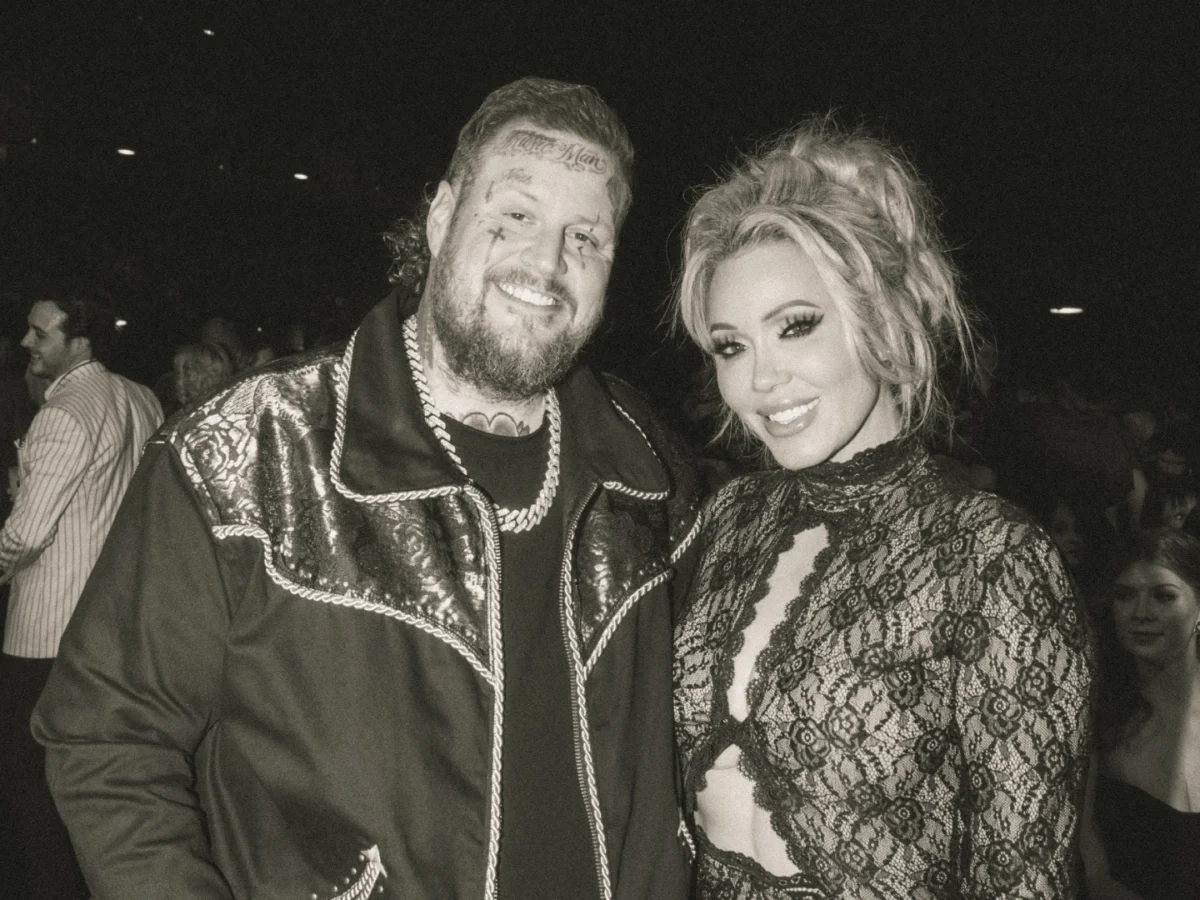
In a move that has captivated both the entertainment industry and legal experts, Alisa DeFord, known professionally as Bunnie Xo, has announced that she and her estranged husband, country music sensation Jelly Roll (Jason DeFord), intend to proceed with their efforts to conceive a child via in vitro fertilization (IVF) despite their ongoing divorce. The announcement, made during a July 18 episode of her Dumb Blonde podcast, marks a significant departure from traditional matrimonial dissolution proceedings, highlighting the increasingly complex intersection of reproductive technology and family law.
The couple, who have been married for approximately a decade, have long been public about their desire to expand their family. However, the news of their divorce, filed by Jelly Roll, initially led many to believe their shared pursuit of biological children had concluded. Bunnie Xo addressed these assumptions directly, characterizing their relationship as "the most unconventional couple" the public has encountered. While the decision to continue a shared IVF journey post-separation is rare, it reflects a growing trend in modern domestic relations where genetic material and reproductive goals remain intertwined even after a romantic partnership ends.
A History of Resilience and Reproductive Challenges
The path to parenthood for the DeFords has been fraught with significant emotional and physical hurdles. During her podcast, the 46-year-old Bunnie Xo described the IVF process as one of the "loneliest, darkest" experiences of her life. The process of assisted reproduction often places immense strain on a marriage, involving rigorous medical schedules, substantial financial investment, and a volatile emotional landscape driven by hormonal treatments.
Bunnie Xo revealed that the couple has already undergone three embryo transfers. These attempts resulted in the loss of twins and two subsequent pregnancies. "Anybody that’s going through that and has to deal with these miscarriages—it’s gut-wrenching," she stated. The physical toll was not limited to the surrogate or the mother; Jelly Roll was also undergoing hormonal treatments to address a low sperm count. Bunnie Xo noted that these treatments significantly affected his temperament, describing the period as a "nightmare" due to the side effects of the medication.
Despite these setbacks and the filing for divorce, the couple appears committed to the remaining genetic material they have created. This commitment persists even as legal counsel for both parties has reportedly issued warnings regarding the potential ramifications of bringing a child into a post-divorce environment using shared embryos.
Legal Precedents and the "Interim Category" of Genetic Material
The decision to proceed with IVF after a split introduces a labyrinth of legal challenges. According to reports from People, both Jelly Roll and Bunnie Xo were "separately advised" by their respective legal teams that there could be unforeseen consequences to their decision. These warnings stem from the "evolving technology and case law" surrounding frozen embryos, which are often classified in an "interim category" of interest—somewhere between property and personhood.
Morghan Richardson, co-chair of the Matrimonial Law Practice at Tarter, Krinsky & Drogin, notes that IVF is becoming a standard fixture in modern divorce negotiations and prenuptial agreements. Richardson explains that many fertility clinics now require couples to sign advanced directives stipulating what should happen to embryos in the event of death or divorce. However, these documents are not always ironclad, as state laws and judicial interpretations continue to shift.
"I have handled a number of cases involving claims surrounding what might happen with embryos, should a spouse be permitted to have a child despite the divorce or after the divorce," Richardson told SheKnows. She emphasized that the lack of a "one-size-fits-all" approach makes these cases particularly volatile. For the DeFords, who have reportedly "specifically chosen not to seek" further expert counsel on the long-term legalities of their choice, the risks involve future disputes over parental rights, child support, and custody.
The Shifting Landscape of Reproductive Law in the United States
The DeFords’ situation occurs against a backdrop of significant legal upheaval regarding reproductive rights in the United States. In early 2024, the Alabama Supreme Court issued a landmark ruling in LePage v. Center for Reproductive Medicine, which classified frozen embryos as "children" under the state’s Wrongful Death of a Minor Act. While this specific ruling was confined to Alabama, it sent shockwaves through the medical and legal communities nationwide, raising questions about the liability of clinics and the legal status of embryos in other jurisdictions.
As more states consider similar "personhood" measures, the legal status of embryos created during a marriage becomes a focal point of divorce litigation. If an embryo is legally viewed as a person, a spouse’s right to "not procreate" may be weighed differently against the other spouse’s right to "procreate."

In many jurisdictions, the prevailing legal standard has favored the party who does not wish to proceed with the pregnancy, based on the principle that no individual should be forced to become a parent against their will. However, exceptions are sometimes made if the embryos represent the last biological chance for one party to have a child.
Lessons from the Vergara-Loeb Legal Battle
The complexities of post-split embryo disputes are perhaps best illustrated by the multi-year legal battle between actress Sofia Vergara and her former fiancé, Nick Loeb. After their 2014 split, Loeb sought to bring two frozen embryos to term via a surrogate, despite Vergara’s strenuous objections. Loeb even authored an op-ed in the New York Times arguing that the embryos had a "right to live."
The ensuing litigation spanned multiple states. In 2016, a "right-to-live" lawsuit was filed in Louisiana on behalf of the embryos themselves, naming them as plaintiffs. This unusual legal strategy sought to take advantage of Louisiana’s unique laws regarding the status of in vitro fertilized ova. Ultimately, the Louisiana lawsuit was dismissed in 2021, and a California judge granted Vergara’s request for a permanent injunction, preventing Loeb from using the embryos without her explicit written consent.
The Vergara case serves as a cautionary tale for high-profile couples like Jelly Roll and Bunnie Xo. It highlights how quickly a shared dream of parenthood can transform into a protracted legal conflict that plays out in the public eye.
The Financial and Psychological Stakes of Modern IVF
The decision to continue IVF is also a significant financial undertaking. On average, a single IVF cycle in the United States costs between $15,000 and $30,000, depending on the clinic and the required medications. When factoring in the costs of egg retrieval, genetic testing, and potential surrogate fees, the total investment can easily exceed $100,000. For a couple in the midst of a divorce, which already involves the division of assets and potential alimony, these costs add another layer of financial complexity.
Psychologically, the "unconventional" path chosen by the DeFords requires a high degree of cooperation and emotional maturity. Experts suggest that couples pursuing this route must establish clear boundaries and expectations regarding the child’s upbringing. Richardson advises that any settlement involving embryos should explicitly address:
- Parental Rights: Will both parties be listed on the birth certificate?
- Visitation and Custody: How will time be shared between two parents who are no longer in a relationship?
- Financial Support: Will the non-custodial parent be responsible for child support in the same manner as a traditional divorce?
"I have even seen contracts that absolve one party of rights and support, unfortunately," Richardson noted, though she cautioned that such agreements are not always enforceable in family court, as judges often prioritize the "best interests of the child" over private contracts.
Broader Implications for the Future of Family Law
The DeFords’ choice reflects a broader societal shift toward diverse family structures. As assisted reproductive technology (ART) becomes more accessible, the traditional definitions of "family" and "parentage" are being tested. Data from the Centers for Disease Control and Prevention (CDC) indicates that approximately 2% of all infants born in the U.S. every year are conceived using ART.
As these technologies become more integrated into the fabric of American life, the legal system must adapt. The case of Jelly Roll and Bunnie Xo may serve as a future reference point for how courts handle "intentional co-parenting" agreements between divorcing spouses. While the couple has opted to bypass additional legal counsel for now, the "evolving case law" their attorneys mentioned remains a looming factor.
For the fans of the country star and the podcast host, the news is a mixture of surprise and concern. Jelly Roll, who has been open about his past struggles with incarceration and his journey to stardom, has built a brand on authenticity and vulnerability. His daughter, Bailee Ann, whom he has raised with Bunnie’s help, has also been a central figure in their public narrative. The addition of a new child through IVF, amid a divorce, adds a complex new chapter to their family story.
As the divorce proceedings continue, the medical and legal milestones of their IVF journey will likely remain a subject of intense public interest. Whether their "unconventional" approach provides a blueprint for others or becomes a cautionary tale of legal ambiguity remains to be seen. For now, the DeFords appear resolute in their decision to separate their romantic dissolution from their shared biological goals, navigating a path that is as modern as it is fraught with uncertainty.

0 Comments