
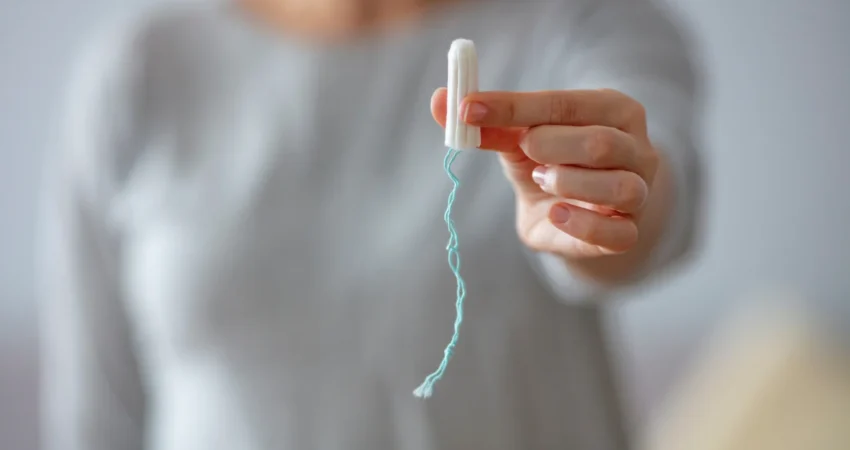
The intersection of early childhood curiosity and reproductive health education has become a focal point of modern parenting discourse, as evidenced by a recent viral interaction shared on the social media platform TikTok. A certified lactation counselor and mother of three, known online as @expectingwithgrace, recently detailed an encounter with her five-year-old daughter that has sparked a broader conversation regarding the efficacy and necessity of discussing menstruation with young children. The incident, which occurred when the child discovered a box of tampons, highlights a significant shift in contemporary parenting styles—moving away from the traditional "wait until they are older" approach toward a model of continuous, age-appropriate biological literacy.
The encounter began in a domestic setting when the five-year-old child entered her mother’s room and noticed a package of menstrual products. According to the mother’s account, the child asked directly what the items were. Rather than deferring the conversation or employing euphemisms, the mother identified the objects as tampons and proceeded to explain their function. This interaction serves as a case study for what developmental experts call "teachable moments," where a child’s natural curiosity provides an opening for factual, shame-free information.
The Chronology of the Educational Encounter
The dialogue unfolded in a structured yet informal manner. Upon being asked what tampons were for, the mother utilized a metaphorical framework that translated complex biological processes into concepts understandable to a preschool-aged child. She explained that as a female body matures, it prepares monthly for the possibility of a pregnancy. The explanation centered on the uterus, which she described as creating a "cushion" of lining each month.
"When you don’t have a baby in your tummy… your body prepares in case a baby does come," she explained to her daughter. "Inside of your uterus, the lining starts to get a little bit thick in preparation to be a cushion for a baby." The narrative concluded with the biological reality of menstruation: if no pregnancy occurs, the "cushion" is no longer required, and the body sheds the lining, which exits the body as blood. Following this explanation, the mother noted that the child appeared satisfied with the information and the pair moved on to other activities, illustrating that when such topics are treated with clinical normalcy, they do not necessarily cause distress or confusion for the child.
Psychological and Pedagogical Foundations of Early Disclosure
The philosophy demonstrated in this viral interaction aligns with contemporary psychological recommendations regarding "body literacy." For decades, menstruation was treated as a "taboo" subject, often withheld from children until they reached puberty. However, child development experts now suggest that providing factual information early can prevent the development of fear or misinformation. By removing the "mysterious" or "secretive" nature of menstrual health, parents can foster an environment where children feel comfortable seeking accurate information from trusted adults rather than potentially unreliable peer sources.
The reaction from the public, particularly within the comments section of the video, indicates a strong consensus among a segment of modern parents. Many commenters emphasized that normalizing these discussions early prevents the subject from becoming a source of embarrassment or judgment later in life. One parent noted that establishing this transparency early ensures that when the child reaches adolescence, they will perceive their parents as reliable sources of health information. This is particularly relevant as children today often have access to vast amounts of unvetted information via digital platforms.
Supporting Data on Menarche and Health Literacy
The necessity for earlier education on reproductive health is supported by shifting biological trends. Medical data from the last several decades indicates that the average age of menarche (the first menstrual period) has been gradually declining in many parts of the world. In the United States, the average age of menarche is approximately 12.4 years, but it is not uncommon for it to occur as early as age 8 or 9. Given this trend, waiting until a child is in their pre-teen years to discuss menstruation may result in many children experiencing their first period without a full understanding of the biological process, potentially leading to trauma or anxiety.
Furthermore, studies in health literacy suggest that children who are taught the correct anatomical names for body parts and biological processes are less likely to experience body-related shame. Organizations such as the American Academy of Pediatrics (AAP) and the World Health Organization (WHO) have long advocated for comprehensive health education that begins in a simplified form during early childhood. The WHO’s standards for sexuality education emphasize that children aged 4 to 6 should begin to understand basic body functions and the differences between genders in a non-judgmental context.

Societal Implications and the De-Stigmatization Movement
The broader impact of such interactions extends beyond individual family dynamics to the societal level. The "period poverty" and "menstrual equity" movements have gained significant traction in recent years, highlighting how the historical stigma surrounding menstruation has led to policy failures, such as the taxation of menstrual products (the "tampon tax") and the lack of access to supplies in schools and workplaces. By educating the next generation—including both girls and boys—about the biological normalcy of menstruation, advocates hope to dismantle the systemic shame that has historically hindered public health initiatives.
The use of social media platforms like TikTok as a medium for parenting advice also represents a shift in how educational strategies are disseminated. While social media can often be a source of controversy, it also functions as a digital community where parents share "scripts" for difficult conversations. In this instance, the mother’s specific phrasing regarding the "uterine cushion" provided a template for other parents who may feel ill-equipped to explain reproduction and anatomy to young children.
Expert Analysis of Child-Friendly Terminology
Linguistic experts and child psychologists often point to the importance of "scaffolding" information. This involves providing enough information to satisfy a child’s current curiosity without overwhelming them with unnecessary complexity. In the case of the five-year-old in the video, the mother avoided "big words" or clinical jargon that might be frightening, such as "endometrium" or "hemorrhaging," and instead focused on the functional aspect of the body’s preparation.
This approach is validated by the "Inquiry-Based Learning" model, which suggests that when a child initiates a question, they are developmentally ready for a simplified version of the answer. Proponents of this method argue that saying "I’ll tell you when you’re older" can inadvertently signal to the child that the topic is "bad," "dirty," or "dangerous," which can shut down future communication.
Official Responses and Educational Trends
While this specific TikTok video represents an individual family’s choice, it reflects a growing trend in educational policy. Many school districts are re-evaluating their health curricula to introduce basic biological concepts earlier than the traditional fifth or sixth-grade "growth and development" units. Educators argue that by the time children reach middle school, social pressures and peer-group dynamics can make health education more difficult to navigate. Introducing these concepts in the "neutral" environment of early childhood allows the information to be absorbed as a simple fact of life, much like learning about digestion or the circulatory system.
The reaction from the online community—which was largely supportive—suggests a generational shift. The "Millennial" and "Gen Z" parenting cohorts are increasingly prioritizing emotional intelligence and radical honesty. This shift is characterized by a desire to break "cycles of silence" that many of these parents experienced in their own upbringing. By documenting these conversations, influencers and everyday parents alike are contributing to a new cultural standard where reproductive health is treated as an integral part of general wellness education.
Conclusion and Future Outlook
The incident shared by @expectingwithgrace is a microcosm of a larger movement toward transparency in reproductive health. As the video continues to circulate, it serves as a prompt for parents to consider their own readiness to handle the inquisitive nature of children. The goal of such early education is not to accelerate a child’s maturity, but rather to provide them with a foundation of factual knowledge that promotes body autonomy and reduces future anxiety.
As society moves toward 2030, the integration of health literacy into early childhood development is expected to become more standardized. The move from treating menstruation as a "private" or "hidden" matter to an "everyday life" occurrence, as described by the TikTok creator, represents a significant evolution in public health communication. By meeting children where they are and answering their questions with honesty and simplicity, parents are not only providing biological facts but are also building a relationship based on trust and open dialogue that will likely persist through the more complex challenges of adolescence. In the long term, this cultural shift has the potential to produce a more informed, empathetic, and health-conscious society, where biological processes are understood through the lens of science rather than the lens of stigma.

0 Comments