
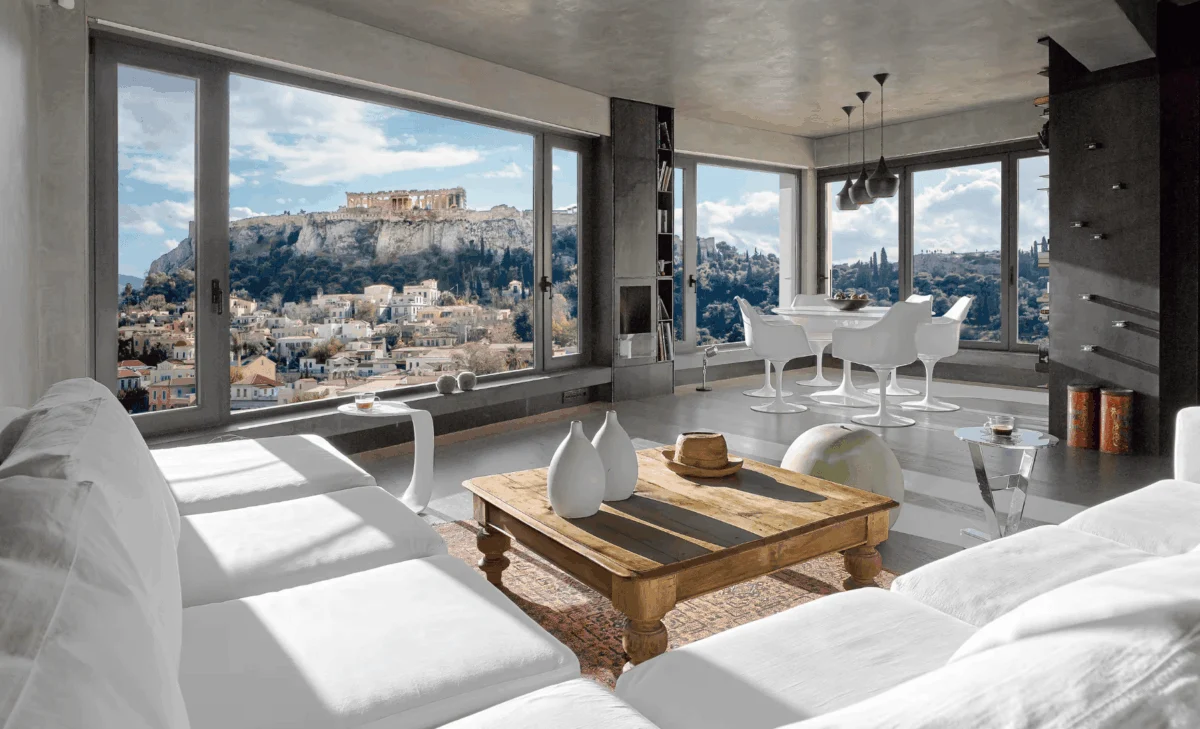
The Acropolis of Athens, a citadel of immense historical and architectural significance comprising the Parthenon, the Propylaea, the Erechtheion, and the Temple of Athena Nike, continues to serve as the primary catalyst for Greece’s burgeoning tourism sector. As one of the most visited archaeological sites globally, its influence extends beyond the boundaries of the Macriyianni district, shaping the modern hospitality landscape of the Greek capital. In recent years, a distinct shift has occurred in how international travelers consume the Athenian experience. The demand for traditional hotel stays is increasingly being supplemented, and in some cases replaced, by high-end short-term rentals that offer a domestic yet luxurious vantage point of the ancient ruins. These accommodations, ranging from renovated mid-century penthouses to contemporary condos with expansive rooftop terraces, have redefined the "room with a view" concept, allowing visitors to engage with the birthplace of democracy from private living spaces and rooftop amenities.
The Historical and Cultural Magnetism of the Acropolis
To understand the current premium placed on Athenian real estate with "Acropolis views," one must consider the historical weight of the site itself. The Acropolis, a UNESCO World Heritage site, represents the peak of Greek architectural achievement during the 5th century BCE. The Parthenon, dedicated to the goddess Athena, remains the most iconic structure, celebrated for its Doric order and sophisticated optical refinements. Flanking it are the Propylaea, the monumental gateway; the Erechtheion, famous for its Porch of the Caryatids; and the Temple of Athena Nike, an elegant example of the Ionic order.
For decades, the experience of these monuments was confined to daytime pedestrian tours. However, the modernization of Athens, accelerated by the 2004 Summer Olympics, transformed the city’s infrastructure. This period marked the beginning of a new era for Athenian tourism, characterized by the renovation of historic neighborhoods like Plaka and the pedestrianization of Dionysiou Areopagitou Street. Today, the integration of these ancient sites into the daily lives of tourists is facilitated by a sophisticated short-term rental market that prioritizes proximity and visual access to the "Sacred Rock."
Chronology of the Athenian Tourism Surge
The trajectory of Athens as a premier global destination has followed a complex path over the last two decades. Following the 2004 Olympics, the city saw a temporary plateau in visitor numbers, which was further complicated by the Greek government-debt crisis beginning in 2009. Paradoxically, the economic downturn served as a catalyst for the short-term rental market. As property values plummeted and traditional employment became scarce, many Athenians turned to platforms like Airbnb to generate income from family-owned apartments.
By 2015, the "Airbnb effect" had taken firm root in neighborhoods such as Koukaki and Monastiraki. What began as a supplemental income stream for locals evolved into a professionalized industry. Between 2017 and 2019, the number of listings in central Athens grew by over 300%. After a significant hiatus caused by the COVID-19 pandemic, 2023 emerged as a record-breaking year for Greek tourism. According to the Hellenic Statistical Authority (ELSTAT) and the Bank of Greece, international arrivals in 2023 surpassed 32 million, exceeding the previous record set in 2019. This resurgence has intensified the competition for premium rentals that offer unobstructed views of the Parthenon, particularly as the Ministry of Culture implemented new visitor caps of 20,000 per day at the Acropolis to manage overtourism.
Supporting Data and Economic Impact
The economic significance of tourism to the Greek economy cannot be overstated. It currently accounts for approximately 18% to 20% of the national Gross Domestic Product (GDP) and provides employment for one in five workers. Within Athens, the short-term rental sector has become a multi-billion euro industry. Data from AirDNA, a leading provider of short-term rental analytics, indicates that Athens maintains one of the highest occupancy rates in Europe for "view-centric" properties.
In neighborhoods like Plaka and Anafiotika, the price premium for an apartment with a direct view of the Acropolis can range from 40% to 100% higher than comparable units without such views. The market is currently dominated by "Superhosts" and "Guest Favorites"—designations awarded by platforms for high ratings and reliable service. These listings often feature amenities that cater to a luxury-seeking demographic, including floor-to-ceiling windows, designer interiors, and outdoor hot tubs positioned to face the illuminated ruins at night.
Furthermore, the "underrated food neighborhoods" mentioned by culinary experts like Diane Kochilas have seen a parallel rise in interest. Areas such as Pangrati, Petralona, and Kypseli are now part of the standard tourist itinerary, as visitors seek "authentic" experiences to complement their luxury stays. This expansion of the tourist footprint has led to a 15% increase in commercial revenue for local businesses in these formerly residential zones.
Official Responses and Regulatory Shifts
The rapid expansion of the short-term rental market has prompted a variety of responses from government officials and industry stakeholders. While the Ministry of Tourism has welcomed the influx of capital, the Hellenic Chamber of Hotels has frequently called for a more level playing field, citing concerns over unregulated competition.
In January 2024, the Greek government introduced a new regulatory framework for short-term rentals to address these concerns and mitigate the housing shortage for local residents. Key measures include:
- Taxation Adjustments: Individuals renting out three or more properties are now classified as business entities, subjecting them to VAT and corporate taxes.
- Climate Crisis Resilience Fee: A new daily levy ranging from €0.50 to €10.00 per night, depending on the property type, has been introduced to fund disaster relief and environmental initiatives.
- Local Restrictions: The Mayor of Athens has publicly discussed the possibility of capping the number of short-term rental licenses in specific "saturated" districts to preserve the social fabric of the city.
In a statement regarding the balance between tourism and preservation, Lina Mendoni, the Greek Minister of Culture, emphasized that "the protection of the monuments is our absolute priority, but we must also ensure that the city remains a living, breathing entity for both its residents and its guests."
Broader Impact and Social Implications
The proliferation of luxury Airbnbs with Acropolis views has had a profound impact on the urban sociology of Athens. Gentrification is a primary concern. In neighborhoods like Koukaki, which was once a quiet middle-class enclave, long-term rental prices have surged by nearly 60% over the last five years, displacing students and elderly residents. The transformation of entire apartment blocks into "serviced apartments" has altered the traditional "polykatoikia" (multi-story apartment building) culture that defined post-war Athens.
However, there is a counter-argument regarding urban revitalization. Many of the buildings now housing luxury rentals were previously dilapidated or abandoned. Private investment in these properties has led to a significant aesthetic improvement in the city center and has incentivized the preservation of neoclassical facades that might otherwise have been demolished.
From an environmental perspective, the "stay-at-home" tourism model encouraged by these luxury rentals has a mixed impact. While it reduces the pressure on hotel infrastructure, it increases energy consumption in residential areas not originally designed for high-turnover occupancy. The Greek government’s "Smart City" initiatives are currently looking into ways to integrate these rentals into a more sustainable urban grid.
Analysis of Future Trends
Looking ahead, the Athenian hospitality market is expected to continue its trend toward "experiential luxury." The focus is shifting from mere accommodation to curated experiences. Modern travelers are no longer satisfied with just a view; they seek properties that tell a story—whether through the restoration of a 1920s mansion or the integration of local artisanal crafts into the decor.
The Acropolis will remain the centerpiece of this industry, but the management of its surroundings will become increasingly sophisticated. We are likely to see a greater integration of technology, such as augmented reality (AR) apps that allow guests to view the Parthenon as it appeared in antiquity directly from their rental balconies.
In conclusion, the rise of high-end Airbnbs with views of the Acropolis is more than a trend in travel; it is a reflection of Athens’ ongoing transformation into a global luxury hub. While the city grapples with the challenges of overtourism and gentrification, the enduring appeal of its ancient ruins ensures that the demand for a "front-row seat to history" will remain a cornerstone of the Greek economy. The success of this model will ultimately depend on the ability of policymakers to balance the lucrative potential of luxury tourism with the necessity of maintaining Athens as a functional and affordable city for its own citizens. For the visitor, however, the allure remains simple: the timeless sight of the Parthenon glowing against the night sky, viewed from the quiet comfort of a modern Athenian home.

0 Comments