
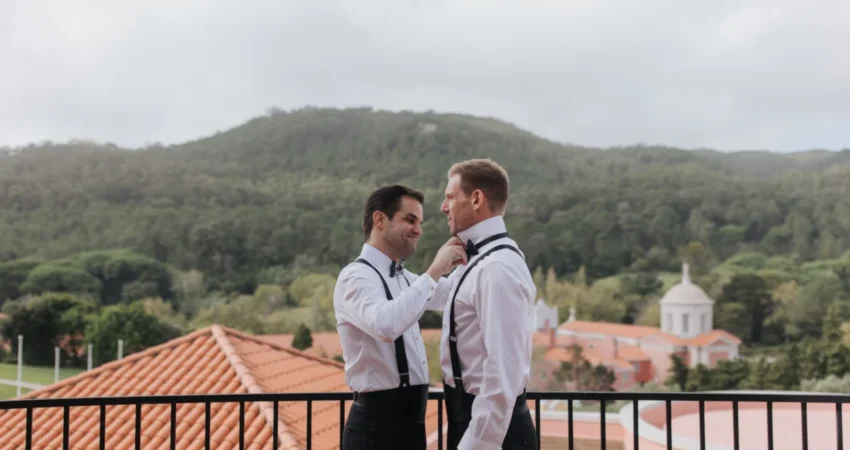
The international destination wedding market, currently valued at approximately $28.3 billion and projected to grow significantly by the end of the decade, has seen a shift toward highly curated, experiential celebrations. Among the most notable recent examples is the wedding of Taylor Rains and Carter Joyce, a Charleston-based couple who transformed a 16th-century Portuguese monastery into a multi-day cultural exhibition. Their celebration, which hosted 100 guests in the historic town of Sintra, serves as a case study in modern luxury travel, logistical precision, and the integration of local heritage into personal milestones.

A Foundation in Global Exploration
The union of Taylor Rains and Carter Joyce was defined by travel long before their wedding planning commenced. Meeting online in 2016, the couple established a tradition of spending holiday seasons in Belgium, a choice that reflected their shared affinity for European history and festive atmospheres. This travel-centric relationship reached a pivotal moment in late 2022 during a trip to Brussels.

While riding a Ferris wheel in the city’s main Christmas market, mulled wine in hand, Joyce proposed to Rains. The engagement set the tone for their future nuptials: a desire for a storied venue that could provide a grand-scale experience for their social circle. As residents of Charleston, South Carolina—a city frequently cited as one of the top wedding destinations in the United States—the couple sought to move away from what they described as "cookie-cutter" ceremonies, opting instead for an international setting that offered a unique identity.

Strategic Planning and Market Realities
The transition from engagement to wedding planning was marked by a rigorous evaluation of the European luxury venue market. Initially, the couple considered opulent estates in the United States, such as the Biltmore in North Carolina, before shifting their focus to the chateaux of France and the villas of Italy. However, market data and logistical hurdles necessitated a pivot.

During the planning period, the couple observed a significant surge in pricing for premier venues in Western Europe. Industry reports suggest that post-pandemic demand led to a 20% to 30% increase in wedding costs in traditional hotspots like Lake Como and the Loire Valley. "Prices had doubled or tripled since we’d started looking," Joyce noted, highlighting the inflationary pressures currently affecting the global luxury event sector.

To navigate these complexities, the couple enlisted Georgia Haldenby of Matthew Oliver Weddings, a London-based firm specializing in high-end destination events. The choice of planner was predicated on a non-transactional philosophy; Rains and Joyce sought a collaborator who understood their desire for an event that felt like an extension of their personalities rather than a standard service package.

The Selection of Sintra: A Logistical Masterclass
When budgetary and aesthetic requirements were synthesized, the search narrowed to Sintra, Portugal. Located approximately 20 miles from Lisbon, Sintra is a UNESCO World Heritage site renowned for its 19th-century Romanticist architecture and royal history. For a destination wedding, it offered a rare combination of historical gravitas and modern infrastructure.

The couple’s criteria for a destination were stringent:

- Historical Significance: A venue with deep architectural roots.
- Accessibility: Proximity to an international airport with nonstop flights from major U.S. hubs (New York, Atlanta, and Washington D.C.).
- Modern Amenities: A resort capable of hosting 100 guests with contemporary conveniences and full wheelchair accessibility.
The Penha Longa Resort, a Ritz-Carlton property, emerged as the ideal solution. The resort is unique in that it encompasses a sprawling 14th-century monastery and a 16th-century garden within its grounds, allowing the couple to host various events in distinct historical settings without requiring guests to travel between multiple locations.

Chronology of a Multi-Day Cultural Celebration
The wedding weekend was structured as a series of "vignettes," each designed to introduce guests to a different facet of Iberian culture.

The Welcome: A Fusion of Spanish and Portuguese Heritage
On Friday evening, the festivities began with a Portuguese barbecue at Casa Dos Penedos, a pink-hued 20th-century mansion designed by the renowned architect Raul Lino. In a nod to Rains’ Spanish maternal heritage, flamenco dancers from Rueda Flamenca lined the garden paths. The evening also featured a performance by Manel Ferreira, a practitioner of Fado—the melancholic, soul-stirring folk music that was added to the UNESCO Intangible Cultural Heritage Lists in 2011.

The Ceremony: Minimalism Amidst Ruins
The Saturday ceremony took place within the Nuncio Gardens, a 16th-century site featuring crumbling stone walls, climbing ivy, and a central reservoir. In contrast to the ornate surroundings, the couple opted for a "late ’90s Ralph Lauren equestrian" aesthetic. This minimalist approach used dusty pink and peach roses by Atelier Decorelle and bronzed candelabras to complement, rather than compete with, the monastery’s architectural drama.

The Reception: Architectural Immersion
Dinner was served in the Sala Dos Arcos, a hall defined by its dramatic stone archways. The menu balanced traditional Portuguese flavors with continental fine dining, featuring cod fritters and sausage followed by turbot and a Portuguese-influenced beef Wellington. The celebration then moved to the Salão Nobre, a grand salon with intricate wood carvings and a massive fireplace, for a night of dancing.

Navigating Cultural and Social Nuances
Marrying as a same-sex couple in a predominantly Catholic nation like Portugal presented a layer of initial concern for the grooms. While Portugal has been at the forefront of LGBTQ+ rights in Europe—legalizing same-sex marriage in 2010—the couple remained mindful of local traditions. However, they reported that their vendors and the local community were not merely accepting but "amplifying" in their support. This experience aligns with Portugal’s ranking as one of the most LGBTQ-friendly countries in the world, often appearing in the top ten of the Rainbow Europe Map.

Furthermore, the couple faced the challenge of "people-pleasing" tendencies common in large-scale event hosting. To mitigate the stress of managing 100 international travelers, they utilized their wedding planner as a de facto travel agent. This allowed the couple to focus on the emotional aspects of the weekend while professional logistics handled guest transportation, accommodations, and local recommendations.

The Climax: Drag Queens and the European Sunrise Tradition
In keeping with European wedding traditions, which often extend until the early hours of the morning, the couple sought a way to maintain momentum after the formal dinner. Their solution was a midnight surprise: a high-energy performance by drag queens from Pride Talent. The performers included a 7-foot-8-inch artist and a saxophone player, who effectively bridged the gap between the formal ceremony and a late-night club atmosphere.

The inclusion of starchy snacks—Belgian waffles (a tribute to their engagement) and Spanish croquettes—fueled the party until its conclusion at approximately 3:00 a.m. This blend of high-fashion aesthetics and subversive, joyful entertainment ensured the event remained memorable and distinct from traditional matrimonial formats.

Broader Implications for the Destination Wedding Industry
The Rains-Joyce wedding exemplifies several emerging trends in the global travel and event sectors. First, it highlights the "curation economy," where hosts view themselves as directors of a multi-sensory experience rather than just participants in a ritual. Second, it underscores the importance of historical preservation sites as commercial assets; the management at Penha Longa Resort emphasized that their 600-year-old structures are "meant to be lived in and enjoyed," suggesting a shift toward interactive heritage tourism.

Finally, the success of the event reinforces Portugal’s status as a top-tier destination for high-net-worth travelers from the United States. With its combination of safety, relatively lower costs compared to the UK or France, and rich cultural offerings, Portugal continues to capture a significant share of the international wedding market.

For Taylor Rains and Carter Joyce, the event was more than a wedding; it was a logistical and emotional culmination of a relationship built on global exploration. By prioritizing guest experience and cultural authenticity over traditional tropes, they successfully executed a celebration that balanced the weight of history with the vibrancy of contemporary life.

0 Comments