
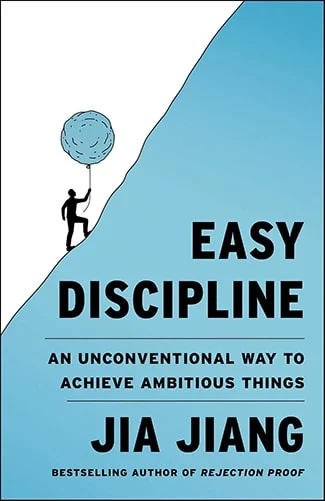
The conventional wisdom surrounding high achievement has long been rooted in the philosophy of "no pain, no gain," suggesting that extraordinary success is inextricably linked to extraordinary suffering. However, a growing movement in the field of behavioral psychology and self-improvement is challenging this paradigm, suggesting that the most sustainable path to excellence is not through sheer willpower, but through the strategic design of enjoyable systems. On July 14, 2026, the Art of Manliness podcast featured Jia Jiang, an author and entrepreneur renowned for his work on resilience, to discuss his latest findings on what he terms "Easy Discipline." Jiang’s new book, Easy Discipline, serves as the foundation for a discussion that critiques the traditional "grind culture" and proposes a model where consistency is a byproduct of desire and environment rather than a battle of attrition.
The Shift from Willpower to Design
For decades, the standard approach to discipline has relied on the concept of "Hard Discipline." This model views willpower as a finite resource—a muscle that must be flexed to overcome procrastination, laziness, or fatigue. In this framework, the individual is in a constant state of internal conflict, forcing themselves to perform tasks they inherently dislike to achieve a distant reward. Jiang argues that while this method can produce short-term results, it is the primary driver of burnout and the high failure rate of long-term goals.
In contrast, "Easy Discipline" is defined as the practice of designing one’s work and life so that the "right" action becomes the path of least resistance. According to Jiang, the secret to the world’s most consistent performers is not that they possess more willpower than the average person, but that they have developed a relationship with their craft that minimizes the need for it. By making the process inherently rewarding, the friction between the individual’s desires and their duties is removed.

The Cultural Context: Critiquing "Eating Bitterness"
A significant portion of Jiang’s thesis involves a critique of the traditional East Asian concept of "eating bitterness" (chi ku). This cultural value suggests that the ability to endure hardship and suffering is a virtue in itself and a prerequisite for success. Jiang, drawing on his own background and observations, explains that while "eating bitterness" can build resilience, it often leads to a joyless existence where the individual becomes disconnected from their intrinsic motivations.
Jiang’s research suggests that when discipline is framed as a form of penance, the brain eventually rebels. This leads to the "yo-yo" effect seen in dieting and productivity cycles, where periods of intense self-denial are followed by periods of total collapse. By shifting the focus from enduring bitterness to finding "sweetness" in the process, individuals can maintain high standards without the psychological toll of constant self-coercion.
Case Studies in Playful Excellence: Soviet Hockey and Japanese Rituals
To illustrate the effectiveness of Easy Discipline, Jiang points to historical examples where high-stakes performance was achieved through unconventional, non-punitive methods. One notable example is the Soviet Union’s "Red Army" hockey team of the 1980s. While Western observers often assumed the team’s dominance was the result of brutal, robotic training, the reality was more complex. The team’s coach, Anatoly Tarasov, incorporated elements of ballet, chess, and acrobatics into their training. He encouraged a style of play that was creative, fluid, and deeply collaborative—essentially turning the highest level of athletic competition into a form of collective play. This approach allowed the players to maintain an intense practice schedule for years without losing their edge or their passion for the game.
Similarly, Jiang explores the Japanese tea ceremony (chanoyu) as a masterclass in Easy Discipline. The ceremony requires immense precision and years of practice to master, yet it is framed as a meditative and aesthetic experience. The discipline required is not "hard" in the sense of being a struggle; it is "easy" because it is embedded in a ritual that provides immediate sensory and spiritual rewards. These examples serve to show that high standards do not require a low quality of life during the process of achievement.
The Science of Habit and "One-Action Goals"
Supporting Jiang’s philosophy are several decades of research into habit formation and neurobiology. Studies from institutions such as Duke University have shown that nearly 40% of daily activities are not the result of conscious decisions but of habits. When a task is "hard," the prefrontal cortex—the area of the brain responsible for executive function—must work overtime. When a task is "easy" or ritualized, the basal ganglia take over, requiring significantly less metabolic energy.
Jiang introduces the concept of "one-action goals" to facilitate this transition. Instead of setting broad, intimidating objectives (e.g., "I will write a book"), he advocates for goals that require a single, non-negotiable action that triggers a flow state (e.g., "I will open my laptop and write one sentence"). This lowers the "activation energy" required to start, making it easier for the individual to begin the task. Once the initial friction is overcome, the natural momentum of the activity often carries the individual through to a productive session.
Rejection Therapy and the Resilience Factor
Jia Jiang first rose to international prominence through his "100 Days of Rejection" project, where he sought out daily opportunities to be told "no" to desensitize himself to the pain of social disapproval. This experience informs much of Easy Discipline. Jiang argues that a major source of "hard" discipline is the fear of failure or judgment. When an individual is afraid, every step toward their goal feels like an uphill battle against their own survival instincts.
By utilizing "Rejection Therapy," individuals can lower their baseline anxiety. When the stakes of a particular action—such as making a sales call or asking for a promotion—no longer feel like a life-or-death situation, the discipline required to perform those actions becomes "easy." Resilience, in Jiang’s view, is not about getting tougher; it is about making the world feel less threatening.

Identity-Based Motivation
A core pillar of Easy Discipline is the alignment of actions with identity. Jiang references the work of social psychologists who have found that people are more likely to stick to a behavior if they view it as an expression of who they are rather than a task they must perform.
- Traditional Discipline: "I have to go to the gym to lose weight." (Extrinsic, outcome-oriented, high friction).
- Easy Discipline: "I am the type of person who never misses a workout." (Intrinsic, identity-oriented, low friction).
When an action is an expression of identity, failing to perform that action creates cognitive dissonance. Therefore, the "discipline" comes from the desire to remain consistent with one’s self-image, which is a much more powerful and sustainable motivator than a desire for a future reward.
Implications for the Modern Workforce and Mental Health
The timing of Jiang’s "Easy Discipline" framework coincides with a global crisis in workplace engagement and mental health. According to 2025 Gallup data, employee burnout remains at record highs, with a significant percentage of the workforce reporting that they feel "emotionally drained" by their professional responsibilities.
The "Easy Discipline" model offers a potential solution for organizations looking to increase productivity without sacrificing employee well-being. By focusing on "job crafting"—the process of allowing employees to reshape their tasks to better fit their strengths and interests—companies can foster an environment where high performance is a natural outcome of engagement rather than the result of strict oversight and quotas.

Furthermore, the implications for mental health are profound. By removing the "moral" weight often attached to discipline—where being "unproductive" is seen as a character flaw—individuals can reduce the shame and anxiety that often lead to procrastination. This shift from a punitive to a design-based approach to self-improvement aligns with modern therapeutic practices, such as Acceptance and Commitment Therapy (ACT), which emphasize moving toward valued ends rather than away from discomfort.
Conclusion and Future Outlook
The discussion between the McKays and Jia Jiang highlights a significant shift in the cultural zeitgeist regarding achievement. As the limitations of "grind culture" become increasingly apparent, the move toward "Easy Discipline" represents a more sophisticated understanding of human psychology.
The success of Jiang’s book and the reception of these ideas suggest that the public is ready for a more sustainable approach to personal growth. By integrating play, ritual, identity, and environmental design, individuals can achieve the same "extraordinary results" previously associated with suffering, but with a level of consistency and joy that was once thought impossible. As the world moves toward 2027, the focus of the self-improvement industry appears to be shifting away from "how to work harder" and toward "how to make hard work feel easy."

0 Comments