
The Archetypal Tension: Restlessness vs. Rootedness
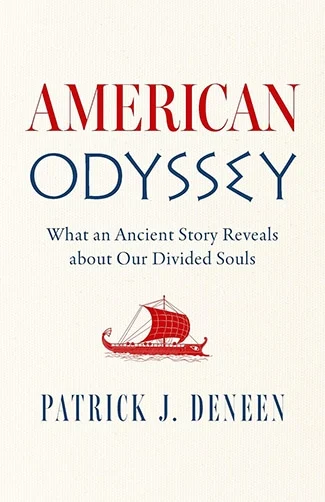
At the heart of the Odyssey lies the character of Odysseus, a man who spent ten years fighting in the Trojan War and another ten years attempting to return to his kingdom of Ithaca. According to Deneen, Odysseus is the quintessential representative of the human condition, particularly as it manifests in the United States. He embodies the duality of the human spirit: the desire to push beyond known horizons and the countervailing need to belong to a specific place and community.
Deneen argues that this "divided soul" is not merely a literary device but a historical and sociological reality for Americans. The American identity has long been forged by the "frontier myth"—the idea that progress is found in moving forward, breaking ties, and seeking new opportunities. However, this restlessness often comes at the cost of stability, tradition, and the deep social bonds that only a permanent "home" can provide.
The podcast discussion highlights that while modern culture often celebrates the "restless" aspect of the hero—the explorer, the innovator, and the nomad—it frequently overlooks the "rooted" aspect. Deneen suggests that the true journey of Odysseus is not found in his wanderings, but in his unwavering commitment to return to the specificities of his home, his wife Penelope, and his son Telemachus.
Historical Context: Tocqueville’s Observation
The tension identified by Deneen is not a new observation in the study of American life. Nearly two centuries ago, the French diplomat and philosopher Alexis de Tocqueville noted a similar phenomenon during his travels through the young United States. In his seminal work, Democracy in America, Tocqueville observed that Americans were uniquely "restless in the midst of abundance."
Tocqueville described a population that was constantly moving, changing professions, and seeking better fortunes, yet remained perpetually unsatisfied. He noted that even when Americans achieved success, they often felt a sense of anxiety that they were missing out on something else, leading to a cycle of perpetual motion. Deneen connects Tocqueville’s 19th-century observations to the 21st-century American experience, suggesting that the digital age has only intensified this restlessness by making every corner of the world seem accessible, yet making the concept of a "permanent home" feel increasingly elusive.
The Philosophical Struggle: Between Gods and Beasts
A significant portion of Deneen’s analysis focuses on the temptations Odysseus faces during his journey, which he categorizes as the pressure to become either "more than human" or "less than human."
The Temptation of Divinity
Odysseus is frequently offered the chance to escape the burdens of mortality. On the island of Ogygia, the nymph Calypso offers him immortality and eternal youth if he remains with her. This represents the temptation to become "more than human"—to transcend the limits of time, suffering, and death. Deneen posits that modern technology and the pursuit of radical individualism often mirror this temptation. The desire to "transcend" one’s local community, biological limits, or historical context is a modern form of the Calypso offer. Odysseus’s rejection of this offer, choosing instead to return to an aging wife and a mortal life, is framed by Deneen as a profound act of human wisdom.
The Temptation of Animality
Conversely, Odysseus encounters environments that threaten to reduce him to a "less than human" state. The Lotus-eaters offer a drug-induced oblivion where memory and purpose are erased, leading to a life of pure physical sensation. Similarly, the enchantress Circe turns men into literal swine. These episodes represent the danger of losing one’s humanity through the abandonment of responsibility, memory, and social structure. Deneen suggests that contemporary "escapism"—whether through substance abuse, mindless consumerism, or the erosion of civic duty—parallels these ancient traps.
The Heroism of the Return
In traditional interpretations of the Odyssey, the hero’s greatness is often measured by his cunning (metis) and his prowess in battle. However, Deneen argues that the most heroic thing Odysseus does is not slaying the Cyclops or surviving the Sirens, but the act of returning home and re-establishing order.
The "return" (nostos) is a difficult and messy process. Upon reaching Ithaca, Odysseus does not find immediate peace; he finds his home occupied by suitors who have depleted his wealth and disrespected his family. The restoration of his household requires a violent and strategic reclamation of his rightful place. Deneen notes that for modern Americans, "coming home"—whether metaphorically or literally—is often harder than leaving. It requires the difficult work of reconciliation, the maintenance of aging infrastructure, and the commitment to local institutions that may have fallen into disrepair.
Supporting Data: The Decline of Rootedness in America
The philosophical arguments presented by Deneen are supported by shifting demographic and sociological data in the United States. While Americans have historically been more mobile than their European counterparts, recent decades have shown a complex shift in how "home" is perceived.

- Declining Social Capital: According to data from the General Social Survey (GSS), the number of Americans who report having no close friends has tripled since the 1980s. Sociologists like Robert Putnam have long documented the decline of "civic rootedness," as participation in local clubs, religious organizations, and community groups has plummeted.
- Internal Migration Trends: While mobility has actually slowed down in terms of raw percentage—U.S. Census Bureau data shows that moving rates reached a historic low in the early 2020s—the desire for mobility remains high. However, this lack of movement is often attributed to economic constraints (such as housing costs) rather than a renewed sense of community rootedness.
- The "Loneliness Epidemic": The U.S. Surgeon General recently issued an advisory on the "epidemic of loneliness and isolation," linking the lack of social connection to increased risks of heart disease, stroke, and dementia. This data aligns with Deneen’s argument that a "restless" soul without a "secure base" suffers significant psychological and physical consequences.
The "Secure Base" and Daring Exploration
The podcast concludes with a synthesis of ideas from Deneen and New York Times columnist David Brooks. The central thesis is that "rootedness" and "restlessness" should not be seen as mutually exclusive, but as complementary forces. Brooks famously stated that "All of life is a series of daring explorations from a secure base."
Deneen argues that it is only by having a secure home—a place where one is known, loved, and accountable—that an individual gains the confidence to explore the world effectively. Without a home to return to, exploration becomes aimless wandering. Conversely, a home that forbids exploration becomes a prison. The challenge for modern society, Deneen suggests, is to rebuild the "secure base" of family, neighborhood, and local culture so that the natural human drive for exploration can be directed toward productive and meaningful ends.
Broader Impact and Implications
The resurgence of interest in the Odyssey through Nolan’s film and Deneen’s academic work suggests a cultural "tipping point." As the world becomes increasingly globalized and digital, the specificities of "place" are gaining new value.
Educational Implications
Scholars suggest that Deneen’s approach to the Odyssey could influence how classical literature is taught in universities. Rather than treating the epic as a dusty relic of the past, educators are increasingly framing it as a mirror for modern political and social anxieties.

Political Implications
Deneen’s work often intersects with "post-liberal" political thought, which critiques the modern emphasis on individual autonomy at the expense of communal stability. His interpretation of the Odyssey provides a narrative foundation for policies that prioritize local economies, family support, and community revitalization over global mobility and corporate consolidation.
Psychological Implications
From a mental health perspective, the concept of the "divided soul" offers a framework for understanding the burnout and anxiety prevalent in modern life. By acknowledging the innate need for rootedness, individuals may find more balance between their professional ambitions and their personal need for belonging.
Conclusion
The enduring power of the Odyssey lies in its ability to speak to the universal human experience across millennia. Through the lens of Patrick Deneen’s American Odyssey, the poem serves as a timely reminder that while the spirit of exploration is a vital part of the human (and American) identity, it is the return to home—the commitment to the particular, the local, and the mortal—that ultimately defines a hero. As the cultural conversation continues to revolve around these ancient themes, the message remains clear: the journey is only meaningful if it leads, eventually, back to where we belong.

0 Comments