
In the specialized field of executive protection and residential security, practitioners frequently observe a disconnect between a homeowner’s perceived safety and the actual vulnerability of their property. Spencer Coursen, a prominent security expert and author of The Safety Trap, recently highlighted a case study involving a high-net-worth client that illustrates the fundamental flaws in modern home security logic. The client, an owner of multiple luxury vehicles, maintained a habit of placing his electronic key fobs on a console near the front entrance of his residence. Exploiting this oversight, an intruder was able to enter the home through an unsecured front door, retrieve a fob, and depart with a high-value vehicle. Throughout the duration of the theft, the homeowner remained in his bedroom, entirely unaware that a felony was being committed within his primary residence.
When the client later consulted Coursen regarding the installation of a high-technology, multi-thousand-dollar surveillance and alarm infrastructure, the investigation returned to a foundational question: was the door locked at the time of the incident? The client’s admission that the door was left unlocked revealed a critical vulnerability that technology alone cannot resolve. This incident serves as a primary example of how human error and the absence of standardized habits can undermine even the most sophisticated security environments. The solution proposed by security professionals is not merely more hardware, but the implementation of a disciplined, nightly protocol known as the "9 P.M. Routine."
The Mechanics of the 9 P.M. Routine
The 9 P.M. Routine is a preventative security framework designed to mitigate "crimes of opportunity." Law enforcement agencies define these crimes as offenses committed when a perpetrator identifies a low-risk, high-reward situation where the effort required to commit the act is minimal. By establishing a fixed time each evening to conduct a comprehensive security sweep, homeowners shift from a reactive posture to a proactive one.
While the name suggests a specific hour, security analysts emphasize that the timing is less important than the consistency of the execution. The routine typically involves a five-minute checklist that addresses the most common points of failure in residential security. The protocol includes:
- Vehicle Security: Removing all valuables, including electronics, bags, and spare keys, from vehicles parked in driveways or on the street.
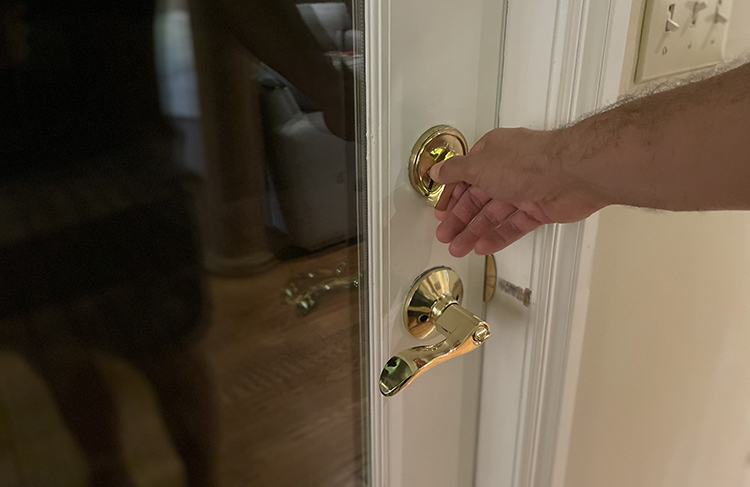
- Access Point Verification: Physically checking and locking all exterior doors, including those leading from the garage into the home.
- Fenestration Security: Ensuring all ground-floor windows and sliding glass doors are closed and latched.
- Peripheral Enclosures: Closing and locking garage doors and pedestrian gates.
- Illumination and Monitoring: Activating exterior lighting and ensuring that home security systems or cameras are armed and functional.
Statistical Context: The Reality of Residential Burglary
To understand the necessity of a nightly routine, one must examine the data provided by the Federal Bureau of Investigation’s (FBI) Uniform Crime Reporting (UCR) program. Historically, residential burglaries account for a significant portion of property crimes in the United States. According to national crime statistics, approximately 30% of all burglaries are classified as "unlawful entries," meaning the intruder gained access through an unlocked door or window without the use of force.
Data suggests that a significant percentage of these entries occur during the night when occupants are home. In many jurisdictions, law enforcement reports that vehicle break-ins and "warm-up" thefts (stealing a car while the engine is running or when the keys are left inside) are almost entirely preventable through basic habit changes. In suburban environments, the "door-pull" method is a common tactic where offenders walk through neighborhoods checking car door handles; they bypass locked vehicles and focus exclusively on those left open. By implementing the 9 P.M. Routine, a household effectively removes itself from the pool of easy targets, forcing a potential intruder to either take the risk of a forced entry—which is noisier and more likely to trigger alarms—or move on to a less prepared property.
Chronology of the Movement: From Social Media to Public Policy
The formalization of the 9 P.M. Routine as a public safety campaign began in the mid-2010s. The Pasco County Sheriff’s Office in Florida is widely credited with pioneering the #9PMRoutine hashtag on social media platforms around 2016. The initiative was born out of a realization that a majority of the department’s property crime calls involved unlocked vehicles and homes.
The chronology of the campaign’s expansion highlights its effectiveness:
- 2016: Initial launch by Florida law enforcement to reduce "preventable" thefts.
- 2017–2018: The campaign goes viral among municipal police departments across North America, from Toronto to California.
- 2020: During the global pandemic, as residential occupancy increased, the routine was adapted to include "porch piracy" prevention, encouraging citizens to bring packages inside before nightfall.
- 2022–Present: Security experts like Spencer Coursen integrated the routine into broader "safety trap" philosophies, emphasizing that the "feeling" of safety in a quiet neighborhood often leads to the very complacency that criminals exploit.
Expert Analysis: The Psychology of the Safety Trap
Spencer Coursen’s analysis of home security centers on the concept of the "Safety Trap"—a psychological state where individuals believe they are safe because they have not yet been victimized. This leads to a degradation of situational awareness. In the case of the wealthy client who lost his vehicle, the trap was the assumption that a high-end neighborhood and a sophisticated home acted as a natural deterrent.
Security professionals argue that technology often exacerbates this complacency. Homeowners may invest in doorbell cameras and smart locks but fail to ensure the door is actually latched or that the camera is positioned to capture usable footage. "Why not try locking your doors first before we spend a lot of money on a security system?" Coursen’s inquiry to his client underscores a fundamental principle of tactical security: the most effective tools are often the simplest, provided they are used correctly and consistently.
Furthermore, the routine addresses "decision fatigue." At the end of a long day, individuals are less likely to remember to check the side gate or the basement window. By turning these actions into a reflexive routine—much like brushing one’s teeth—the homeowner offloads the cognitive burden of security to a habit, ensuring that no steps are missed.
Broader Implications for Community Safety and Insurance
The implementation of a nightly security routine has implications that extend beyond the individual household. Law enforcement agencies note that when an entire neighborhood adopts the 9 P.M. Routine, the area becomes "hardened" against criminal activity. Burglars are often deterred by neighborhoods where they find consistently locked vehicles and active motion lighting, as the risk-to-reward ratio becomes unfavorable.
From an economic perspective, consistent security habits can impact insurance considerations. While most homeowners’ insurance policies cover theft regardless of whether a door was locked, a history of preventable claims can lead to increased premiums or the non-renewal of policies. Conversely, some modern insurance providers are beginning to offer discounts for homes equipped with "active" security measures, which include both hardware and documented safety protocols.
Moreover, the routine fosters a sense of communal responsibility. In many municipalities, the 9 P.M. Routine has become a nightly social media event, where neighbors remind one another via community apps to secure their property. This collective vigilance acts as a modern version of the Neighborhood Watch, utilizing digital platforms to reinforce physical security.
Conclusion: Establishing the Sanctuary
The overarching goal of the 9 P.M. Routine is the preservation of the home as a sanctuary. While high-tech solutions like biometric scanners and remote-monitored CCTV have their place in a comprehensive security plan, they are secondary to the "human element." The case of the stolen luxury vehicle serves as a permanent reminder that the absence of a five-minute habit can render thousands of dollars in security equipment irrelevant.
As security trends continue to evolve toward automation, experts like Spencer Coursen continue to advocate for a return to basics. The 9 P.M. Routine is not merely a task list; it is a mindset shift. It acknowledges that while no home can be made 100% impenetrable, the vast majority of residential crimes can be avoided through the simple, disciplined application of a nightly check. For the modern homeowner, the most powerful tool in the security arsenal is not a camera or an alarm, but the deadbolt—and the memory to turn it.

0 Comments