
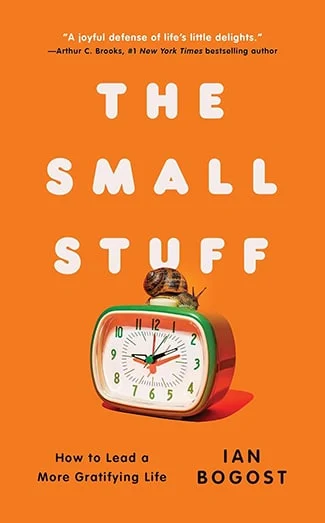
The Philosophy of Tactile Engagement
Bogost’s thesis centers on the idea that human well-being is intrinsically linked to our interactions with the material world. As the environment becomes "dematerialized" through the rise of touchscreens and software-based services, individuals are losing the "friction" that once defined daily life. This friction, according to Bogost, is not a nuisance to be eliminated but a source of engagement and control.
The concept of "touching grass," a colloquialism often used to suggest that someone needs to disconnect from the internet and reconnect with reality, serves as the metaphorical foundation for Bogost’s argument. However, he extends this beyond nature to include the man-made environment. The tactile feedback of a well-made knob, the weight of a physical menu, or the act of breaking an icicle off a roof represent moments where the individual asserts presence in a three-dimensional space. These interactions provide a sense of agency that digital "taps" and "swipes" fail to replicate.
Historical Context: The Shift Toward Frictionless Design
The transition away from tactile interfaces is a relatively recent phenomenon in human history, accelerated by the "frictionless" design philosophy of Silicon Valley. Beginning in the late 2000s with the proliferation of the smartphone, industrial design began prioritizing sleek, buttonless surfaces.
- 2007–2012: The initial "iPhone era" popularized the capacitive touchscreen, leading to the removal of physical keyboards on mobile devices.
- 2015–2020: The "Internet of Things" (IoT) phase saw physical controls on household appliances—such as thermostats and washing machines—replaced by smartphone applications.
- 2020–Present: The COVID-19 pandemic accelerated the adoption of QR code menus and contactless services, further distancing consumers from physical artifacts in public spaces.
This chronology highlights a systematic removal of physical landmarks in the user experience. Bogost suggests that while these advancements offer efficiency, they strip away the "sensory enchantment" that grounds humans in their surroundings.
Psychological and Sensory Data
Research in the field of haptics—the science of touch—supports the notion that physical feedback is vital for cognitive processing and emotional stability. According to a study published in the Journal of Consumer Research, tactile interaction with an object increases a sense of psychological ownership and valuation. When a consumer touches a physical product or operates a mechanical tool, the brain processes the feedback through the somatosensory cortex, creating a more vivid and memorable experience than visual-only stimuli.
Furthermore, data on "digital fatigue" indicates a growing counter-movement. A 2023 report on consumer trends noted a significant uptick in the sales of analog goods:
- Vinyl Records: Sales have seen 17 consecutive years of growth, with physical media often preferred for its "ritualistic" qualities.
- Film Photography: Kodak and Fujifilm reported record demand for 35mm film in 2022 and 2023, driven by a desire for "tangible" memories.
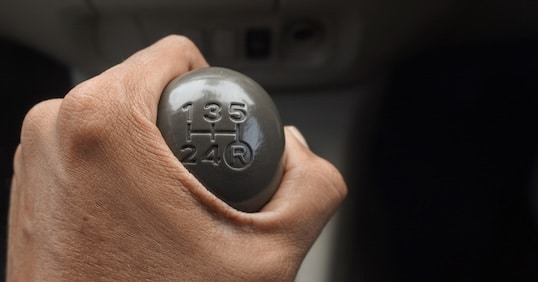
- Manual Transmissions: In the automotive sector, while still a minority, several manufacturers have reported a "manual renaissance," with enthusiasts citing "driver engagement" as the primary motivator.
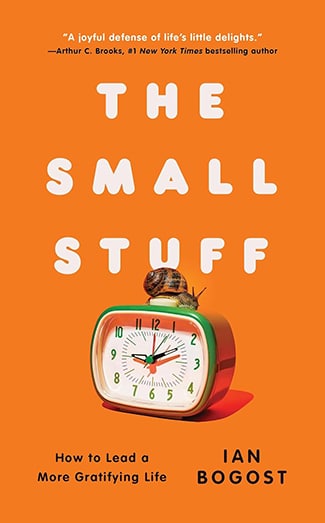
These data points suggest a latent public desire to reclaim the tactile experiences that Bogost describes in The Small Stuff.
The Loss of Micro-Gratifications
During the podcast, Bogost highlighted specific examples of "micro-gratifications" that are disappearing. The hotel ice machine, once a staple of the travel experience, offered a multisensory event: the sliding of the bucket, the weight of the ice, and the thunderous sound of the chute. Today, many modern hotels have replaced these with silent, automated dispensers or room service requests via an app, sanitizing the experience and removing the "fun" of the interaction.

Similarly, the physical boarding pass is being phased out in favor of digital wallets. While the digital version is more convenient, the physical pass serves as a "token of progress"—a tangible marker of a journey that can be held, folded, and eventually kept as a memento. Bogost argues that when everything is a screen, nothing feels "real" or "earned."
Analysis of "Sensory Enchantment" and Character
The implications of Bogost’s work extend into the realm of character development and self-improvement. The Art of Manliness discussion framed these tactile moments as a way to cultivate "attentiveness." By paying attention to the "small stuff"—the way a fountain pen moves across paper or the specific click of a high-quality switch—individuals practice a form of mindfulness that is grounded in the physical rather than the abstract.
This attentiveness acts as a bulwark against the "zombie-like" state induced by excessive screen time. Bogost posits that a fulfilling life is not merely the sum of major achievements (career, family, wealth) but is also composed of the quality of one’s minute-to-minute interactions with the world. If those interactions are exclusively digital and frictionless, the "texture" of life is smoothed away, leading to a sense of ennui or disconnection.

Official Responses and Expert Perspectives
While Bogost represents the philosophical and academic side of this argument, industry experts have begun to acknowledge the "over-digitization" of the world. In the automotive industry, several high-profile designers have recently walked back the "all-screen" dashboard.
In a 2023 interview, the head of design for a major European automaker stated, "We realized that for safety and driver satisfaction, certain things—like volume and temperature—must remain physical buttons. You need the muscle memory and the tactile ‘click’ to know the action is complete without taking your eyes off the road."
Similarly, in the restaurant industry, some high-end establishments have made a point of returning to physical, leather-bound menus. "The menu is the first handshake between the guest and the kitchen," one restaurateur noted. "A QR code is a barrier; a physical menu is an invitation."

Broader Implications and Future Outlook
The "joy of touching grass" and physical objects is likely to become a central theme in future discussions regarding mental health and urban design. As artificial intelligence and virtual reality (VR) continue to advance, the "dematerialization" of the world will only accelerate. Bogost’s work serves as a timely reminder that the human body is designed for a three-dimensional, tactile environment.
The future may see a "bifurcation of experience," where the mass market is served by frictionless, automated digital systems, while a "premium" or "human-centric" experience is defined by its physical, tactile qualities. This "Tactile Renaissance" suggests that the most valuable luxury of the future may not be high-tech automation, but the simple, gratifying "click" of a well-made button.
Ultimately, The Small Stuff and the insights shared by Ian Bogost challenge the modern individual to look for "enchantment" in the ordinary. By reclaiming the joy of physical boarding passes, manual knobs, and the crunch of an icicle, people can find a sense of grounding and satisfaction that no touchscreen can provide. The path to a fulfilling life, it seems, is paved with the small, tangible details that define our physical reality.

0 Comments