
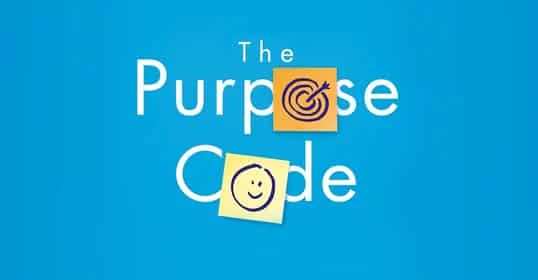
The modern pursuit of a singular, life-defining mission has increasingly become a source of psychological distress rather than a roadmap for fulfillment. In a comprehensive discussion on the Art of Manliness, Jordan Grumet, a physician and author of The Purpose Code, challenges the prevailing cultural narrative that every individual possesses one "true calling." Grumet argues that the relentless search for what he terms "Big P" Purpose—a grand, overarching goal intended to define one’s entire existence—often leads to burnout, anxiety, and a sense of existential failure. Instead, he proposes a shift toward "little p" purposes: the smaller, daily activities and connections that aggregate to form a meaningful life.
This paradigm shift comes at a time when workforce data suggests a growing "purpose gap" among professionals. According to recent surveys on workplace well-being, nearly 70% of employees report that their sense of purpose is defined by their work, yet many struggle to articulate what that purpose actually is. Grumet’s framework offers a pragmatic alternative to this "all-or-nothing" approach to life satisfaction, drawing from his extensive experience in internal medicine and hospice care.
The Genesis of Purpose Anxiety: From Medicine to Hospice
Jordan Grumet’s philosophy is rooted in a personal trajectory of professional exhaustion and subsequent realization. Having spent years climbing the ranks of the medical profession, Grumet reached a point of profound burnout. He realized that while he had achieved the societal "Big P" goal of becoming a doctor—a role often equated with ultimate purpose—he felt a distinct lack of personal resonance with the daily realities of the job.
The chronology of Grumet’s shift began with his transition into hospice care. In this environment, the abstract concept of "purpose" met the concrete reality of mortality. Grumet observed that patients at the end of their lives rarely expressed regret over failing to achieve a singular, world-changing ambition. Instead, their regrets centered on missed connections, unexpressed emotions, and the neglect of small joys. This observation serves as the foundation for The Purpose Code, where Grumet posits that the "One True Calling" is often a myth that prevents individuals from recognizing the value in their current, smaller-scale contributions.
Defining the Framework: Big P vs. Little p
To understand the implications of Grumet’s work, one must distinguish between the two types of purpose he identifies.
Big P Purpose
"Big P" Purpose is characterized by its scale and its demand for a legacy. It is the ambition to write a seminal novel, build a billion-dollar company, or cure a disease. While these are noble pursuits, Grumet argues they carry a high risk of "arrival fallacy"—the belief that once the goal is reached, lasting happiness will follow. When the goal remains elusive, it creates a sense of perpetual inadequacy.
Little p Purpose
"Little p" purposes are the immediate, actionable ways an individual finds meaning in the present. These can include being a reliable neighbor, honing a craft for the sake of the skill itself, volunteering at a local shelter, or simply engaging in a hobby that brings genuine interest. These purposes are modular and adaptable; they can change as a person moves through different stages of life. Grumet suggests that by focusing on these "little p" iterations, individuals can build a robust sense of meaning that is not dependent on a single, high-stakes outcome.
Supporting Data: The Impact of Purpose on Longevity and Health
The shift toward a more nuanced understanding of purpose is supported by a growing body of longitudinal research. A study published in JAMA Network Open tracked nearly 7,000 adults and found a significant association between a high sense of purpose and a lower risk of all-cause mortality. However, the study also noted that "purpose" did not necessarily mean a grand career achievement; it was often tied to social integration and daily engagement.
Furthermore, data from the American Psychological Association suggests that the "search for meaning" is a major stressor for younger generations, specifically Millennials and Gen Z. These cohorts are more likely to report feeling "lost" if they do not have a career that doubles as a vocational calling. Grumet’s "little p" approach serves as a psychological intervention, lowering the stakes of the search and allowing for a more experimental, iterative approach to life.
Rethinking Traditional Pillars: The Case of Family and Career
One of the more provocative aspects of Grumet’s analysis is his critique of how society views family as a primary purpose. While family is undeniably significant, Grumet argues that making family one’s sole purpose can be problematic. This is because family dynamics are subject to change and factors beyond an individual’s control. Children grow up and leave; spouses may pass away or separate.
Grumet suggests that family should be viewed as a context in which one exercises their "little p" purposes—such as the purpose of being a teacher, a nurturer, or a provider—rather than the "Big P" destination itself. This distinction protects the individual’s sense of self when family roles inevitably shift. Similarly, he encourages a decoupling of purpose from employment. By diversifying one’s "little p" purposes across different areas of life, the impact of a career setback or retirement is significantly mitigated.
Practical Applications for Discovering Little p Purposes
Grumet provides a structured approach for those feeling "purpose-paralyzed." He suggests looking back at childhood interests before the pressure of professional achievement took hold. Often, the activities that provided intrinsic joy in youth—such as drawing, building, or organizing—point toward a person’s natural "little p" inclinations.
Another practical method discussed is the "Life Review," a technique borrowed from palliative care. By asking oneself, "What would I regret not having done if my life were to end tomorrow?" individuals can identify their true priorities. Crucially, this exercise often reveals that the missing elements are not grand achievements, but rather small, neglected interests or relationships.
Broader Implications and Societal Impact
The move away from the "Big P" Purpose narrative has significant implications for mental health and organizational management. In a corporate world increasingly obsessed with "mission statements" and "purpose-driven work," Grumet’s philosophy suggests that companies might better serve their employees by supporting their "little p" lives outside of the office.
From a public health perspective, reducing "purpose anxiety" could lead to lower rates of depression and anxiety associated with the mid-life crisis—a period often defined by the realization that a "Big P" goal may never be reached. By validating the "little p" lifestyle, society can foster a more resilient population that finds value in the mundane and the local.
Conclusion: The Path to a No-Regret Life
Jordan Grumet’s insights, as discussed on the Art of Manliness, serve as a corrective to the high-pressure "hustle culture" that demands every individual find a world-shaking vocation. The evidence from hospice care remains the most compelling argument: when the end of life approaches, the "Big P" successes often fade in importance compared to the "little p" moments of connection and authenticity.
The core takeaway for listeners and readers is that meaning is not something to be "found" in a distant future or a singular achievement. Rather, it is something to be "practiced" through small, daily choices. By embracing a life of "little p" purposes, individuals can alleviate the burden of the "one true calling" and instead build a life that is rich, varied, and, most importantly, free of the regret of having waited for a grand purpose that may never have existed. This shift does not diminish ambition; it simply grounds it in a reality that is sustainable and deeply human.

0 Comments