
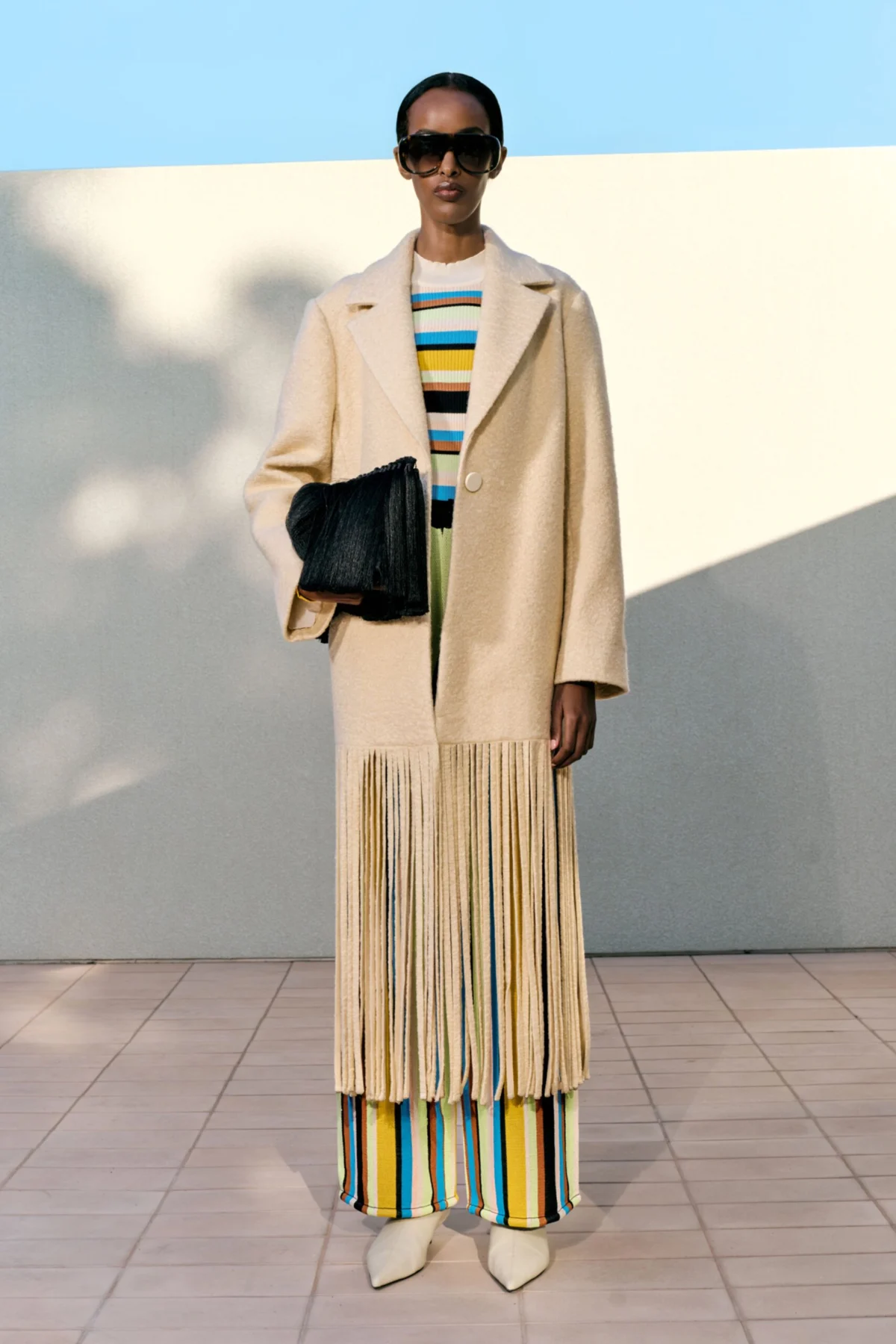
The traditional landscape of autumnal fashion, typically characterized by muted earth tones, heavy wools, and neutral palettes, has been pointedly challenged by Chelsea Hansford in her latest unveiling for Simon Miller. For the Fall 2026 Ready-to-Wear season, Hansford has steered the brand toward a high-saturation aesthetic that prioritizes bold primaries and playful silhouettes over the conventional "quiet luxury" that has dominated recent market cycles. By centering the collection on the psychological impact of color and the strategic expansion of its accessory line, Simon Miller is positioning itself as a leader in "optimistic luxury," a segment of the market that seeks to merge high-end craftsmanship with an irreverent, West Coast sensibility.
Design Philosophy: The Psychology of Color and Optimistic Luxury
In a season where competitors are largely adhering to the safety of black turtlenecks and camel-colored outerwear, Chelsea Hansford’s Fall 2026 collection serves as a deliberate counter-narrative. Hansford’s creative direction for this cycle was rooted in the physical and emotional effects of color, a philosophy she describes as a core pillar of the Simon Miller identity. The brand’s internal research and creative development focused on the concept of "dopamine dressing"—the idea that vibrant hues can influence the wearer’s mood and the perception of those around them.
The Fall 2026 offering is built on the premise that luxury does not have to be somber. Hansford noted that the brand identifies as a "playful luxury" entity, with its primary expression being one of optimism. This approach is a strategic move to capture a demographic of consumers who are increasingly looking for expressive, statement-making pieces to balance the utilitarian nature of a winter wardrobe. By utilizing a palette that includes electric yellows, deep reds, and vibrant blues, Simon Miller is attempting to redefine what "fall-appropriate" looks like in a modern, globalized fashion economy.
Materiality and Aesthetic Execution: Bridging the Seasonal Gap
One of the primary challenges identified for the Fall 2026 collection was the translation of Simon Miller’s inherent "summery" DNA into garments suitable for colder climates. Historically, the brand has found its greatest resonance during the spring and pre-fall seasons, where its cheeky resortwear and lightweight fabrics align naturally with the climate of its Southern California base. For the current fall season, Hansford has addressed this by integrating textural depth and heavier fabrications without sacrificing the brand’s signature levity.
Key pieces from the collection demonstrate this balance. A sandy-toned, faux suede jacket featuring heavy fringe detailing was paired with a matching miniskirt adorned with grommets, offering a tactile, rugged aesthetic that remains rooted in California cool. The use of fringe serves as a stylistic throughline, appearing in various iterations throughout the collection. This includes swishy, colorful midi dresses designed for the holiday season and gold tinsel trims that elevate party-ready sets into the realm of high-glamour evening wear.
Furthermore, the collection experiments with traditional autumnal patterns through a distorted lens. A yellow-and-red plaid sweater serves as a focal point for the knitwear category, utilizing loud, contrasting colors to subvert the typically conservative nature of tartan and check patterns. By pairing these vibrant primaries with foundational blacks and browns, the collection provides a bridge for consumers who wish to experiment with color while maintaining the functional requirements of seasonal layering.
Data-Driven Success: The Rise of the Fringed Clutch and the ‘It’ Bag Phenomenon
While the apparel remains a central focus of the Fall 2026 narrative, the brand’s performance in the accessories sector has emerged as the most significant indicator of its current market trajectory. Chelsea Hansford has highlighted the immediate commercial success of the new fringed clutch, an accessory that has already surpassed internal sales projections.
The data surrounding the launch of the fringed clutch provides a clear picture of the brand’s growing influence:
- Initial Sales Performance: The brand recorded 130 units sold via pre-order over a single weekend.
- Benchmark Comparison: Historically, Simon Miller considers the sale of 30 units of a new bag design over a seven-day period to be a successful launch.
- Growth Metric: The pre-order figures represent a 333% increase over the brand’s standard success threshold for new accessory introductions.
- Market Availability: The clutch is currently offered in black and olive green, colors that Hansford suggests provide a grounded entry point for consumers to engage with the more avant-garde fringed silhouette.
Hansford’s assertion that the fringed clutch is the brand’s next "It" bag is backed by these quantitative metrics. In the luxury fashion industry, an "It" bag is often the primary driver of brand heat and long-term financial stability. For a mid-sized luxury house like Simon Miller, achieving this level of velocity in the accessories category is a critical milestone that signals a transition from a niche apparel brand to a comprehensive lifestyle powerhouse.
Historical Context: The Evolution of Simon Miller under Chelsea Hansford
To understand the significance of the Fall 2026 collection, it is necessary to examine the evolution of Simon Miller over the last decade. Founded in 2008 as a men’s denim brand based in Los Angeles, Simon Miller originally focused on high-quality indigo and rugged, minimalist aesthetics. The brand underwent a radical transformation when Chelsea Hansford took the helm, shifting the focus toward women’s ready-to-wear and accessories that embraced a more eccentric, colorful, and "mod" inspired aesthetic.
Under Hansford’s leadership, the brand became synonymous with specific "viral" items, most notably the "Bonsai" bucket bag and the "Bubble" clogs. These items helped establish Simon Miller as a brand that prioritizes silhouette and texture. The Fall 2026 collection represents a continuation of this trajectory but with a newfound emphasis on the "holiday" and "winter" categories, which have historically been secondary to the brand’s resort-heavy offerings.
The timeline of the brand’s expansion includes:
- 2008–2014: Focus on premium Japanese denim and menswear.
- 2015–2018: Introduction of womenswear and the launch of the Bonsai bag, which gained significant traction among fashion influencers and high-end retailers.
- 2019–2022: Diversification into footwear and "lifestyle" categories, including home goods and swimwear.
- 2023–2025: Strategic pivot toward "DTC" (Direct-to-Consumer) growth and the refinement of the "Playful Luxury" brand positioning.
- 2026: The launch of the Fall/Holiday collection, emphasizing high-velocity accessory sales and a departure from traditional seasonal color palettes.
Market Implications and the Future of Seasonal Fashion
The success of Simon Miller’s Fall 2026 collection has broader implications for the fashion industry at large. First, it suggests a shift in consumer behavior toward "seasonal defiance." As global climates change and travel becomes more accessible, the strict lines between "summer" and "winter" wardrobes are blurring. Consumers are increasingly looking for pieces that offer versatility and a sense of joy, regardless of the temperature outside.
Second, the rapid sell-through of the fringed clutch indicates that the "It" bag market is no longer exclusive to the heritage European houses. Independent, designer-led brands are finding success by creating unique, recognizable silhouettes that offer a "new luxury" alternative to the ubiquitous logos of larger conglomerates. The fact that Simon Miller can move 130 units in three days via pre-order demonstrates a high level of brand loyalty and a successful "scarcity" marketing strategy.
Industry analysts suggest that Hansford’s approach may force other contemporary luxury brands to reconsider their reliance on safe, neutral palettes for fall. If Simon Miller continues to see double-digit growth by leaning into "optimism," it could signal a wider trend toward maximalism in the 2027 and 2028 seasons.
Conclusion: A Strategic Triumph for Playful Luxury
The Simon Miller Fall 2026 collection is more than a seasonal update; it is a calculated business move to solidify the brand’s standing in the luxury accessory market while maintaining its reputation for creative risk-taking. By leveraging bold color, textural fringe, and data-backed accessory launches, Chelsea Hansford has navigated the difficult transition from summer-centric design to cold-weather sophistication.
As the brand moves into the holiday season, the performance of the fringed clutch and the vibrant knitwear line will likely serve as the benchmark for future collections. For now, Simon Miller has successfully demonstrated that even in the darkest months of the year, there is a significant market appetite for color, texture, and unbridled optimism. The brand’s ability to triple its expected sales metrics for a new accessory launch suggests that its "playful luxury" formula is not only artistically resonant but commercially formidable in an increasingly competitive retail environment.

0 Comments