
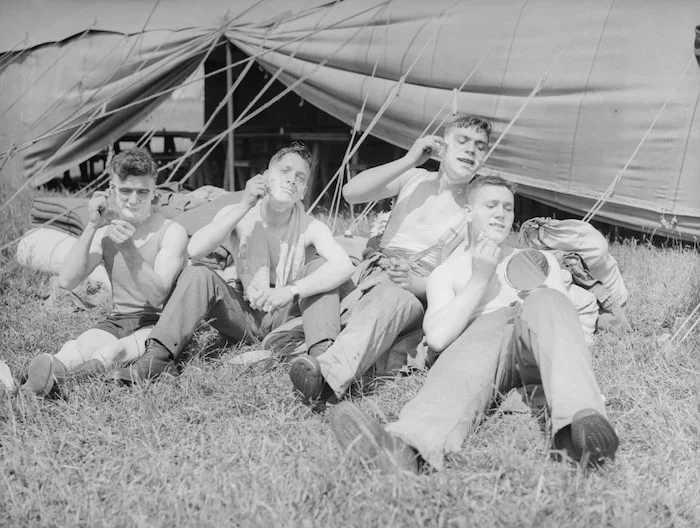
The modern morning ritual for the American male—shaving with a safety razor, brushing teeth with a nylon-bristled brush, and organizing toiletries in a compact leather bag—is often viewed as a timeless tradition of personal hygiene. However, historical records and industrial data reveal that these practices were not the cultural norm for the majority of the population until the mid-20th century. The standardization of these grooming habits was not the result of a gradual shift in fashion, but rather the direct consequence of logistical mandates and survival requirements during the two World Wars. Between 1914 and 1945, the United States military transformed the grooming habits of millions of servicemen, creating a standardized aesthetic of cleanliness and efficiency that would redefine American masculinity in the post-war era.
The Pre-War Era: The Barber and the Beard
To understand the scale of the transformation, one must examine the state of personal grooming at the turn of the 20th century. In the late 1800s, home shaving was a complex and often dangerous endeavor. The primary tool was the straight razor, a fixed-blade instrument that required significant skill to use without causing injury. Furthermore, the maintenance of a straight razor was labor-intensive, requiring regular stropping on leather and honing on stones to maintain a functional edge.
Due to these barriers, many men in the Victorian and Edwardian eras opted for full beards or visited professional barbershops for weekly shaves. Personal hygiene was often viewed through a lens of class; while the wealthy might have access to heated water and private valets, the working class relied on public baths or infrequent washings. Daily tooth brushing was virtually non-existent for the average American, as dental care was reactive rather than preventative.
The technological shift began in 1904 when King Camp Gillette was awarded U.S. Patent No. 775,134 for the safety razor. Gillette’s innovation featured a disposable double-edged blade held in a protective guard, significantly reducing the risk of deep lacerations. While the product was revolutionary, initial adoption was slow. In 1903, Gillette sold only 51 razors and 168 blades. Although sales grew to 450,000 razors annually by 1915, it was the outbreak of global conflict that provided the ultimate catalyst for mass adoption.
World War I and the Requirement of the Gas Mask
When the United States entered World War I in 1917, the military faced a unique tactical challenge: chemical warfare. The introduction of chlorine and mustard gas on the Western Front necessitated the use of gas masks. For a gas mask to be effective, it required an airtight seal against the wearer’s face. Facial hair, particularly the thick beards common among men of the era, prevented this seal, rendering the masks useless and leaving soldiers vulnerable to agonizing death or permanent lung damage.
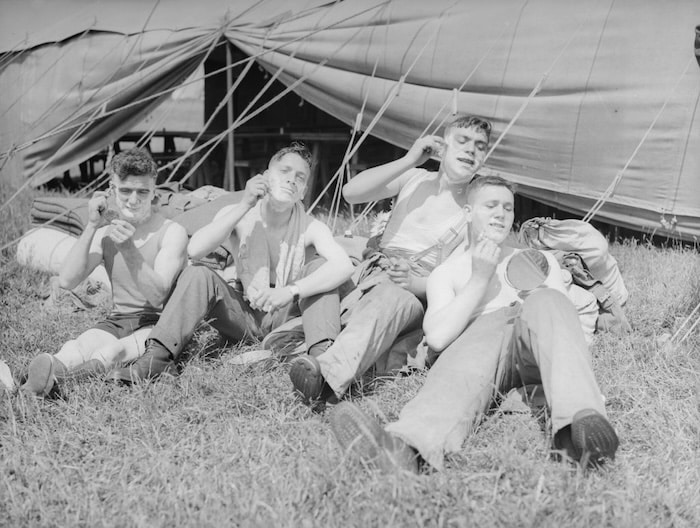
Consequently, the U.S. Army mandated that all soldiers be clean-shaven. To facilitate this, the War Department entered into a massive contract with the Gillette Safety Razor Company. By the end of the war, the government had purchased some 3.5 million razors and 32 million blades. Every "doughboy" headed for Europe was issued a grooming kit that included a safety razor.
This military mandate served as a massive, government-funded trial for Gillette’s product. Millions of young men from rural and urban backgrounds, many of whom had never shaved themselves, were trained in the daily ritual of the safety razor. When these veterans returned home in 1918 and 1919, they did not return to the barbershop for their primary grooming needs. They brought their safety razors and their new habits with them. By 1926, the cultural shift was solidified, with American men purchasing more than two million blades every day.
The Interwar Expansion and the Rise of the Toiletry Bag
The period between the wars saw the commercialization of the military’s grooming standards. Marketing departments began to equate a clean-shaven face with modernism, efficiency, and professional success. During this time, a leather goods designer named Charles Doppelt innovated the way men transported their grooming supplies. In 1919, Doppelt introduced a compact, box-shaped leather bag designed to hold razors, soaps, and brushes.
These bags, which became known as "Dopp kits," were initially a niche luxury item. However, as travel became more common and the variety of grooming products expanded—including the introduction of brushless shaving creams and early deodorants—the need for organized storage grew. The Dopp kit provided a masculine solution to what had previously been viewed as a feminine concern: the organized vanity.
World War II: The Universal Standardization of Hygiene
While World War I introduced the safety razor, World War II institutionalized a comprehensive grooming routine that included dental hygiene and standardized storage. By 1941, the U.S. military had become the largest purchaser of grooming supplies in history. The Army officially contracted with Charles Doppelt to produce millions of leather and canvas toiletry bags for recruits. These "Dopp kits" became standard-issue equipment, ensuring that every soldier, regardless of his socio-economic background, possessed the tools for daily maintenance.
The contents of a WWII-issue Dopp kit typically included:
- A safety razor (often made of bakelite or light alloys to conserve strategic metals like brass).
- Shaving soap or brushless cream.
- A nylon-bristled toothbrush.
- Toothpaste or tooth powder.
- A comb and a small signal mirror.
- A bar of standard-issue soap.
The inclusion of the toothbrush was particularly significant. Before WWII, regular tooth brushing was not a common American habit. However, the military recognized that dental issues were a leading cause of medical discharges and lost man-hours. During World War I, "trench mouth" (acute necrotizing ulcerative gingivitis) had been a major ailment. To prevent a recurrence, the military mandated daily brushing.
The technology of the toothbrush also evolved during this period. In 1938, DuPont had introduced "Exton" bristles made of nylon, replacing the traditional and less hygienic hog bristles. The military’s mass purchase of nylon toothbrushes for the troops essentially created the modern dental hygiene industry overnight.
Logistical Innovations and Secondary Uses
The pressure of total war led to unique innovations in grooming technology. Gillette, for instance, had to modify its production to support the war effort. The company produced "Kits for Colonials" and specialized sets for prisoners of war (POWs). Some of these shaving kits were engineered by intelligence agencies to include hidden compartments containing compasses, silk maps, and counterfeit currency to aid in escapes.
Soldiers also found utilitarian uses for their grooming supplies in the field. War correspondent Ernie Pyle documented that troops during the Italian campaign used shaving cream to treat minor skin irritations and fleabites. Some soldiers even massaged shaving cream into their feet, believing the emollients helped prevent trench foot in damp environments. These anecdotes highlight how deeply integrated these products had become into the daily life of the American soldier.
Post-War Implications and the "Organization Man"
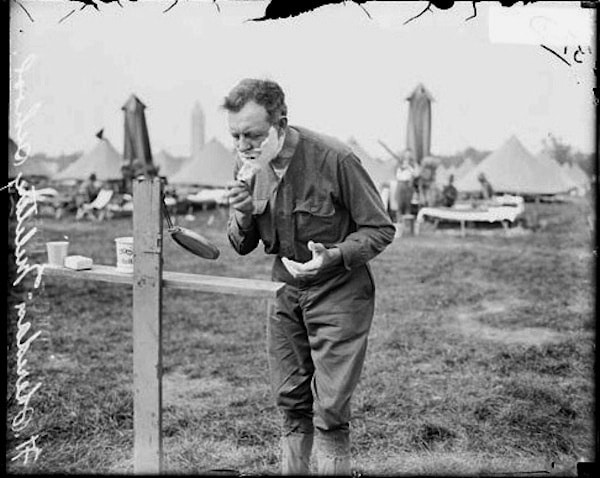
The conclusion of World War II in 1945 saw the return of over 12 million veterans to civilian life. These men returned with a deeply ingrained set of habits. The military had functioned as a massive finishing school for personal hygiene, taking men from diverse backgrounds and instilling a uniform standard of appearance.
The post-war era of the 1950s saw the rise of the "corporate man," characterized by a clean-shaven face and a neatly combed haircut. The grooming habits forged in the trenches and barracks became the baseline for professional acceptance. Companies like Gillette, Colgate-Palmolive, and DuPont capitalized on this, launching massive advertising campaigns that linked their products to the discipline and heroism of the war years.
The economic impact was profound. The grooming industry shifted from a service-based model (the barbershop) to a product-based model (the home bathroom). This transition fueled the growth of the American manufacturing and chemical sectors, as companies competed to produce better razors, more effective toothpastes, and more durable plastics.
Analysis of the Lasting Cultural Legacy
The standardization of male grooming represents one of the most successful examples of social engineering in American history. By mandating hygiene for functional and medical reasons, the military effectively bypassed the slow process of cultural diffusion. What would have taken decades of marketing to achieve was accomplished in a matter of years through the necessity of the gas mask and the prevention of dental infection.
Today, the "Dopp kit" remains a staple of travel, and the safety razor (and its cartridge-based successors) remains the dominant tool for facial hair removal. The daily ritual of standing before a mirror to shave and brush teeth is a direct link to the logistical requirements of 20th-century warfare.
In conclusion, the American male’s grooming routine is a byproduct of industrial mobilization. The two World Wars took personal hygiene out of the realm of personal choice and turned it into a matter of national efficiency. As men today reach for their razors or pack their toiletries for a trip, they are participating in a standardized ritual that was once a requirement for survival on the battlefields of Europe and the Pacific. The "clean-cut" look, once a military mandate, has become the enduring aesthetic of the modern professional man.

0 Comments