
Researchers at the University of Texas at Dallas have achieved a significant breakthrough in dental technology, developing a novel 3D printing process that could enable dentists to produce permanent zirconia restorations in a single day. This innovation addresses a long-standing challenge in the field, potentially revolutionizing how dental crowns, bridges, and veneers are manufactured and delivered to patients. Zirconia, renowned for its exceptional strength, durability, and biocompatibility, is widely considered the gold standard for permanent dental prosthetics, making this advancement particularly impactful.
The implications of this research are far-reaching, promising to enhance patient convenience, reduce treatment times, and offer a more personalized approach to restorative dentistry. With support from the National Science Foundation (NSF), the UT Dallas team is actively pursuing the commercialization of this groundbreaking technology, aiming to bring it from the laboratory to dental practices nationwide. This development marks a pivotal moment in the quest for chair-side, all-ceramic zirconia permanent dental restorations, a goal that has eluded the dental industry for years.
The Quest for Durable, Rapid Dental Restorations
Dental crowns serve a critical purpose in modern dentistry, acting as protective caps for teeth that have been compromised by decay, damage, or extensive wear. They are also integral to the structure of dental bridges, which are used to replace one or more missing teeth, restoring both function and aesthetics. The demand for high-quality, long-lasting restorations is constant, driving innovation in material science and manufacturing techniques.
In recent years, 3D printing has emerged as a transformative technology across various industries, including healthcare. In dentistry, 3D printing offers distinct advantages: unparalleled precision in customization, allowing for restorations that perfectly match a patient’s unique tooth anatomy and color, and a more efficient manufacturing process that can potentially lead to cost reductions and minimized material waste. Current commercially available same-day dental restorations, however, are typically fabricated from ceramic resins. While these resins offer aesthetic benefits and rapid production, they do not possess the robust strength and longevity of zirconia.
For decades, same-day zirconia crowns have been a reality in some dental clinics, but their production relies on subtractive manufacturing methods, primarily milling. This process involves meticulously carving a restoration from a solid block of zirconia. While effective, milling can impose limitations on the complexity of achievable designs and introduces a risk of micro-cracking during the manufacturing or subsequent sintering stages. These limitations have historically prevented the full realization of 3D printing’s potential for same-day zirconia restorations.
Overcoming the Debinding Bottleneck
The core of the UT Dallas researchers’ achievement lies in their ability to overcome a significant hurdle in the 3D printing of zirconia: the post-printing processing. Specifically, they have dramatically accelerated the debinding and sintering stages, transforming a process that traditionally took many hours into one that can be completed in mere minutes.
After a zirconia restoration emerges from a 3D printer, it must undergo two crucial steps to achieve its final, hardened form: debinding and sintering. Debinding involves the careful heating of the printed object to eliminate the binder material (often a resin or polymer) that holds the fine zirconia particles together during the printing process. This is a delicate procedure; if the heating is too rapid, the binder can decompose into gas, and if this gas cannot escape efficiently, it can cause internal pressure, leading to cracks or fractures in the delicate green-state part.
Traditionally, this debinding process can take an extraordinarily long time, ranging from 20 to an astonishing 100 hours. This protracted timeline makes it incompatible with the concept of same-day dental service. Following debinding, the part is then sintered. This is a high-temperature firing process, akin to baking pottery in a kiln, where the zirconia particles fuse together under extreme heat, resulting in a dense, strong, and durable final restoration.
"Debinding has been the bottleneck in the process," explained Dr. Majid Minary, a professor of mechanical engineering in the Erik Jonsson School of Engineering and Computer Science at UT Dallas and the corresponding author of the study published in the journal Ceramics International. "It must be done very slowly. If you speed it up, the polymer being burned off turns into gas, and if that gas cannot escape, the crown may crack or fracture. A debinding time of 20 to 100 hours is not practical for same-day dental service. As a result, 3D-printed permanent zirconia restorations are not yet commercially available."
The innovative technology developed at UT Dallas tackles this challenge head-on. Their method drastically reduces the debinding stage to less than 30 minutes, effectively removing one of the primary obstacles that has prevented the widespread adoption of same-day 3D-printed permanent zirconia dental restorations.
A Novel System for Accelerated Processing
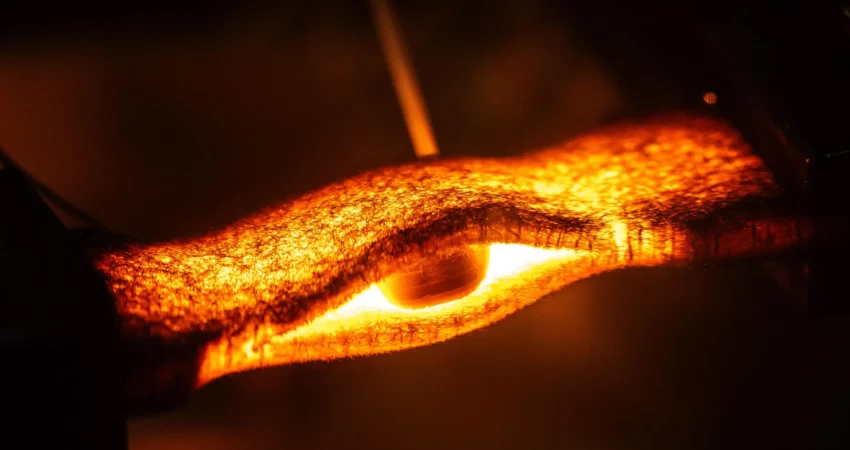
The researchers’ groundbreaking system integrates several key components to achieve this remarkable acceleration. Central to the innovation is an enhanced heat transfer mechanism combined with a specialized porous graphite felt. This felt material is capable of reaching temperatures exceeding 2,550 degrees Fahrenheit, the optimal range for sintering zirconia.
The 3D-printed zirconia restoration is enveloped by this porous graphite felt. Crucially, the felt’s porous structure provides an unimpeded pathway for the gases released during the binder burnout phase to escape. Simultaneously, a vacuum system is employed to actively remove these gases from the immediate vicinity of the restoration. This synergistic combination of controlled heating, efficient gas evacuation, and rapid binder removal allows for a significantly faster and safer debinding process.
"The combination of all of these features is what makes it work," Dr. Minary stated. "With our technology, if a practitioner wants to offer a 3D-printed zirconia crown chair-side, they could provide it to a patient within just a few hours." This streamlined process means that a patient could potentially have a damaged tooth prepared, a custom zirconia crown designed, printed, processed, and permanently cemented all within a single dental visit, a paradigm shift from the multi-week timelines often associated with traditional crown fabrication.
Path to Commercialization and Broader Impact
The successful development of this accelerated processing technology represents a significant step toward making same-day permanent 3D-printed zirconia dental restorations a commercial reality. The UT Dallas team, under Dr. Minary’s leadership, is now actively engaged in the crucial phase of commercialization. They have partnered with Pan-AM Dental Laboratory, a move that signifies a commitment to translating laboratory-based research into practical, market-ready solutions.
This collaborative effort has received a substantial boost in the form of a $550,000 award (grant 2431684) from the National Science Foundation (NSF) through its Partnerships for Innovation — Technology Translation project. This funding underscores the NSF’s recognition of the technology’s potential to address critical societal needs and foster economic growth through innovation.
The commercialization initiative is further strengthened by the involvement of key industry and clinical partners. 3DCeram Sinto Inc., a company based in Grand Ledge, Michigan, brings its expertise in additive manufacturing and ceramics to the project. Additionally, Dr. Amirali Zandinejad, a prosthodontist in Arlington, Texas, and former associate professor at the Texas A&M University College of Dentistry, provides invaluable clinical insight and validation from a practitioner’s perspective.
The research team at UT Dallas comprises several dedicated individuals who have contributed to this pioneering work. Mahdi Mosadegh, a mechanical engineering doctoral student, served as the first author of the study. Other significant contributors include Moein Khakzad (PhD’25), chemistry doctoral student Zahra Sepasi, mechanical engineering graduate student Kalyan Nandigama, and Dr. Golden Kumar, an associate professor of mechanical engineering. The research was also supported by the U.S. Air Force Office of Scientific Research, indicating the broad interest and potential military applications of advanced manufacturing techniques.
Future Implications for Dentistry and Patient Care
The implications of this technological advancement extend beyond mere convenience. The ability to produce permanent zirconia restorations in-house within a single visit could fundamentally alter the economics and logistics of dental practices. Dentists would no longer need to rely on external dental laboratories for fabrication, potentially reducing turnaround times and associated shipping costs. This could lead to more competitive pricing for patients and a more streamlined workflow for dental professionals.
Furthermore, the enhanced customization offered by 3D printing, combined with the superior material properties of zirconia, promises improved patient outcomes. Custom-fit restorations are less likely to cause discomfort or require adjustments, leading to greater patient satisfaction and potentially reducing the incidence of secondary dental issues. The durability of zirconia also means that these restorations are likely to last for many years, offering a long-term solution for tooth restoration.
The journey from research to widespread clinical adoption will, however, require further steps. The technology must undergo rigorous clinical validation to ensure its safety and efficacy in real-world patient scenarios. Additionally, regulatory approval from relevant health authorities will be necessary before it can be widely implemented. Nevertheless, the progress made by the UT Dallas researchers represents a significant leap forward, bringing the vision of same-day, high-quality, permanent zirconia dental restorations closer to reality than ever before. This innovation has the potential to reshape the future of restorative dentistry, offering a brighter, more efficient, and more patient-centric approach to oral healthcare.

0 Comments