
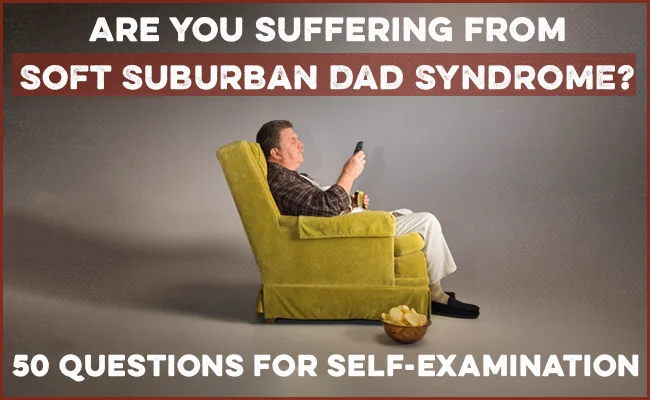
The phenomenon known as Soft Suburban Dad Syndrome (SSDS) represents a multifaceted decline in physical vigor, mental agility, and social engagement observed in men as they transition from early adulthood into the structured environments of domestic and professional life. While not a clinical diagnosis in the Diagnostic and Statistical Manual of Mental Disorders, the term encapsulates a documented sociological and physiological trend where the responsibilities of marriage, career, and child-rearing often coincide with a marked reduction in personal health maintenance and adventurous activity. Observations from social gatherings, such as high school reunions, frequently highlight a stark contrast between the aging trajectories of men and women, with a significant percentage of men exhibiting signs of sedentary lifestyle effects, including weight gain, decreased muscle mass, and a perceived loss of "edge" or vitality.
The Physiological Transition: From Vitality to Sedentary Stagnation
The physical manifestation of Soft Suburban Dad Syndrome is perhaps its most visible component. Research indicates that the decades following college graduation are often characterized by a steady decrease in physical activity and an increase in caloric intake. According to data from the Centers for Disease Control and Prevention (CDC), obesity rates among men aged 40 to 59 are significantly higher than those in their early 20s. This transition is often driven by the "time poverty" associated with middle-class domestic life, where professional obligations and family duties take precedence over exercise.
Physiologically, this period is marked by a natural decline in testosterone levels, which typically drop by about 1% to 2% annually after the age of 30. This hormonal shift, compounded by a lack of resistance training and poor sleep hygiene, leads to sarcopenia—the loss of skeletal muscle mass—and an increase in visceral fat. The "literal softness" mentioned by observers is the result of a feedback loop: as men become more sedentary, their metabolic health declines, making physical exertion feel more taxing, which in turn discourages further movement.
The implications of this physical decline extend beyond aesthetics. Studies in the British Journal of Sports Medicine have shown that functional strength markers, such as the ability to rise from the floor without using hands or maintaining a certain level of grip strength, are strong predictors of long-term mortality. When men lose the ability to perform basic physical tasks—such as pull-ups, sprints, or carrying their own body weight—they effectively reduce their "healthspan," the period of life spent in good health.
The Mental Petrifying Process: Stagnation of Thought and Curiosity
Parallel to the physical softening is a cognitive process that sociological analysts describe as "petrification." In the early stages of adulthood, individuals are typically exposed to a diverse array of ideas through higher education and the exploration of new social environments. However, as men settle into the routines of suburban life and specialized white-collar professions, their intellectual inputs often become restricted.
The transition from an "autodidact" or lifelong learner to a passive consumer of information is a hallmark of SSDS. This mental stagnation is often characterized by a reliance on algorithmic media feeds and a decrease in the consumption of challenging literature or complex philosophical discourse. Psychologists note that without the "cognitive friction" of learning new skills or engaging in deep reflection, the brain’s neuroplasticity decreases.
The loss of a creative outlet or a challenging hobby further exacerbates this condition. In a professionalized society, many men define themselves solely through their labor or their role as a provider, neglecting the "fire in the belly" that comes from personal growth and intellectual curiosity. This leads to a state of chronic boredom and a lack of purpose, which are key psychological indicators of the syndrome.
The Male Friendship Recession and Social Isolation
Perhaps the most overlooked aspect of Soft Suburban Dad Syndrome is the erosion of social networks. Sociologists have identified a "male friendship recession," noting that men are increasingly likely to report having no close friends. In youth, social circles are often organic, formed in schools, sports teams, or dormitories. In adulthood, these circles often collapse under the weight of "domesticating defaults."
Many men in the "suburban" phase of life rely almost exclusively on their spouses for emotional support and social interaction. While a strong marriage is a pillar of well-being, the absence of a "gang" or a peer group of men can lead to a loss of perspective and a decrease in healthy competition and accountability. The lack of "intentionality" in maintaining old friendships or forging new ones through shared activities leads to a fragile social existence. This isolation is linked to higher rates of depression and cardiovascular disease, as the Harvard Study of Adult Development has consistently shown that the quality of one’s relationships is the single greatest predictor of health and happiness in old age.
A 50-Question Diagnostic Framework for Self-Examination
To address the onset of Soft Suburban Dad Syndrome, health and wellness advocates suggest a rigorous process of self-examination. The following 50 questions serve as a diagnostic tool to help men identify where they have allowed the "domesticating defaults" to take hold.
Physical Health and Functional Capability
- Do you engage in at least 60 minutes of physical activity every day?
- Have you had your testosterone levels tested recently, and are they within a healthy range?
- Is your waist circumference greater than 40 inches?
- Can you hold a deep squat for 30 seconds?
- Can you hang from a pull-up bar for 30 seconds?
- Can you perform at least five strict pull-ups?
- Can you pick up your body weight and carry it for a significant distance?
- Can you perform a standing long jump equal to your own height?
- Can you bench press your own body weight?
- Can you deadlift 150% of your body weight?
- Can you get off the ground from a seated position without using your hands?
- What is the ratio of time spent watching sports versus playing or practicing them?
- When was the last time you reached a state of physical exhaustion that required you to put your hands on your knees?
- When was the last time you performed a full-effort sprint?
- When was the last time you crawled on the ground for a functional or fitness purpose?
- When was the last time you jumped onto or down from a significant height?
- When was the last time you climbed an object other than a ladder?
- When was the last time you performed an explosive movement, such as a kettlebell swing or plyometric jump?
- When was the last time you pushed through a weightlifting set when you felt you had nothing left?
- Do you spend at least one hour outdoors daily?
- When was the last time you exercised in a non-climate-controlled environment?
- When was the last time you swam in a natural body of water?
- How many miles did you walk over uneven, natural terrain in the last week?
- Could you walk 50 miles in a single day if required?
- When was the last time you intentionally sought out physical discomfort?
Mental Agility and Intellectual Growth
- How frequently do you experience a sense of chronic boredom?
- When was the last time you significantly changed your opinion based on new evidence?
- When was the last time you read a non-fiction book from cover to cover?
- When was the last time you engaged with a work of philosophy or ethics?
- When was the last time you finished a book that you found intellectually challenging?
- When was the last time you spent five minutes in silence, thinking deeply about a single idea?
- When was the last time you wrote for pleasure, such as a journal entry or an essay?
- When was the last time you acquired a completely new technical or manual skill?
- Do you maintain a hobby that is unrelated to your professional life?
- Do you engage in any form of creative expression (art, music, building)?
Social Connectivity and Community
- Have you maintained regular, meaningful contact with friends from your youth?
- When was the last time you contacted an old friend specifically to catch up?
- Do you have a local group of friends you can rely on for daily or weekly interaction?
- If you faced a personal crisis, do you have a friend (non-spouse) you could call?
- Are you a member of a formal or semi-formal group organized around a shared interest or activity?
Lifestyle and Risk Assessment
- When was the last time you took a calculated risk (financial, professional, or physical)?
- When was the last time you felt a genuine sense of nervous anticipation?
- When was the last time you embarked on a trip that could be classified as an adventure?
- Do you have a concrete plan for a future adventure or challenge?
- How many hours per day do you spend consuming content on a screen?
- How many practical survival or DIY skills can you perform competently?
- Are you burdened by an accumulation of material possessions, or do you live minimally?
- When was the last time you entered a competitive event (athletic, strategic, or professional)?
- Do you have clearly defined goals for the next one to five years?
- Do you possess a clear and articulated sense of your life’s purpose?
Analysis of Broader Implications and Long-term Impact
The prevalence of Soft Suburban Dad Syndrome has broader implications for public health and community stability. Men who maintain their physical and mental "edge" are more likely to remain productive members of the workforce longer, provide more stable support for their families, and require less medical intervention as they age. Conversely, the "softening" of the male population contributes to the rising costs of chronic lifestyle diseases, including Type 2 diabetes and hypertension.
Furthermore, the social isolation inherent in SSDS contributes to a decline in "social capital." When men retreat into their suburban enclaves and lose touch with broader social networks, the community structures that rely on male participation—such as local coaching, civic organizations, and mentorship programs—suffer.
Experts suggest that the "countervailing force" required to fight SSDS is intentionality. The transition into mature manhood does not require an abandonment of the "young buck" energy but rather its refinement. By staying physically capable, mentally curious, and socially active, men can navigate the seasons of life without falling into the stagnation of the "soft suburban" default. The goal is not to reclaim youth, but to maintain strength and vitality well into old age, ensuring that the fire in the belly remains lit long after the college years have faded.

0 Comments