
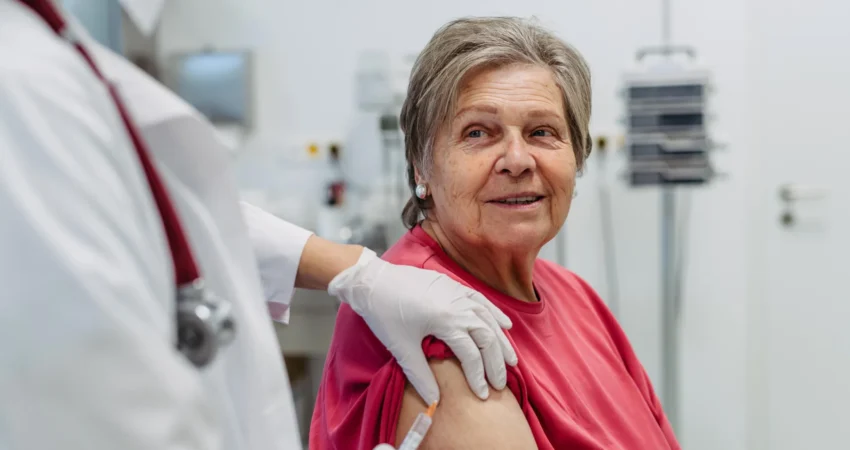
Older adults who received a shingles vaccine after entering a skilled nursing facility were less likely to be diagnosed with dementia over the following four years, according to a new study. Researchers found that vaccinated adults had a 24% lower risk of dementia compared with those who did not receive the vaccine. This finding, derived from an analysis of Medicare data and health records from over 500,000 individuals, suggests a potential neuroprotective benefit of the widely administered Shingrix vaccine, even in a vulnerable population.
Groundbreaking Study Reveals Potential Cognitive Benefits of Shingles Vaccination
A significant new study has unveiled a compelling association between receiving the recombinant shingles vaccine, known as RZV or Shingrix, and a reduced risk of dementia among older adults admitted to skilled nursing facilities. The research, published in the prestigious Annals of Internal Medicine, analyzed the health records of over half a million individuals aged 66 and older, providing crucial insights into the potential cognitive advantages of vaccination beyond its primary purpose of preventing shingles.
The study’s lead author, Kaley Hayes, an assistant professor at Brown University’s School of Public Health and associate director of pharmacoepidemiology for Brown’s Center for Gerontology and Healthcare Research, highlighted the unique focus of this investigation. "A lot of previous studies with similar results focused on an older vaccine," Hayes explained. "This study looks at the newest vaccine only in an older, vulnerable adult population who were not up to date with shingles vaccination and are at a very clear clinical point in care: entering a skilled nursing facility." This targeted approach allowed researchers to examine the impact of Shingrix in a population that may be at a higher risk for both shingles and cognitive decline.
The findings are particularly noteworthy as they align with and extend the implications of several earlier studies that observed a similar association between a previous shingles vaccine and a decreased risk of dementia. Hayes elaborated on this consistency, stating, "It fits into this large puzzle that’s just starting to come together that the vaccines are effective at preventing shingles and also appear to have neuroprotective benefits as well." This suggests that the benefits of shingles vaccination might extend beyond the prevention of the painful viral infection itself, potentially playing a role in safeguarding cognitive function.
Methodology: Emulating a Clinical Trial with Real-World Data
To conduct this extensive analysis, researchers employed a sophisticated statistical technique known as target trial emulation. This method is designed to approximate the conditions and rigor of a randomized clinical trial, particularly in situations where directly conducting such a trial is logistically challenging or ethically complex. By emulating a trial, the researchers aimed to establish a more robust comparison between vaccinated and unvaccinated individuals, accounting for potential confounding factors.
The dataset comprised Medicare claims and electronic health records from a vast cohort of individuals admitted to more than 5,500 skilled nursing facilities across the United States between 2017 and 2022. This period coincides with the introduction and widespread adoption of Shingrix, which became the only shingles vaccine available on the market in 2017. The study meticulously screened participants, including only those who were eligible for shingles vaccination and had no prior diagnosis of dementia.
Out of the 509,926 individuals included in the analysis, a subset of 8,843 participants received at least one dose of the Shingrix vaccine. The remaining individuals served as the unvaccinated control group. The researchers then tracked these participants for a period of four years, meticulously recording any new dementia diagnoses.
Key Findings: A Significant Reduction in Dementia Diagnoses
The results of the four-year follow-up were striking. Adults who had received at least one dose of the two-dose Shingrix regimen demonstrated a significantly lower incidence of dementia diagnoses. Specifically, dementia developed in 18.8% of the vaccinated participants, compared to a substantially higher rate of 24.6% among those who remained unvaccinated.
This translates to a 24% reduction in the risk of dementia among those who received the shingles vaccine. Hayes further quantified the potential impact, stating, "This translates to about one in 17 dementia cases potentially being prevented." This figure underscores the public health implications of the findings, suggesting that a readily accessible preventive measure could have a considerable effect on reducing the burden of dementia in an aging population.
Background: The Rise of Shingrix and Concerns Over Dementia
Shingles, also known as herpes zoster, is a painful rash caused by the reactivation of the varicella-zoster virus, the same virus that causes chickenpox. While most people recover from shingles, some can experience long-term complications, including postherpetic neuralgia (PHN), a persistent nerve pain. In recent years, there has been a growing awareness of potential links between viral infections and neurological conditions, including dementia.
The introduction of Shingrix in late 2017 marked a significant advancement in shingles prevention. Unlike its predecessor, Zostavax, Shingrix is a recombinant subunit vaccine that has demonstrated higher efficacy rates in preventing shingles and PHN, particularly in older adults. Its availability has led to increased vaccination rates for shingles, making it a widely used preventive measure for individuals aged 50 and over.
Concurrently, the global population is aging, and with it, the prevalence of age-related cognitive impairments and dementia, such as Alzheimer’s disease, has become a major public health concern. The search for effective preventive strategies and treatments for dementia is a critical area of medical research. Against this backdrop, the possibility that a vaccine primarily designed for shingles might offer ancillary benefits for cognitive health has garnered considerable scientific interest.
Limitations and Future Directions: Establishing Causality
Despite the robust nature of the study, the researchers acknowledge a crucial limitation: the observational design of the study means it cannot definitively prove a cause-and-effect relationship between Shingrix vaccination and reduced dementia risk. While the analysis adjusted for several potential confounding factors, such as age and underlying health conditions, residual biases may still exist.
Individuals who opt for vaccination may, on average, be slightly younger or healthier than those who do not, and these inherent differences could independently contribute to a lower risk of dementia. The study’s authors emphasize that further research, particularly well-designed clinical trials, is essential to confirm whether Shingrix vaccination directly mitigates the risk of developing dementia. Such trials would involve randomly assigning participants to receive either the vaccine or a placebo, providing a higher level of certainty in establishing causality.
Broader Implications: A Holistic Approach to Health
The findings from this study carry significant implications for public health policy and individual health decisions. They suggest that preventive measures, like vaccination, might offer a more holistic approach to health than previously understood, impacting not only the prevention of infectious diseases but also contributing to the preservation of cognitive function.
"Our cognition is so tied to our overall health and what happens to us physically," Hayes remarked. "It’s really amazing to see that something that’s supposed to prevent a physical ailment can also help keep our brain healthy, too." This perspective underscores the intricate connection between physical well-being and cognitive health, suggesting that interventions supporting one can positively influence the other.
The fact that Shingrix is already widely accessible and recommended for older adults further amplifies the potential impact of these findings. If confirmed by future research, promoting shingles vaccination could become an indirect strategy for dementia prevention, contributing to improved quality of life for millions of older adults.
Funding and Transparency
The study authors disclosed that they received funding from GlaxoSmithKline, the manufacturer of Shingrix. They were careful to note that the company had no involvement in the study’s design, the analysis of the data, or the decision to publish the results, ensuring the integrity and independence of the research. This transparency is crucial in scientific reporting, particularly when commercial entities are involved in the funding.
In conclusion, this study provides compelling evidence of a potential link between Shingrix vaccination and a reduced risk of dementia in a vulnerable older adult population. While further research is needed to establish causality, the findings are promising and highlight the potential for vaccines to offer multifaceted health benefits that extend beyond their primary indications. The results encourage continued investigation into the neuroprotective effects of vaccinations and underscore the importance of staying up-to-date with recommended immunizations for overall health and well-being.

0 Comments