
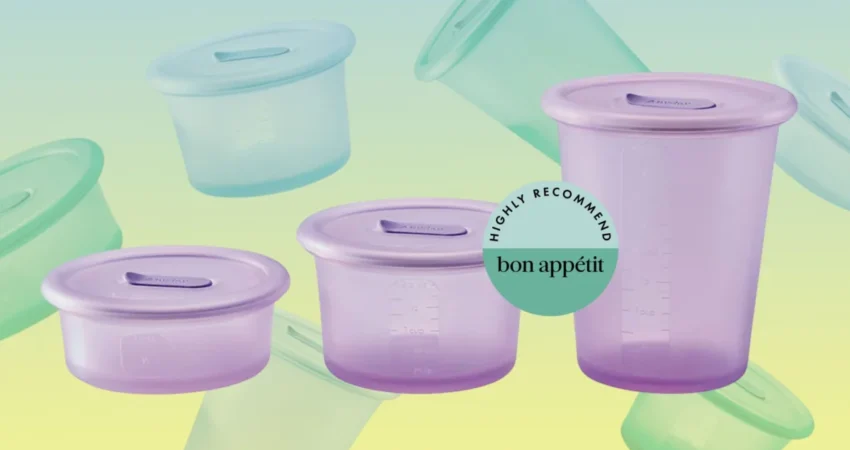
The humble deli container, a staple in kitchens worldwide, is undergoing a significant transformation. These clear, cylindrical plastic vessels, often associated with storing everything from bagel schmears and pasta salads to more impromptu beachside beverages, have long been lauded for their convenience and affordability. Their widespread use in commercial food service has cemented their presence in the cabinets of countless home cooks and food professionals alike. However, a closer examination of their design, particularly their cylindrical shape and universally fitting lids, reveals a functional elegance that sets them apart from many other reusable food storage options. This inherent practicality has now inspired a novel approach to food preservation with the introduction of Anydeli containers, silicone food storage solutions that meticulously replicate the classic deli container aesthetic while addressing its inherent limitations.
The concept behind Anydeli containers emerged from a desire to bridge the gap between the beloved form factor of traditional deli containers and the growing demand for sustainable, long-lasting food storage alternatives. While the original plastic deli containers have served their purpose for decades, their single-use or limited reusability nature has become increasingly scrutinized in an era focused on waste reduction and environmental consciousness. The typical lifecycle of a plastic deli container is often short-lived. They are prone to degradation, especially when subjected to the rigors of dishwashers and microwaves – practices generally advised against by manufacturers for extending their lifespan, yet common in busy kitchens. This fragility leads to cracking, warping, and a diminished sealing capacity over time, ultimately contributing to landfill waste.
The development of Anydeli containers by Anyday aims to provide a durable, reusable counterpart that retains the beloved operational characteristics of their plastic predecessors. The initial reception within the culinary community, particularly among food editors and enthusiasts, has been overwhelmingly positive. Upon their introduction, the Anydeli containers quickly garnered attention for their ingenious design, sparking a palpable enthusiasm and even friendly competition among those eager to test their efficacy in real-world kitchen environments.
Design and Functionality: A Familiar Form, Enhanced Performance
Anydeli containers are designed to mirror the familiar three standard sizes of traditional deli containers: half-pint, pint, and quart. This thoughtful sizing ensures a seamless transition for users accustomed to the dimensions of their plastic counterparts. A key innovation lies in the integration of an embedded steel rim. This seemingly minor addition provides a crucial element of structural integrity, imbuing the silicone containers with a sturdiness that resists deformation and maintains their shape, even when filled. This feature directly addresses a common complaint with some silicone containers, which can feel flimsy or prone to collapsing under pressure.
Furthermore, Anydeli containers incorporate volumetric measurements etched onto their sides. This practical enhancement elevates their utility beyond mere storage, offering a convenient tool for precise portioning and ingredient preparation, a feature often absent in conventional deli containers.

Sealing Capabilities: Challenging Silicone’s Limitations
A persistent challenge with silicone food storage containers has been their ability to achieve a truly airtight and watertight seal, particularly when storing liquids. This has historically made them a somewhat uncertain choice for transporting soups or sauces. However, Anydeli containers appear to have successfully overcome this hurdle. Rigorous testing, including inverting and squeezing the containers while filled with water, demonstrated an impressive seal integrity. Neither the steam vent nor the sides yielded any leaks, suggesting a robust and reliable closure mechanism that significantly reduces the risk of spills. This level of performance rivals, and in some cases surpasses, that of many traditional rigid plastic containers.
Freezer Performance: A Superior Alternative
The Anydeli containers also present a distinct advantage over conventional deli containers when it comes to freezer storage. Traditional plastic deli containers, when exposed to freezing temperatures, can become brittle. This brittleness makes them susceptible to cracking or bulging, particularly when filled to capacity with items like marinara sauce, leading to potential product loss and increased waste. The flexible nature of the silicone Anydelis, on the other hand, allows them to comfortably accommodate the expansion of frozen contents. Their inherent elasticity provides a more forgiving and resilient solution for long-term freezer preservation.
Material Considerations: Stain Resistance and Aesthetics
Like all silicone products, Anydeli containers are susceptible to staining from highly pigmented foods, such as turmeric or intensely colored sauces. While a cycle through the dishwasher can often mitigate discoloration, some permanent staining may occur over time. For instance, the clear pint-sized containers used for prepping lunches, when repeatedly exposed to spicy tofu scrambles, developed a slightly sallow hue. However, the article’s author notes that once food is placed inside, the discoloration becomes virtually unnoticeable. For consumers who prioritize pristine aesthetics, Anyday offers a range of colorful variations that effectively mask any subtle tinges, ensuring visual appeal alongside functionality.
Storage and Labeling: Minor Inconveniences Addressed
While the Anydeli containers excel in many areas, there are a couple of minor considerations regarding their storage and labeling. Unlike many rigid plastic containers that can be neatly nested for compact storage, the Anydelis do not stack in the same space-efficient manner. Additionally, adhesive tapes do not adhere well to the silicone surface. However, a practical workaround has been identified: permanent markers can be used directly on the containers, and the markings can be easily scrubbed off with soap and a sponge. This simple yet effective solution facilitates labeling and identification without the need for special stickers.
A Strategic Investment for the Conscious Consumer
For professional chefs or individuals who rely on vast quantities of disposable deli containers daily, the Anydeli containers might represent a significant upfront investment and a bulkier storage solution than their disposable counterparts. In such high-volume scenarios, a complete transition might not be immediately feasible or cost-effective. However, for the home cook, the "casual deli container appreciator," or anyone seeking a more robust and environmentally responsible alternative to single-use plastics, the Anydeli containers emerge as an exceptionally compelling solution. Their durability, reusability, and enhanced performance characteristics offer a sustainable and practical upgrade, aligning with a growing consumer desire for products that are both functional and mindful of their environmental footprint. The evolution from disposable plastic to durable silicone represents a tangible step forward in kitchenware, demonstrating that cherished design principles can indeed be reimagined for a more sustainable future.

0 Comments