
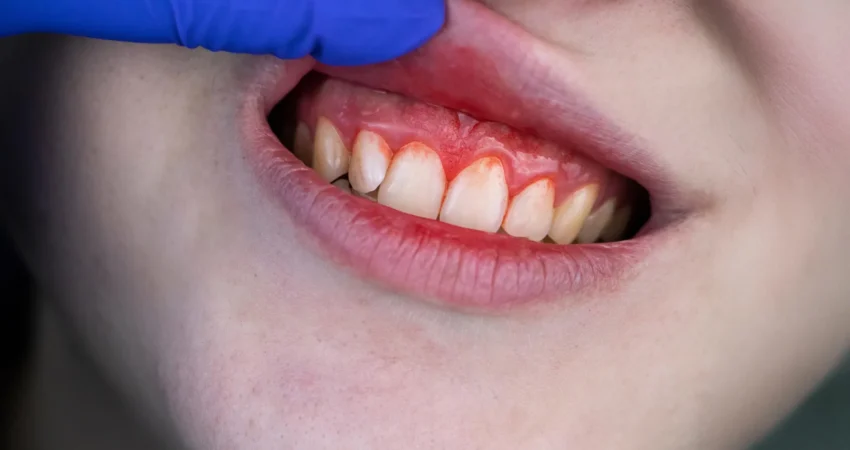
A groundbreaking yearlong study has revealed that a combination therapy of omega-3 fatty acids and low-dose acetylsalicylic acid (ASA), commonly known as aspirin, performed comparably to antibiotics in treating severe periodontitis. This finding, published in the prestigious Journal of Periodontology, opens a significant new avenue for therapeutic intervention, potentially reducing reliance on antibiotics and addressing the growing global threat of antimicrobial resistance.
The research, a collaborative effort involving esteemed institutions such as Albert Einstein Israelite Hospital, Guarulhos University (UNG), the University of Taubaté (UNITAU), and the Ribeirão Preto School of Dentistry at USP (FORP-USP) in Brazil, alongside Harvard University in the United States, offers a beacon of hope for patients suffering from this debilitating oral condition. The implications of these findings are far-reaching, suggesting a future where the judicious use of antibiotics for severe periodontitis can be re-evaluated, preserving these vital medications for situations where they are truly indispensable.
Understanding the Devastation of Severe Periodontitis
Periodontitis, a chronic inflammatory disease, arises from the accumulation of bacteria beneath the gumline. When left unchecked, this bacterial onslaught triggers an immune response that progressively damages the delicate tissues supporting the teeth. In its advanced stages, severe periodontitis can lead to the destruction of the alveolar bone, the loosening of teeth, and ultimately, irreversible tooth loss. This condition affects millions worldwide, impacting not only oral health but also potentially contributing to systemic health issues.
"Patients with severe disease present with very deep periodontal pockets, which effectively serve as reservoirs for the bacteria implicated in the disease’s progression," explained Dr. Nádia Cristina Castro dos Santos, the study’s first author and a professor and researcher at Einstein. "It is a profoundly challenging condition to manage effectively." The economic and social burden of untreated or poorly managed periodontitis is substantial, encompassing the costs of restorative dental work, compromised nutritional intake due to difficulty chewing, and diminished quality of life.
The research was generously supported by FAPESP, a prominent Brazilian funding agency, through projects 20/05874-2 and 20/05875-9, underscoring the commitment to advancing scientific understanding and clinical application in critical health areas.
A Rigorous Comparative Study Design
To rigorously assess alternative treatment strategies, researchers enrolled 109 individuals diagnosed with advanced periodontitis. These participants were followed meticulously over a 12-month period. The study employed a randomized controlled trial design, dividing participants into four distinct groups.
All participants underwent subgingival instrumentation, a fundamental procedure commonly referred to as scaling. This essential step involves the professional removal of bacterial deposits, plaque, and calculus from below the gumline, a cornerstone of periodontal therapy. However, the divergence among the groups lay in the adjunctive treatments they received following the initial scaling.
- Group 1: The Placebo Control Group: This group received placebo versions of all active treatments. They were given capsules designed to mimic antibiotics, omega-3 supplements, and ASA, ensuring that any observed effects were attributable to the active ingredients rather than the psychological impact of receiving treatment.
- Group 2: The Antibiotic Group: This group was administered a 14-day course of a potent antibiotic combination: metronidazole and amoxicillin. This regimen is recognized for its efficacy in managing severe periodontal infections and is supported by a considerable body of scientific evidence. The antibiotics were prescribed to be taken three times daily.
- Group 3: The Omega-3 and ASA Group: Participants in this arm of the study received a daily regimen of three grams of omega-3 fatty acids supplemented by a daily low-dose of aspirin for a duration of six months. This approach aimed to investigate the anti-inflammatory and tissue-healing potential of these compounds.
- Group 4: The Combined Therapy Group: This group received a hybrid treatment protocol, encompassing the 14-day antibiotic course for severe infection control, alongside the six-month regimen of omega-3 and ASA. This group was designed to determine if combining antibiotics with the omega-3/ASA therapy yielded superior outcomes.
The study’s comprehensive timeline involved re-evaluating participants at three, six, and twelve months post-intervention. This longitudinal approach was crucial for assessing the sustained effectiveness of each treatment strategy and observing any long-term changes in periodontal health.
Surprising Equivalence: Omega-3 and Aspirin Rival Antibiotics
The results at the one-year mark were nothing short of remarkable. The primary clinical endpoint established by the researchers was achieving a state with no more than four remaining deep periodontal pockets, indicative of significant disease control.
In the group treated with antibiotics, approximately 58% of patients met this crucial clinical target. In a striking parallel, the group receiving the combination of omega-3 and low-dose ASA achieved a nearly identical success rate, with 57.7% of participants reaching the same goal. This equivalence between a well-established antibiotic protocol and the novel omega-3/ASA regimen is a pivotal finding, suggesting that the latter can serve as a viable alternative.
In stark contrast, the control group, which received only scaling and placebo, demonstrated a significantly lower success rate, with only 23.1% of participants meeting the clinical objective. This highlights the inadequacy of scaling alone for managing severe periodontitis and underscores the need for adjunctive therapies.
Perhaps one of the most intriguing outcomes was the observation that the combined therapy group, which received both antibiotics and the omega-3/ASA regimen, did not exhibit any additional benefit compared to either strategy employed individually. This suggests that the benefits observed in the omega-3/ASA group were robust enough to match the antibiotic intervention, and that adding antibiotics to this regimen did not confer further advantages in this specific context.
"The use of antibiotics is not universally considered the gold standard of treatment, especially when considering long-term management," Dr. Castro dos Santos elaborated. "While metronidazole and amoxicillin demonstrably yield positive outcomes in the most severe instances, their application warrants careful, individualized assessment due to the escalating risks associated with bacterial resistance and the potential for adverse side effects."
Building on Precedent: The Anti-Inflammatory Power of Omega-3
This recent study’s findings are not emerging in a vacuum. They are grounded in a growing body of research that has explored the intricate relationship between omega-3 fatty acids and inflammatory processes, particularly in the context of periodontal disease.
Previous research, also supported by FAPESP and published in Scientific Reports, investigated the effects of omega-3 supplementation in an animal model. In that study, omega-3 supplementation demonstrably reduced inflammation and bone loss associated with periodontal disease in rats. The effect was even more pronounced when the supplementation was paired with physical exercise. While this animal study could not directly translate to human efficacy, it provided compelling biological plausibility for omega-3’s role in modulating the inflammatory pathways involved in oral health conditions.
A Novel Mechanism: Resolving Inflammation and Promoting Repair
The scientific rationale behind the omega-3 and ASA combination lies in their distinct yet complementary mechanisms of action. Unlike conventional anti-inflammatory medications that primarily block specific inflammatory pathways, omega-3 fatty acids are believed to play a more sophisticated role. They are precursors to specialized pro-resolving mediators (SPMs), molecules that actively help the body to naturally terminate inflammatory responses and initiate tissue repair processes.
Low-dose acetylsalicylic acid was incorporated into the treatment regimen because it can enhance the production of these inflammation-resolving molecules. The researchers hypothesized that by combining omega-3 with ASA, they could empower the body’s own regulatory systems to gain superior control over the persistent inflammation characteristic of periodontitis.
"Our initial hypothesis was that a combination of antibiotics and omega-3 would prove most effective in controlling periodontitis in these patients," Dr. Castro acknowledged. "We also anticipated that the outcomes for the omega-3 and ASA group might be slightly less favorable than those observed in the antibiotic group. The result was truly surprising, as the two therapeutic approaches performed virtually identically. This finding has paved the way for this combination to be considered a legitimate treatment option for these patients."
Enduring Benefits: A Lasting Impact Beyond Treatment
Beyond the immediate therapeutic success, the researchers were particularly impressed by the longevity of the observed benefits. Participants who had received the omega-3 and ASA therapy continued to exhibit periodontal health markers comparable to those recorded at the end of the treatment period, even six months after supplementation had ceased.
This sustained effect suggests that interventions that modify the body’s fundamental inflammatory response might confer more enduring benefits than therapies that merely suppress acute symptoms. Dr. Castro noted that the persistence of these positive outcomes is an active area of ongoing investigation, with researchers keen to unravel the precise biological mechanisms responsible for this long-term efficacy.
Dr. Magda Feres, the study’s lead author and a distinguished full professor at the Harvard School of Dental Medicine and the Graduate Program in Dentistry at UNG, emphasized the significance of targeting the inflammatory response. "The combination of omega-3 and low-dose aspirin achieved clinical benefits comparable to those of the metronidazole and amoxicillin protocol, thereby presenting a genuine alternative for individuals who cannot tolerate antibiotics, particularly those with allergies or intolerance to these medications," she stated.
Addressing the Antimicrobial Resistance Crisis
The potential to effectively manage severe periodontitis without resorting to antibiotics carries immense public health significance. Antimicrobial resistance (AMR) is recognized as one of the most formidable threats to global health in the 21st century. The relentless exposure of bacteria to antibiotics drives the evolution of resistant strains, rendering common infections increasingly difficult, and sometimes impossible, to treat. Reducing the unnecessary use of antibiotics is therefore a critical public health imperative.
"Demonstrating that it is possible to treat severe periodontitis by modulating the body’s intrinsic inflammatory response is a novel and highly relevant finding," Dr. Feres remarked. "This research contributes to the vital effort of preserving antibiotics for situations where they are truly indispensable."
The Path Forward: Cautious Optimism and Further Research
Despite the highly promising results, the researchers are judicious in their recommendations. They strongly caution against viewing omega-3 and aspirin as an immediate, routine substitute for antibiotics in all cases of severe periodontitis. The clinical trial, while robust, was conducted on a specific cohort of patients who did not present with significant co-existing systemic or oral diseases.
Further extensive research is imperative to validate these findings across broader and more diverse patient populations. Future studies will need to elucidate which specific patient profiles are most likely to derive the greatest benefit from each treatment strategy, and to define clear diagnostic and prognostic indicators for guiding therapeutic choices.
Additionally, the research team is actively conducting detailed microbiological analyses to gain a deeper understanding of the microbial shifts occurring within periodontal pockets during treatment. Preliminary findings from these analyses suggest that the omega-3 and ASA therapies may not only reduce the prevalence of bacterial species associated with periodontal disease but also promote the growth of microorganisms linked to a healthier oral microbiome.
"This represents a significant step forward, but it is by no means the definitive conclusion," Dr. Feres concluded. "Therefore, the overarching message is one of cautious optimism. We now have a promising, scientifically plausible alternative to antibiotics in select cases. However, its widespread adoption as a routine replacement will necessitate the accumulation of more comprehensive evidence." The journey from promising discovery to established clinical practice is often a long one, but this study has undeniably charted a compelling new course in the management of severe periodontitis.

0 Comments