
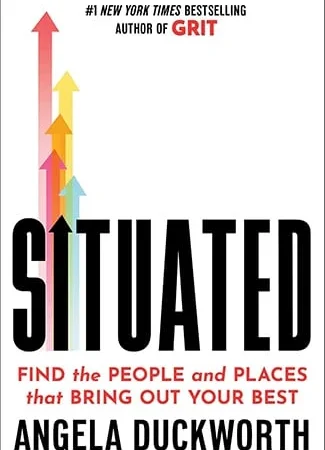
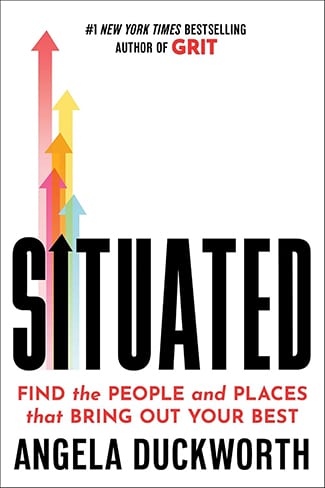
Angela Duckworth, a professor of psychology at the University of Pennsylvania and a MacArthur Fellow, has long been synonymous with the concept of "grit." Her 2016 bestseller defined achievement as the result of passion and perseverance. However, in a significant shift of focus that reflects a growing consensus in behavioral science, Duckworth’s recent work—highlighted in her latest book, Situated: Find the People and Places That Bring Out Your Best—posits that internal fortitude is only one piece of the success puzzle. Her latest research suggests that the environments individuals inhabit—ranging from their immediate physical workspace to their broader social circles and even their geographic locations—play a primary role in determining behavior and long-term outcomes.
During a recent discussion on the Art of Manliness podcast, Duckworth detailed the "three-box model" of behavior, a framework that de-emphasizes the traditional reliance on willpower. This paradigm shift suggests that to change the self, one must first change the "situation." This approach aligns with modern psychological theories that view human behavior as a response to external cues rather than a purely internal drive. The implications of this research are vast, affecting how individuals approach self-improvement, how parents raise children, and how policymakers design communities to foster upward mobility.
The Evolution of Grit: From Internal Drive to External Design
For over a decade, Duckworth’s research focused on why some people succeed while others of equal intelligence fail. Her conclusion was "grit," a trait-based explanation for success. Yet, as her research progressed, she observed that even the grittiest individuals struggle when placed in environments that actively work against their goals. This realization led to the development of the "situational" perspective.
The core of Duckworth’s new thesis is that willpower is a limited and fallible resource. While many people believe that self-control is a muscle that can be strengthened, Duckworth argues that the most successful people are not those with the strongest willpower, but those who structure their lives so they do not have to use willpower in the first place. By altering the situation, individuals can automate "good" behaviors and create friction for "bad" ones.
The Three-Box Model of Behavior
To explain how environments dictate actions, Duckworth utilizes the "three-box model," a simplified representation of the psychological process:
- The Situation (The External): This includes everything outside the person—the physical space, the people present, the available tools, and the cultural norms.
- The Person (The Internal): This represents the individual’s thoughts, feelings, and biological predispositions.
- The Behavior (The Action): This is the resulting movement or decision.
Traditional self-help focuses almost exclusively on the middle box—the person. It encourages people to "think differently" or "want it more." Duckworth argues that this is the most difficult path to change. Instead, by modifying the first box (the situation), the second box (the person’s internal state) changes naturally, leading to a frictionless change in the third box (the behavior).
For example, if an individual wishes to eat healthier, the "grit" approach is to stare at a bowl of cookies and use mental energy to resist them. The "situational" approach is to remove the cookies from the house entirely. In the latter scenario, the person does not need to exercise willpower because the stimulus for the unwanted behavior has been removed.
Chronology of the Situational Shift in Psychology
The transition from trait-based psychology to situational psychology has been building for decades, and Duckworth’s work represents a culmination of several key movements:
- 1930s-1940s: Kurt Lewin, often recognized as the father of social psychology, proposed the equation $B = f(P, E)$, meaning Behavior is a function of the Person and their Environment.
- 1960s-1970s: The "Person-Situation Debate" emerged in psychology, with researchers like Walter Mischel questioning the consistency of personality traits across different contexts.
- 2008: The publication of Nudge by Richard Thaler and Cass Sunstein introduced "choice architecture," showing how small environmental tweaks (like placing fruit at eye level in a cafeteria) can significantly alter public health outcomes.
- 2016-2023: Duckworth’s work on grit dominated the conversation, but critics pointed out that socioeconomic factors (the situation) were often more predictive of success than character traits.
- 2024-2026: Duckworth integrates these critiques into her "situational" framework, moving toward a holistic view of achievement that balances character with context.
Supporting Data: The Power of Environment
The data supporting situational influence is robust across various fields of study. Research in social contagion, for instance, has shown that behavior is "infectious" within social networks. A landmark study published in the New England Journal of Medicine found that a person’s chances of becoming obese increased by 57% if they had a friend who became obese. Similar patterns have been found regarding smoking cessation, happiness, and even career ambition.
Furthermore, data from the "Opportunity Atlas," a project by Harvard economist Raj Chetty, demonstrates the profound impact of geography. The research shows that children who move from a low-opportunity zip code to a high-opportunity zip code at a young age see significant increases in their lifetime earnings and college attendance rates. This suggests that the "situation" of a neighborhood—its schools, its safety, and its social capital—can be more influential than an individual’s innate "grit."
In the realm of habit formation, studies have shown that environmental cues are the primary triggers for 40% to 45% of daily activities. When the environment remains stable, habits are easy to maintain. When the environment changes (e.g., moving to a new city), people experience a "habit discontinuity," which provides a rare window of opportunity to reset behaviors without the usual resistance from old environmental cues.

Practical Applications: Shaping the Surroundings
Duckworth emphasizes that situational changes can happen at various scales. She categorizes these into three levels of intervention:
Micro-Situations: The Immediate Space
This involves small-scale changes to one’s physical environment. For a student, this might mean keeping a phone in another room during study sessions. For an office worker, it might mean standing at a desk to increase alertness. These "micro-nudges" reduce the cognitive load required to make the "right" choice.
Meso-Situations: The Social Circle
The people we surround ourselves with act as a "social thermostat." Duckworth notes that we unconsciously mimic the behaviors and standards of our peers. If a person joins a running club, they are likely to start viewing long-distance running as a normal, baseline activity. Conversely, if one’s social circle prioritizes late-night drinking, maintaining a rigorous fitness schedule becomes a constant uphill battle against social friction.
Macro-Situations: The Geography of Opportunity
The most drastic, yet often most effective, situational change is moving. This could mean moving to a city with a better job market, a neighborhood with more parks, or a country with a different cultural attitude toward work-life balance. While not everyone has the means to move, Duckworth argues that acknowledging the impact of location is essential for understanding why some people thrive while others remain stagnant despite equal effort.

Reactions and Broader Implications
The shift toward situational psychology has been met with both acclaim and critical analysis within the academic community. Dr. James Gross, a psychologist at Stanford University and a frequent collaborator with Duckworth, has noted that "situation selection" is one of the most effective forms of emotion regulation. By choosing which situations to enter, individuals can preemptively manage their stress and productivity levels.
However, some sociologists caution that an overemphasis on "changing your situation" might overlook the systemic barriers that prevent many people from having agency over their environments. They argue that for those living in poverty or under-resourced areas, the "situation" is not something that can be easily rearranged.
In response, Duckworth’s work has begun to influence policy discussions. If environment is a primary driver of success, then "grit" should not be the only thing taught in schools. Instead, institutions should focus on creating "high-friction" environments for negative behaviors and "low-friction" environments for positive ones. This includes urban planning that encourages walking, school designs that foster mentorship, and corporate cultures that prioritize deep work over constant digital interruptions.
Conclusion: The Future of Self-Improvement
The transition from "Grit" to "Situated" represents a maturing of the self-improvement genre. It moves away from the "heroic" model of success—where a lone individual overcomes all odds through sheer force of will—toward a "design" model of success. In this new framework, the individual is an architect of their own circumstances.

As Duckworth concludes in her latest research, the most important skill an individual can develop is not just the ability to persist, but the wisdom to recognize when a situation is no longer serving them. Whether it is a cluttered desk, a toxic friend group, or a stagnant town, the path to a better self almost always begins with a change in the world around us. By understanding the invisible forces of our environment, we can stop fighting ourselves and start designing a life where success is the natural, inevitable outcome.

0 Comments