
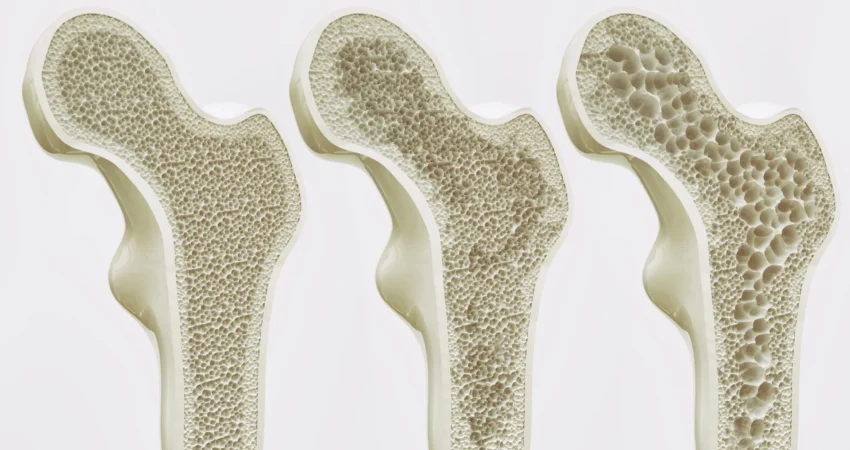
Researchers at Flinders University in Australia have unveiled significant new findings suggesting a nuanced relationship between habitual coffee and tea consumption and bone health in older women. The decade-long study, published in the prestigious journal Nutrients, analyzed data from nearly 10,000 women aged 65 and above, specifically examining how regular intake of these popular beverages correlated with changes in bone mineral density (BMD), a critical indicator for assessing the risk of osteoporosis.
Osteoporosis, a pervasive global health challenge, disproportionately affects women, with approximately one in three women over the age of 50 experiencing this debilitating condition. The disease is a primary driver of millions of fractures annually, leading to significant morbidity, mortality, and economic burden. Given the ubiquitous nature of coffee and tea consumption worldwide, with billions of individuals partaking daily, even subtle impacts on bone health can have far-reaching public health implications. Previous scientific investigations into this association have yielded inconsistent results, and the current study distinguishes itself through its extensive 10-year longitudinal design, offering a more robust understanding of these beverage-bone health dynamics over an extended period.
Unraveling the Link: Coffee, Tea, and Bone Density Over a Decade
The Flinders University research team meticulously analyzed data drawn from the renowned Study of Osteoporotic Fractures (SOF). This comprehensive dataset allowed researchers to track participants’ beverage consumption habits and simultaneously measure their bone mineral density. The focus was placed on two key skeletal sites – the total hip and the femoral neck – both of which are strongly associated with fracture risk in older adults.
Over the 10-year duration of the study, participants consistently reported their daily coffee and tea intake. Concurrently, advanced imaging techniques were employed to precisely monitor any fluctuations or changes in their bone density. This dual approach of self-reported behavioral data and objective physiological measurements provided a comprehensive picture of the potential interactions between these beverages and skeletal integrity.
The analysis revealed a statistically significant, albeit modest, positive association between tea consumption and bone health. Women who regularly drank tea exhibited slightly higher total hip BMD compared to their non-tea-drinking counterparts. While the magnitude of this difference might appear small on an individual level, its statistical significance underscores its potential importance when extrapolated across vast populations.
Adjunct Associate Professor Enwu Liu from Flinders University’s College of Medicine and Public Health commented on the broader implications of these findings: "Even small improvements in bone density can translate into fewer fractures across large groups. This suggests that a simple, widely accessible beverage like tea could play a supportive role in mitigating fracture risk in older women."
The Complex Relationship: Coffee Consumption and Bone Health
The association between coffee consumption and bone health presented a more intricate and dose-dependent pattern. Moderate coffee intake, defined in the study as approximately two to three cups per day, did not appear to be associated with any detrimental effects on bone health. This finding aligns with some previous research, suggesting that for a significant portion of the population, typical coffee consumption poses no immediate threat to skeletal integrity.
However, the study identified a concerning trend among women who consumed very high quantities of coffee. Those who reported drinking more than five cups per day exhibited lower BMD. This observation strongly suggests that excessive coffee intake could have negative consequences for bone density in older women, potentially increasing their susceptibility to fractures.
Furthermore, the research indicated that the influence of coffee and tea on bone health might be modulated by other concurrent health and lifestyle factors. The negative impact of high coffee consumption appeared to be more pronounced in women with a history of higher lifetime alcohol consumption. Conversely, the potential benefits of tea consumption were found to be more evident among women who were classified as having obesity. These findings highlight the complex interplay of various dietary and lifestyle elements in determining skeletal health outcomes.
Ryan Liu, a co-author of the study and a researcher at Flinders University, provided insight into the potential biological mechanisms at play. He suggested that catechins, a class of potent antioxidants abundantly found in tea, may play a role in promoting bone formation and inhibiting bone resorption. "Compounds like catechins are thought to influence the delicate balance of bone remodeling," Liu explained.
In contrast, the impact of coffee, particularly its caffeine content, warrants careful consideration. "Coffee’s caffeine content, by contrast, has been shown in laboratory studies to interfere with calcium absorption and bone metabolism," Ryan Liu stated. "However, it is important to note that these effects are generally small and can often be offset by the addition of milk, which provides calcium." This observation emphasizes the importance of dietary context when evaluating the effects of coffee.
A Potential Boon from Daily Tea Consumption
The study’s findings strongly suggest that the regular consumption of tea could represent a simple and accessible strategy for supporting bone health in later life. Adjunct Associate Professor Enwu Liu reiterated this point, stating, "The findings suggest that regularly drinking tea could offer a simple way to support bone health later in life."
However, he cautioned against drawing overly broad conclusions regarding coffee. "While moderate coffee drinking appears safe, very high consumption may not be ideal, especially for women who drink alcohol," he advised. This nuanced perspective underscores the importance of personalized health advice based on individual consumption patterns and other health factors.
It is crucial to emphasize that the observed differences in BMD between beverage consumers were modest. While statistically significant, these variations were not substantial enough to warrant drastic changes to an individual’s established daily habits. The researchers were keen to temper expectations and prevent misinterpretation of their findings.
"Our results don’t mean you need to give up coffee or start drinking tea by the gallon," Associate Professor Liu clarified. "But they do suggest that moderate tea consumption could be one simple way to support bone health, and that very high coffee intake might not be ideal, especially for women who drink alcohol."
The researchers concluded by reinforcing the foundational elements of bone health while acknowledging the potential role of dietary choices. "While calcium and vitamin D remain cornerstones of bone health, what’s in your cup could play a role too. For older women, enjoying a daily cup of tea may be more than a comforting ritual; it could be a small step toward stronger bones," he concluded.
Broader Implications and Future Directions
The implications of this research extend beyond individual dietary choices, potentially influencing public health recommendations and the development of targeted interventions. Given the global prevalence of osteoporosis and the widespread consumption of coffee and tea, even minor dietary adjustments could yield significant public health benefits over time.
The study’s longitudinal design, spanning a full decade, is a critical strength that allows for the observation of long-term associations rather than mere correlations. This methodology is particularly valuable in understanding chronic disease development and the cumulative effects of lifestyle factors. The SOF study, which provided the data for this research, has been a cornerstone in understanding osteoporosis for decades, involving numerous participants and rigorous data collection protocols.
Timeline of Key Developments:
- 1985: The Study of Osteoporotic Fractures (SOF) is initiated, a prospective cohort study designed to investigate risk factors for osteoporosis and fractures in older women.
- Early 2000s: Data collection for the SOF study continues, including detailed questionnaires on lifestyle habits, dietary intake, and regular bone mineral density measurements.
- 2010s: Researchers at Flinders University begin to analyze the extensive SOF dataset, focusing on the long-term impact of beverage consumption on bone health.
- Present: The Flinders University team publishes their findings in the journal Nutrients, presenting a decade-long analysis of coffee and tea consumption and its association with BMD in older women.
The findings underscore the importance of a holistic approach to bone health management. While calcium and vitamin D supplementation and adequate physical activity remain paramount, the subtle influences of dietary components like coffee and tea should not be overlooked, particularly for vulnerable populations like postmenopausal women.
Future research could delve deeper into the specific compounds within tea and coffee that mediate these effects, as well as explore the impact of different preparation methods and the inclusion of other ingredients, such as milk or sugar. Investigating these beverages’ effects in diverse demographic groups, including men and younger populations, would also provide a more comprehensive understanding of their role in skeletal health.
The acknowledgement of funding from the National Institute on Aging (NIA) and the National Institute of Arthritis and Musculoskeletal and Skin Diseases (NIAMS) highlights the significant investment in research aimed at understanding and combating osteoporosis, a condition that continues to pose a substantial threat to the well-being of aging populations worldwide.
The paper, titled ‘Longitudinal Association of Coffee and Tea Consumption with Bone Mineral Density in Older Women: A 10-Year Repeated-Measures Analysis in the Study of Osteoporotic Fractures,’ authored by Ryan Yan Liu and Enwu Liu, represents a significant contribution to the ongoing scientific discourse on diet and bone health. Its findings offer valuable insights that can inform both individual lifestyle choices and broader public health strategies aimed at promoting healthier aging.

0 Comments