
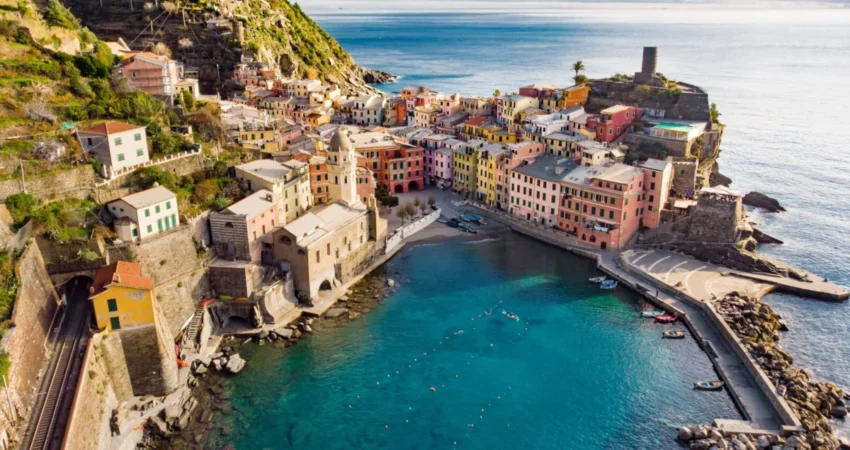
Italy’s geographic profile is defined by its extensive 7,600-kilometer coastline, a feature that has shaped the nation’s economic, cultural, and social fabric for millennia. While the traditional "Golden Triangle" of Italian tourism—comprising Rome, Florence, and Venice—continues to attract the highest volume of international arrivals, a significant strategic shift is occurring as travelers and policymakers increasingly prioritize coastal regions. From the rugged cliffs of Liguria to the azure waters of Sicily and the Adriatic seaboard, Italy’s coastal towns represent a vital segment of the country’s "Blue Economy," blending ancient maritime heritage with modern luxury infrastructure. This transition reflects a broader global trend toward experiential travel, where the allure of the Mediterranean lifestyle, or la dolce vita, serves as a primary driver for regional development and international investment.

The Shift in Italian Tourism Paradigms
Historically, the Italian tourism model was anchored in the preservation and exhibition of Renaissance and Roman heritage found in landlocked or lagoon-based urban centers. However, recent data from the Italian National Institute of Statistics (ISTAT) and the Ministry of Tourism indicate a growing diversification. Coastal municipalities now account for a substantial portion of the nation’s overnight stays, particularly during the second and third quarters of the fiscal year. This shift is not merely seasonal; it represents a fundamental re-evaluation of Italy’s maritime assets.

Coastal towns are categorized into two distinct tiers: world-renowned resort hubs and "under-the-radar" authentic villages. Established destinations such as Portofino on the Italian Riviera, Capri in the Tyrrhenian Sea, and Taormina in Sicily continue to command premium market rates and attract high-net-worth individuals. Conversely, regions like Basilicata and Calabria are gaining traction as travelers seek "slow travel" experiences in towns like Maratea and Tropea. This dual-market approach allows Italy to maintain its status as a luxury destination while simultaneously expanding its capacity for sustainable, localized tourism.

A Chronology of Coastal Development
The development of Italy’s coastal settlements follows a timeline that predates the unified Italian state by over two thousand years. Understanding this chronology is essential for contextualizing the modern appeal of these destinations.

- Pre-Roman and Magna Graecia (8th – 3rd Century BC): Many coastal towns in Southern Italy and Sicily, such as Syracuse and Taormina, were founded as Greek colonies. These settlements established the Mediterranean trade routes that would later facilitate the expansion of the Roman Empire.
- The Maritime Republics (10th – 13th Century AD): The rise of Amalfi, Genoa, Pisa, and Venice as sovereign maritime republics transformed coastal towns into global epicenters of finance and naval power. The architectural legacy of this era remains a primary draw for contemporary tourists.
- The Grand Tour (18th – 19th Century): European aristocrats began including coastal stops like Naples and the Amalfi Coast in their educational journeys, cementing Italy’s reputation as a cultural destination.
- The Post-War "Dolce Vita" Era (1950s – 1960s): The economic boom following World War II saw the birth of modern seaside tourism. Locations like Portofino and the Costa Smeralda in Sardinia became synonymous with international celebrity culture and cinematic glamour.
- Sustainable Modernization (2000s – Present): Current efforts focus on balancing high-volume tourism with environmental conservation, leading to the implementation of the "Blue Flag" certification and UNESCO World Heritage designations for sites like the Cinque Terre.
Regional Analysis: From the Riviera to the Deep South
Italy’s coastline is divided into distinct geological and cultural zones, each offering a unique value proposition for the global travel market.

The Italian Riviera (Liguria)
In the northwest, the Ligurian coast is characterized by steep topography and colorful vernacular architecture. The Cinque Terre—a series of five fishing villages—serves as a case study in the challenges of over-tourism. With millions of annual visitors, local authorities have had to implement foot traffic management systems to protect the fragile coastal ecosystem. Portofino, meanwhile, remains the standard-bearer for the Italian luxury sector, maintaining its exclusivity through strict zoning laws and limited hospitality inventory.

The Tyrrhenian Coast and Campania
The Amalfi Coast, a UNESCO World Heritage site, represents the pinnacle of Italian coastal iconography. Towns such as Positano and Amalfi are built into vertical cliffs, creating a unique urban landscape that defies modern engineering. The economic impact of this region is significant; however, the seasonality of the Amalfi Coast poses challenges. Many establishments operate only from April to October, creating a high-intensity economic cycle that requires careful management of local resources and labor.

The Islands: Sicily and Sardinia
Sicily offers a synthesis of coastal beauty and archaeological depth. Taormina, perched on a hill overlooking the Ionian Sea, remains a focal point for cultural tourism due to its ancient Greek theater. In contrast, Sardinia’s Costa Smeralda was a purpose-built luxury destination developed in the 1960s. Further south, the island of San Pietro hosts Carloforte, a town that retains a unique Ligurian-Tunisian heritage, illustrating the diverse cultural layers found in Italy’s insular territories.

Economic Data and the "Blue Economy"
The economic significance of Italy’s coastal towns cannot be overstated. According to the "Ninth Report on the Economy of the Sea," the maritime sector contributes approximately €47 billion to the Italian economy annually. Tourism is the largest component of this "Blue Economy," accounting for nearly 40% of the total value added.

In 2023, the Italian Ministry of Tourism reported a record-breaking year for international arrivals, with coastal regions seeing a 10% increase in non-EU visitors. This growth is supported by infrastructure investments, including the expansion of high-speed rail links to southern hubs like Salerno and the modernization of ferry terminals in the Adriatic. Furthermore, the "Blue Flag" (Bandiera Blu) program, which recognizes beaches for water quality and environmental management, awarded over 400 Italian beaches in recent cycles, a metric that serves as a crucial marketing tool for attracting environmentally conscious travelers.

Official Responses and Strategic Management
Governmental bodies have recognized the need for a more structured approach to coastal tourism. The Italian Strategic Plan for Tourism 2023–2027 focuses on "de-seasonalization" and "de-centralization."

Daniela Santanchè, Italy’s Minister of Tourism, has frequently emphasized the need to promote "minor" destinations to alleviate the pressure on major hubs. "Italy is not just its great art cities; our strength lies in the thousands of small ‘borghi’ (villages) and coastal towns that offer an authentic experience of our territory," she stated during a recent industry forum.

To support this, the government has allocated funds through the National Recovery and Resilience Plan (PNRR) to digitize tourism services and improve the accessibility of remote coastal areas. This includes subsidies for the renovation of historic "alberghi diffusi" (scattered hotels), which allow tourists to stay in restored village houses, thereby supporting local economies without the need for new, invasive construction.

Environmental Challenges and the Future of the Coast
Despite the economic success, Italy’s coastal towns face existential threats from climate change and environmental degradation. Rising sea levels and increased frequency of extreme weather events pose a risk to the historic infrastructure of towns like Venice and the cliffside settlements of the Amalfi Coast.

The "Coastal Risk Assessment" conducted by the Euro-Mediterranean Center on Climate Change (CMCC) warns that without significant investment in coastal defenses and sustainable urban planning, many of Italy’s most iconic seaside destinations could suffer irreversible damage by 2050. In response, several municipalities have begun implementing "green" tourism taxes, with revenue earmarked for beach nourishment projects and the protection of marine biodiversity.

The Seasonal Paradox and Market Outlook
The "seasonal paradox" remains one of the primary hurdles for the Italian coastal economy. While the summer months bring unprecedented revenue, the winter "shutdown" in many towns leads to temporary unemployment and underutilized infrastructure.

The current trend among sophisticated travelers is to visit during the "shoulder seasons"—spring (April-May) and autumn (September-October). This shift is being actively encouraged by the hospitality sector through the promotion of culinary and wellness tourism, which are less dependent on traditional beach weather. For example, the truffle and wine seasons in coastal-adjacent regions provide a compelling reason for off-season travel.

Conclusion
The evolution of Italy’s coastal towns from ancient maritime outposts to pillars of the modern global tourism industry is a testament to the country’s enduring cultural appeal. However, the future of these destinations depends on a delicate balance between economic exploitation and heritage preservation. As Italy continues to navigate the complexities of the 21st-century travel market, its nearly 5,000 miles of coastline will remain its most valuable—and most vulnerable—asset. The strategic integration of sustainable practices, infrastructure modernization, and a commitment to authentic local experiences will ensure that the Italian coast continues to define the standard for the global sweet life.

0 Comments