
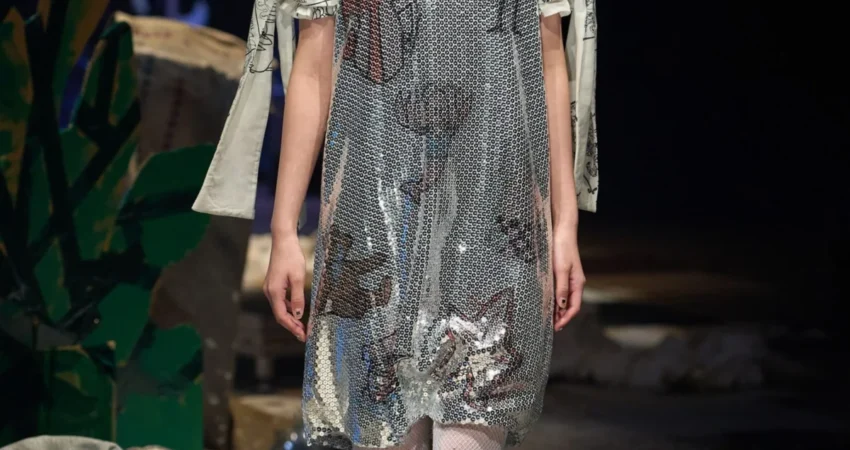
The Spring/Summer 2027 season of Rakuten Fashion Week Tokyo has concluded, leaving the Japan Fashion Week Organization (JFWO) at a critical juncture regarding its role in the global fashion ecosystem. Historically positioned as a vital springboard for Japanese designers, the event is currently grappling with the "springboard effect," where the very talent it nurtures often departs the domestic schedule upon achieving international recognition. As the Tokyo schedule faces an increasing number of absences from its most prominent names, the organization is pivoting toward a more internationalized and curated model to maintain its standing among the world’s fashion capitals.
The Strategic Shift and the Off-Schedule Exodus
The SS27 season featured 27 shows on the main schedule across six days. However, the numerical stability of the event masked a significant shift in the domestic landscape. Several of Tokyo’s most influential designers were notably absent from the official runway calendar. This "off-schedule exodus" is driven by two primary factors: the pursuit of global commercial alignment and the rising costs of traditional runway presentations. Many established Japanese brands have opted to release collections via lookbooks or hold private presentations earlier in the year to align with the Paris men’s schedule or the critical pre-summer buying window.
Kaoru Imajo, director of the JFWO, acknowledged this trend, noting that emerging designers increasingly prioritize visibility in Paris. This sentiment was echoed by Viviano, a brand that has seen significant growth in the United States after securing PR representation in Los Angeles. Despite its designs being worn by high-profile figures such as Lady Gaga and Bad Bunny, Viviano opted for a lookbook this season rather than a runway show. The brand’s leadership suggested that while the Tokyo schedule is essential for nascent labels seeking initial attention, its importance diminishes once a brand achieves a certain level of global celebrity and retail penetration.
.jpg)
In contrast, Pillings, led by Ryota Murakami, remained on the schedule but signaled a potential departure. Murakami, whose knitwear label was shortlisted for the 2023 LVMH Prize, used the Tokyo runway to showcase a broadened aesthetic, including linen suiting and sporty separates. While Pillings maintains a strong presence in Japan through The Sazaby League, its eyes are firmly set on its showroom at Paris Fashion Week. Murakami indicated that the SS27 show might be his final runway presentation in Japan for the foreseeable future as he seeks to challenge his brand on the European stage.
Internationalization as a Countermeasure
To compensate for the departure of domestic heavyweights, the JFWO has intensified its efforts to recruit international designers. Of the 27 slots on this season’s schedule, one-third were occupied by designers from outside Japan, representing nations including France, Spain, Thailand, Taiwan, the Philippines, Canada, and China. This international influx is not merely a filler for the schedule but a strategic attempt to transform Tokyo into a regional hub for global discovery.
A key driver of this internationalization is the partnership between JFWO and the Paris-based RUN x Andam showroom. This collaboration brought seven European designers to Tokyo, providing them with direct access to the Japanese market. Frederic Maus, CEO of WSN Group, which operates RUN, emphasized that Japan remains a unique wholesale market with its own specific retail codes. For European designers like Sonia Carrasco, who specializes in deconstructed tailoring, Japan often represents their primary market. Carrasco noted that Japanese retailers and consumers possess a unique appetite for "discovering something new," a trait that provides a buffer against the general volatility of the global fashion market.
The inclusion of international talent has been met with positive feedback from local journalists and buyers, who view the diversity as a way to keep the event vibrant. By positioning Tokyo as a gateway to Asia for European brands, the JFWO is attempting to redefine the week’s relevance not just as a showcase for Japanese craft, but as a cross-cultural commercial exchange.

Economic Context and Market Resilience
The backdrop of the SS27 season was defined by the continued weakness of the Japanese yen. While a devalued currency makes imports more expensive for Japanese retailers, it has simultaneously made Japanese brands more attractive to international buyers. This economic paradox has sustained interest in Tokyo Fashion Week despite the domestic challenges.
Alessandra Della Morte, a global retail development consultant, observed that the weak yen, combined with the increased international experience of Japanese brands, has created a "valuable offering" for foreign boutiques. International guests this season included representatives from 10 Corso Como Seoul, ShowStudio, and the Italian luxury boutique Tessabit.
Luna, a buyer for the high-end retailer FWRD, attended Tokyo Fashion Week for the first time and highlighted the event’s manageable scale as a competitive advantage. Unlike the frenetic pace of Paris or Milan, Tokyo offers a calmer environment that allows buyers to evaluate collections with greater clarity. This "boutique" atmosphere, characterized by a focus on personal style and self-expression rather than corporate spectacle, remains Tokyo’s strongest selling point for high-end international retailers.
Creative Highlights and Immersive Storytelling
Despite the logistical shifts, the creative output of the week remained high, with several designers opting for immersive installations over traditional runways.

- Khoki: Widely considered the "smash hit" of the week, the menswear collective Khoki held a show in a warehouse in Tokyo Bay. The set was a meticulous replica of designer Koki Abe’s family home in Yamanashi. Sponsored by Rakuten’s "ByR" initiative, the show was praised for its unique deconstruction techniques and its ability to fill a "white space" in the current menswear market.
- Yusho Kobayashi: Known for his "kawaii" aesthetic, Kobayashi created a DIY cardboard set evoking an underwater world. His designs, which have recently gained traction among Gen Z celebrities and K-pop groups like ILLIT, demonstrated the enduring global appeal of Japanese subculture-inspired fashion.
- Yoshio Kubo: Kubo utilized a traditional Mongolian ger (tent) as the centerpiece of his runway, showcasing a collection focused on technical sportswear for runners. The diversity of these presentations—ranging from artisanal menswear to high-concept streetwear—underscores the fact that Tokyo remains a primary source of avant-garde creativity.
Institutional Support and the Pipeline for the Future
The JFWO continues to rely on a robust system of awards to funnel new talent into the fashion week cycle. The conclusion of the SS27 week saw the announcement of the Fashion Prize of Tokyo and the Tokyo Fashion Award, both of which provide critical financial and logistical support for designers looking to expand abroad.
The Fashion Prize of Tokyo was awarded to Tanaka, a denim-focused brand led by Sayori Tanaka. Tanaka, who previously worked with Uniqlo’s global design team, will receive support to show her collection in Paris during the Fall/Winter 2027 season. This prize has a track record of success, with previous winners like Auralee and Mame Kurogouchi successfully transitioning into permanent fixtures on the Paris schedule.
The Tokyo Fashion Award recognized eight recipients who will be featured in a joint showroom during Paris Fashion Week and hold runway shows in Tokyo next season. The winners for this cycle include:
- Midorikawa: Known for artisanal, avant-garde menswear.
- Orimi: A label by Kenta Orimi that draws heavily on Harajuku street culture.
- Gurtwein: An edgy womenswear brand by Teruhiro Hasegawa.
- Jianying "Wing" Lai: A designer with a pedigree from Givenchy and Burberry.
Teruhiro Hasegawa of Gurtwein noted that his experience in the Japanese market has shifted his focus away from large-scale spectacles toward meaningful connections with consumers. This sentiment reflects a broader trend among the new generation of Tokyo designers who prioritize brand loyalty and artisanal quality over mass-market saturation.

Implications for the Global Fashion Calendar
The evolution of Rakuten Fashion Week Tokyo reflects a broader fragmentation in the global fashion industry. As the "Big Four" (New York, London, Milan, and Paris) become increasingly dominated by luxury conglomerates and massive marketing budgets, regional fashion weeks are finding it necessary to specialize.
Tokyo’s pivot toward becoming a curated hub for both high-end domestic craft and international discovery suggests a path forward. While it may no longer be able to retain every "breakout" star on its official schedule, its role as an incubator remains undisputed. The challenge for the JFWO in the coming seasons will be to balance this incubation role with enough commercial "gravitas" to ensure that international buyers and media continue to view the trip to Tokyo as an essential investment.
By leveraging the unique strengths of the Japanese retail market—its appreciation for storytelling, its robust wholesale sector, and its focus on personal expression—Tokyo Fashion Week is attempting to build a sustainable model that thrives on being an alternative to, rather than a competitor of, the traditional fashion establishment. The success of this strategy will depend on the JFWO’s ability to continue attracting international talent while providing a compelling enough platform to convince its most successful domestic designers that showing at home still carries global weight.

0 Comments