
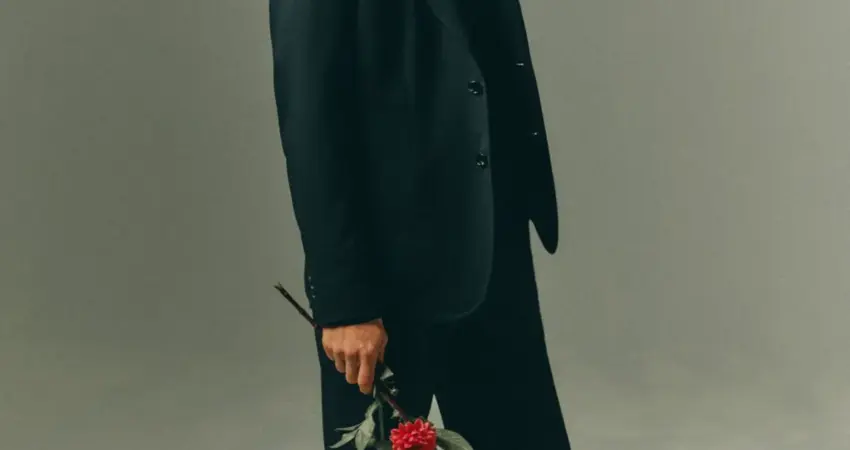
The contemporary fashion landscape is currently witnessing a significant shift toward curated minimalism, a movement led by brands seeking to balance heritage aesthetics with the practical demands of a changing global climate. At the center of this transition is Rag & Bone, a label that has long been synonymous with a specific brand of New York-meets-London utility. Under the creative direction of Swaim Hutson, the brand is currently undergoing a strategic refinement of its core identity. Moving away from its historical reputation as a sprawling provider of denim and basics, the latest High Summer collection signals a pivot toward what Hutson describes as a "tighter" and more "selective" offering. This evolution is not merely an aesthetic choice but a response to shifting consumer behaviors, meteorological shifts, and the logistical realities of modern travel.
The Philosophical Pivot: Refining the "Garden" of Rag & Bone
For over two decades, Rag & Bone has occupied a unique space in the fashion industry, bridging the gap between high-end designer wear and accessible contemporary apparel. However, as the market becomes increasingly saturated, the brand has recognized the need for a more focused approach. Swaim Hutson, acting as the brand’s "constant gardener," has initiated a process of pruning the label’s extensive catalog to make room for more intentional growth. This strategy emphasizes refinement over reinvention, ensuring that the brand’s DNA remains intact while elevating the quality of construction and materials.
The High Summer collection serves as a case study for this new direction. Historically, the "high summer" or "resort" seasons have been challenging for designers, as the primary consumer demand is to wear as little clothing as possible. However, the rise of extreme weather events—exemplified by record-breaking heatwaves in fashion capitals like Paris and New York—has forced a rethink of summer attire. Hutson’s design process for this season began with a personal reflection on a period of extreme heat in Paris, which prompted the question: "What do I wear when the temperature exceeds conventional comfort levels?"
Technical Innovation and Fabrication Strategy
The answer to Hutson’s inquiry lies in a sophisticated approach to fabrication. The collection moves beyond standard cottons and denims, incorporating technical blends and heritage fabrics adapted for high-heat environments. A primary focus of the collection is the "elevation" of materials, utilizing finer yarns and more complex manufacturing processes to create garments that are both lightweight and structurally sound.
Key highlights of the collection include:
- Nylon-Linen Blends: Recognizing the limitations of pure linen—which, while breathable, is prone to excessive wrinkling—the design team introduced a nylon-linen blend. This hybrid fabric retains the cooling properties of natural flax while the synthetic component adds durability and a subtle sheen. A notable piece in this material is a black matching set featuring a "whisper" of tonal plaid, designed to bridge the gap between casual and formal wear.
- Tropical Wool: Traditionally associated with tailoring, Prince of Wales tropical wool was utilized for sets featuring pleated shorts and trousers. Tropical wool is characterized by its porous weave, allowing for maximum airflow, making it a viable alternative to synthetic performance fabrics for consumers seeking a dressed-up aesthetic.
- Poplin with a Patina: The collection features crisp poplin pants and boxy button-downs. To avoid the sterile look of new office wear, these pieces were designed with a built-in sense of patina. Design details such as pajama-style stripes and buttoned cuffs offer a nod to traditional sleepwear, reimagined for public use.
- Sun-Dyed Washed Cotton: T-shirts and canvas work jackets underwent a specialized washing and sun-dying process. This technique results in a "bleached-out" appearance that mimics years of natural wear, providing a tactile sense of history to brand-new garments.
The "Four-Day Carry-On" Framework
A central element of the collection’s development was a specific logistical brief: what would a modern traveler pack for a four-day trip involving varied events? This "carry-on" philosophy addresses the post-pandemic resurgence in global travel and the consumer’s desire for versatility. The collection is built on the principle of modularity—sets that can be broken apart, fabrics that resist the rigors of transit, and silhouettes that transition seamlessly from daytime sightseeing to evening social engagements.
This approach reflects a broader trend in the fashion industry toward "investment dressing." According to recent market data from McKinsey & Company, consumers are increasingly prioritizing "durability" and "versatility" in their purchasing decisions, moving away from fast-fashion cycles in favor of pieces that offer long-term utility. By focusing on a smaller, more selective range of products, Rag & Bone is positioning itself to capture this discerning segment of the market.
Chronology of Brand Evolution
To understand the significance of this High Summer collection, it is necessary to view it within the context of Rag & Bone’s history:
- 2002: Rag & Bone is founded in New York with a focus on high-quality denim and British-inspired tailoring.
- 2010s: The brand expands rapidly, becoming a staple of the "Contemporary" floor in major department stores worldwide.
- 2023: Swaim Hutson takes a leading creative role, beginning the process of streamlining the brand’s aesthetic and production.
- 2024 (High Summer): The brand debuts a collection focused on extreme-weather utility and "elevated basics," marking a departure from its broader, more generic previous iterations.
This timeline illustrates a brand that has successfully navigated the transition from a niche denim label to a global lifestyle brand, and is now entering a phase of maturity where "less is more" becomes the guiding principle.
Artistic Influence: The Cy Twombly Aesthetic
While the collection is rooted in utility, it does not lack artistic depth. Hutson drew inspiration from the works of American painter Cy Twombly, particularly his "scribbled" aesthetic and hand-drawn lines. This influence is visible in the collection’s prints—mariner stripes and oversized windowpane patterns—which possess a deliberate imperfection. By incorporating these hand-drawn elements, the collection avoids the clinical feel of mass-produced patterns, reinforcing the brand’s commitment to "refined" and "intentional" design.
Market Implications and Industry Reaction
The shift toward a more selective collection has significant implications for Rag & Bone’s retail strategy. In an era where "over-inventory" has plagued the fashion industry, leading to heavy discounting and brand dilution, a tighter collection allows for better inventory management and higher full-price sell-through rates.
Industry analysts suggest that this move is a strategic necessity. "The contemporary market is currently being squeezed from both ends," notes one retail consultant. "On one side, you have high-end luxury brands moving further upmarket, and on the other, you have premium-basic brands offering high quality at lower price points. For a brand like Rag & Bone to thrive, it must offer something distinct—not just in terms of style, but in terms of the ‘problem’ it solves for the consumer."
The problem solved by the High Summer collection is the "high-heat dressing" dilemma. By providing garments that are technically capable of handling 100-degree days while maintaining a "dressed-up" silhouette, the brand is filling a specific gap in the luxury-contemporary market.
Conclusion: The Future of the "Constant Gardener"
As Rag & Bone continues its trajectory under Swaim Hutson, the focus on "pruning" and "refining" is expected to extend into future seasons. The High Summer collection serves as a proof of concept for a brand that is no longer content with being a "sprawling garden" of options. Instead, it aims to be a curated boutique of essential, high-performance, and aesthetically elevated pieces.
The broader impact of this shift reflects a changing philosophy in the fashion world: a move away from the "more is better" mantra of the early 2000s toward a more sustainable, thoughtful, and utility-driven approach. For the consumer, this means garments that are not only stylish but are engineered to meet the demands of a world that is becoming increasingly warmer and more mobile. Rag & Bone’s High Summer collection is a testament to the fact that in modern fashion, the most effective way to grow is often to prune.

0 Comments