
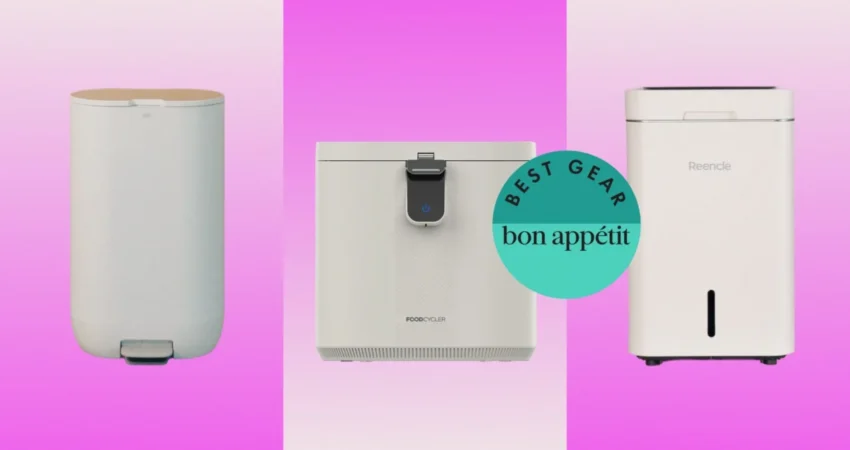
In an era marked by increasing environmental consciousness and evolving urban living mandates, the humble act of composting is undergoing a technological revolution. As cities like New York City mandate composting, starting in 2025, households are seeking more efficient and less odorous alternatives to traditional methods. Electric kitchen composters and food recyclers have emerged as promising solutions, offering to transform food scraps into nutrient-rich grounds or usable compost within hours, thereby alleviating the common challenges of mess, smell, and frequent disposal. This article delves into the effectiveness and value of these innovative appliances, examining their performance through extensive testing by leading culinary publications and their growing significance in sustainable waste management.
The impetus for exploring advanced composting solutions stems from a growing awareness of landfill burden and the environmental impact of food waste. Globally, an estimated one-third of all food produced for human consumption is lost or wasted, contributing significantly to greenhouse gas emissions. Traditional composting, while beneficial, often presents practical hurdles for urban dwellers. The need for regular emptying of often-soggy, odorous bins, the space required for composting setups, and the logistical challenge of transporting waste to communal bins can deter even the most eco-minded individuals. Electric kitchen composters aim to bridge this gap by offering a contained, rapid, and odorless process that dramatically reduces the volume of food waste, often by up to 90%, allowing for significantly less frequent emptying.
The market for these appliances has seen considerable growth, driven by both consumer demand for convenience and legislative changes. While the initial investment can be substantial, the long-term benefits in terms of waste reduction and potential soil enrichment are becoming increasingly recognized. To ascertain the true value proposition of these high-tech composting solutions, several editorial teams from renowned publications have undertaken rigorous, multi-month testing of leading models in their own kitchens. Their findings offer a comprehensive look at the performance, usability, and overall worth of these devices in a real-world domestic setting.
Top Electric Kitchen Composters Under Scrutiny
Following an extensive evaluation period, several electric kitchen composters have distinguished themselves for their performance and features. These evaluations focused on key metrics such as ease of use, design and footprint, capacity, noise levels, and overall value.
Reencle Gravity: The Innovator in Real Compost Creation
The Reencle Gravity stands out as a top contender, distinguished by its unique approach to composting. Unlike many competitors that function primarily as dehydrators and grinders, the Reencle Gravity utilizes living microbes to actively break down food scraps, producing genuine compost. This process, while initially perceived as potentially complex, proved to be remarkably straightforward during testing. The unit arrives with a starter bag of microorganisms derived from soy and cheese, along with a "compost booster." Users simply combine these with water and allow the machine a few hours to activate before introducing food scraps.
One of the most significant advantages of the Reencle Gravity is its continuous operation. While many food recyclers operate on fixed cycles, the Reencle is always active, allowing users to add food scraps at any time. This feature dramatically simplifies the user experience, eliminating the need to wait for a cycle to complete before adding more waste. In a two-person household, the Reencle Gravity took several months to reach its capacity, necessitating emptying only twice over a nine-month testing period. This infrequent emptying schedule is a major boon for convenience, significantly reducing the frequency of handling food waste.
The Reencle Gravity’s price point, around $700, positions it as a premium appliance. However, it is noted to be less expensive than some other highly popular models, and the brand offers smaller, more affordable units. A critical aspect of its long-term maintenance is the annual replacement of the charcoal filter to ensure odor elimination.
Despite its many advantages, the Reencle Gravity has a few quirks. The motion sensor that triggers the lid to open, accompanied by a beep and whirring sound, proved to be overly sensitive during testing, often activated by routine movements or even a pet. Over time, this auditory cue became a source of annoyance, leading testers to cover the sensor with tape and opt for manual lid opening via a button. Additionally, the lid’s automatic closure after a brief nine-second window can be inconvenient when dealing with larger quantities of food scraps or during the emptying process. While the Reencle can beep to signal prolonged lid opening, these minor design challenges do not overshadow the appliance’s overall convenience and effectiveness in producing actual compost.
Mill Food Recycler: A Gear of the Year Award Winner
The Mill Food Recycler has garnered significant attention, including a 2025 Gear of the Year Award, for its transformative approach to food waste management. This appliance, comparable in size to a standard trash can, functions as a powerful dehydrator and grinder, converting a wide array of food scraps—from chicken bones to avocado pits—into a dry, soil-like material. The process, typically completed overnight, reduces food waste volume by approximately 80%.
A primary benefit highlighted by testers is the complete elimination of food waste odors. The Mill effectively eradicates any lingering smells, a common complaint with traditional composting methods. The dry output also eliminates the issue of soggy compostable bags. Users can control the overnight cycle via a smartphone app, ensuring it doesn’t interfere with daily kitchen activities. The flexibility to keep the lid unlocked during processing allows for continuous addition of scraps, further enhancing convenience.
However, the Mill’s substantial footprint, equivalent to that of a trash can, requires significant kitchen space, which can be a consideration for smaller households. The lid’s inability to lock in an open position necessitates continuous pedal operation during filling, which can be cumbersome. The interior capacity, while appearing generous externally, is effectively halved by the internal mechanism, leading to potential overflow during periods of high food waste generation, such as after dinner parties.

The material produced by the Mill is not a direct substitute for garden compost. It is highly concentrated and requires further processing, such as mixing with soil or adding composting enzymes, before it can be used in gardens. Alternatively, it can be disposed of in municipal compost bins. Despite these limitations, the Mill’s ability to drastically reduce waste volume and eliminate odor makes it a compelling option for many households.
Airthereal Revive V500: An Accessible Entry Point
For those seeking a more budget-friendly introduction to electric composting, the Airthereal Revive V500 presents an attractive option. Priced significantly lower than many competitors, it offers a compact design, making it suitable for countertop placement without consuming excessive prep space. A notable feature is the clear viewing window in the lid, allowing users to observe the breakdown process—a novel and engaging aspect, though not essential for functionality.
The Airthereal Revive V500’s smaller capacity, at 2.5 liters, means it requires more frequent operation, particularly for larger families. Testers with a family of four found it necessary to run a cycle every two to three days. However, for households of two, weekly operation might suffice. The inner bucket is dishwasher-safe for cleaning.
A potential concern that emerged during extended testing (approximately seven months) was the degradation of the inner bucket’s coating, accompanied by an increase in cycle duration, from around four hours to nearly eight. This suggests a potential need for bucket replacement over time, which is an easily manageable process via the Airthereal website. The brand also offers a version without the viewing window at a reduced cost.
FoodCycler Eco 5: A Balanced Countertop Solution
The FoodCycler Eco 5 emerges as a strong contender for families of four or five who may find the Mill’s footprint too large or its price point too high. With a 5-liter capacity, it strikes a balance, requiring operation every four to six days for a family of four during testing. The integrated charcoal filter effectively neutralizes odors, and the appliance generally completes its cycles within the manufacturer’s suggested four to nine hours.
A significant advantage of the FoodCycler Eco 5 is its ease of cleaning, facilitated by a specially designed cleaning brush (sold separately) that perfectly fits the bucket’s contours. This feature addresses a common deterrent to composting: the tediousness of cleaning.
While the appliance boasts a sleek design, its 10- by 13.5- by 14-inch footprint might still be considered bulky for some countertops. To mitigate this, some testers opted to store the main unit in the basement and keep only the smaller, lidded collection bucket in the kitchen, which proved effective for odor containment. For those prioritizing countertop space, the brand also offers a smaller 3.5-liter model at a lower price point.
Rigorous Testing Methodology
The evaluation of these electric kitchen composters involved a hands-on approach, with testers integrating the appliances into their daily routines for a minimum of six months. This extended testing period, with some units provided by the manufacturers, allowed for a comprehensive assessment of performance under real-world conditions. The testing protocol focused on several critical aspects:
- Ease of Use: Evaluating the simplicity of setup, operation, and daily interaction with the appliance. This included the clarity of instructions and the intuitiveness of controls.
- Design and Footprint: Assessing the aesthetic appeal and the physical space required by the appliance, considering its suitability for various kitchen layouts.
- Capacity and Frequency of Emptying: Determining how much food waste the appliance could process and how often it needed to be emptied, a key factor for user convenience.
- Noise Level: Measuring the operational noise generated by the appliance, particularly during cycles, to gauge its impact on a living environment.
- Value for Money: Analyzing the overall cost of the appliance in relation to its performance, features, and long-term benefits in waste reduction.
Broader Implications and Future Trends
The increasing adoption of electric kitchen composters signifies a broader shift towards technological solutions for environmental challenges. As urban populations grow and waste management becomes a more pressing concern, these appliances offer a tangible way for individuals to contribute to sustainability efforts without significant lifestyle compromises.
The legislative push for mandatory composting, as seen in New York City’s 2025 mandate, is a significant catalyst for innovation in this sector. Such policies not only encourage residents to participate in composting but also drive demand for more effective and user-friendly technologies. This, in turn, spurs further research and development, leading to more efficient, affordable, and feature-rich appliances in the future.
The data suggests that these devices are not merely niche gadgets but are becoming integral components of a modern, eco-conscious household. Their ability to drastically reduce landfill contributions, mitigate greenhouse gas emissions associated with decomposing organic waste, and potentially provide nutrient-rich soil amendments for gardening, underscores their multifaceted environmental benefits. As the technology matures and production scales, it is anticipated that the cost of these appliances will become more accessible, further accelerating their widespread adoption. The future of domestic waste management is increasingly looking towards smart, electric solutions that align convenience with ecological responsibility.

0 Comments