
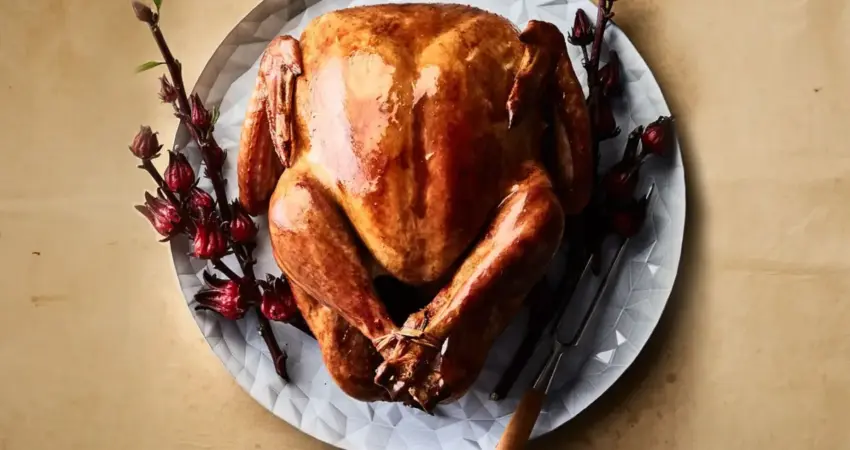
The perennial holiday challenge of fitting an enormous, centerpiece-worthy turkey into a refrigerator already brimming with festive fare is a familiar one for home cooks. This year, culinary expert Alton Brown offers an ingenious solution that not only liberates precious cold storage but also promises a remarkably tender and deeply seasoned bird: his wet-brined turkey recipe utilizing an insulated cooler. This method, lauded for its simplicity and effectiveness, bypasses the need for an overstuffed fridge, allowing cooks to focus on the myriad other preparations that define a successful holiday feast.
Brown’s approach centers on a straightforward brine, a potent yet elementary mixture comprising kosher salt, sugar, and vegetable broth. This liquid alchemy works its magic by immersing the turkey, facilitating the penetration of seasoning deep into the meat and significantly enhancing its ability to retain moisture during the roasting process. The result is a turkey that remains succulent and flavorful, even after extended cooking times. The initial phase of this method involves a thorough soak in the brine, after which the bird is meticulously patted dry. This crucial step ensures that the skin will crisp beautifully. The turkey is then introduced to a searingly hot oven, preheated to 500°F (260°C). This initial blast of intense heat is designed to rapidly brown and crisp the skin, setting the stage for a visually appealing and texturally delightful finish. After a brief period of 30 to 40 minutes, the breast of the turkey is strategically shielded with aluminum foil. The oven temperature is then reduced to a more moderate 350°F (175°C), allowing the bird to complete its cooking process gently and evenly.
One of the most significant advantages of this wet-brining technique, as championed by Brown, is the elimination of the often tedious and messy process of basting. Traditional methods frequently require frequent oven door openings and the constant application of pan juices or melted butter to the roasting bird. This not only interrupts the cooking cycle, leading to longer overall roasting times, but also increases the risk of temperature fluctuations that can compromise the final texture of the turkey. Brown’s method, by contrast, necessitates minimal intervention once the turkey is in the oven, freeing up the cook’s time and attention. This allows for greater focus on other essential components of the holiday meal, such as preparing classic accompaniments like sweet potatoes, artisanal apple pies, and a diverse array of other Thanksgiving delights. The strategic reduction in active cooking tasks is a welcome relief for many hosts and hostesses during what can often be a demanding culinary period.
The Science and Strategy of Brining
Brining, a culinary practice with roots stretching back centuries, is fundamentally a process of osmosis and diffusion. The salt in the brine solution draws out some of the turkey’s natural moisture, but simultaneously, the dissolved salt and sugar molecules are absorbed into the muscle tissues. This influx of salt helps to denature the proteins within the meat, allowing them to absorb and retain more water during cooking. The sugar contributes to browning and adds a subtle sweetness that balances the savory notes. The vegetable broth serves as a neutral liquid base, carrying the salt and sugar and potentially infusing additional subtle flavors.
The cooler, as a brining vessel, offers a practical advantage. Refrigerators, while essential for food safety, can quickly become overwhelmed during the holiday season. A large, insulated cooler, when properly managed, can maintain the necessary cold temperatures to keep the turkey safe while it brines. This frees up valuable refrigerator space for other perishable items, a significant logistical benefit for many households. The insulated nature of the cooler helps to maintain a consistent temperature, crucial for preventing bacterial growth.
Brined Turkey FAQ: Addressing Common Concerns
How long should you brine a turkey?
For a turkey weighing between 14 and 18 pounds, a brining period of 8 to 12 hours is generally recommended. This duration allows sufficient time for the salt to permeate the meat, effectively seasoning it from within and optimizing its moisture-retaining capabilities. While the temptation to extend the brining time, perhaps to 24 hours, might arise, it is important to exercise caution. Over-brining can lead to an excessively salty flavor profile, detracting from the overall enjoyment of the dish. Adhering to the suggested timeframe is key to achieving the desired balance of flavor and texture. This principle is rooted in the understanding of diffusion rates; beyond a certain point, the benefits of increased salt penetration diminish, while the risk of oversaturation increases.
Is brining turkey in a cooler safe?
Yes, brining a turkey in a cooler is a safe practice, provided that stringent temperature control is maintained. The critical threshold for safe brining is to keep the brine and the turkey at or below 40°F (4°C) for the entire duration. To ensure this, it is imperative to use a cooler that is thoroughly cleaned and certified as food-safe. Regular monitoring of the brine’s temperature with a probe thermometer is essential. Sealed ice packs can be added as needed to maintain the target temperature. The objective is to replicate the cold environment of a refrigerator, thereby inhibiting the growth of harmful bacteria. The American Food and Drug Administration (FDA) guidelines on food safety emphasize the "danger zone" for bacterial growth, which lies between 40°F (4°C) and 140°F (60°C). Keeping the turkey and brine outside this zone is paramount.
Can you brine a turkey that’s already been brined?
It is strongly advised against brining a turkey that has already undergone a brining process. Many turkeys available in supermarkets are pre-brined or injected with a saline solution, often indicated by labels such as "self-basting," "enhanced," or "contains a solution." Brining such a turkey again can result in an overly salty and unpalatable meat. Before embarking on the brining process, it is crucial to carefully examine the packaging of the turkey to ascertain whether it has already been treated with a salt solution. Opting for an unbrined turkey is essential for this recipe to achieve optimal results and avoid the pitfalls of double-salting. This practice aligns with the principle of controlled seasoning; introducing additional salt to an already salted product can easily lead to an imbalance.
How do you keep gravy made from brined turkey from getting too salty?
While brining imbues the turkey with exceptional flavor and moisture, it can also lead to exceptionally salty pan drippings, which are the foundation of most gravies. To mitigate this, it is crucial to taste the pan drippings before adding any additional salt to the gravy. Employing low-sodium or unsalted broth when making the gravy provides greater control over the final saltiness. Should the finished gravy still prove too salty, a few pats of unsalted butter can be incorporated. Butter adds richness and a subtle fat content that can help to mellow out excessive saltiness. Alternatively, the gravy can be thinned with additional salt-free broth until the desired flavor balance is achieved. This approach is a practical application of culinary chemistry, where fat and dilution can effectively counteract an overabundance of salt.
Beyond the Cooler: Alternative Holiday Turkey Strategies
While Alton Brown’s cooler brining method offers a compelling solution for space constraints and flavor enhancement, it is not the only pathway to a successful holiday turkey. For those who prefer to eschew wet brining altogether, a dry-brined turkey presents a viable alternative. This method involves liberally salting the turkey’s skin and flesh and allowing it to rest uncovered in the refrigerator for an extended period. The salt draws moisture from the skin, which then reabsorbs into the meat, seasoning it while simultaneously drying the skin, promoting superior crispness. This process can take anywhere from 24 to 72 hours, depending on the size of the bird and desired level of crispness.
For individuals facing significant time constraints, particularly in the final days leading up to a holiday gathering, a technique pioneered by culinary expert Chris Morocco offers a remarkably efficient solution. Morocco’s method involves breaking down the whole turkey into its constituent parts – breasts, thighs, legs, and wings – before roasting. This strategic dissection allows for significantly shorter cooking times, with a deconstructed turkey often ready in under two hours. This approach not only saves time but also allows for more precise cooking of individual components, ensuring that each part of the bird is cooked to perfection. For instance, the breast, which cooks more quickly, can be removed from the heat while the legs and thighs continue to roast, preventing the breast meat from becoming dry.
Broader Impact and Implications for Holiday Cooking
The widespread adoption of techniques like Alton Brown’s cooler brining method reflects a broader trend in home cooking towards more efficient and effective culinary strategies. As busy schedules become the norm, home cooks are increasingly seeking recipes and methods that deliver exceptional results with less effort and fewer logistical hurdles. The emphasis on maximizing flavor and moisture while minimizing stress is a testament to the evolving priorities of the modern home chef.
The proliferation of online culinary resources, including recipe websites and video tutorials, has also played a significant role in disseminating these innovative techniques. Chefs and culinary educators like Alton Brown have a substantial platform to share their expertise, reaching a vast audience eager to improve their cooking skills. The sharing of information on platforms like Bon Appétit, where Brown’s recipe is featured, democratizes access to high-quality culinary advice.
Furthermore, the focus on food safety, as highlighted in the FAQ section, underscores the importance of responsible cooking practices. As more individuals engage in home food preparation, understanding and adhering to safety guidelines becomes paramount. The discussion around maintaining proper temperatures during brining, for example, is not merely a matter of culinary success but also a critical public health consideration. The implications of these educational efforts extend beyond individual kitchens, contributing to a generally more informed and capable home cooking population. The success of such methods also encourages experimentation and adaptation, as cooks learn to apply the principles behind brining and efficient roasting to other dishes and ingredients. This continuous learning and refinement process is what keeps home cooking dynamic and engaging. The holiday season, with its emphasis on shared meals and culinary traditions, provides a perfect backdrop for the exploration and adoption of these advanced, yet accessible, cooking techniques.

0 Comments