
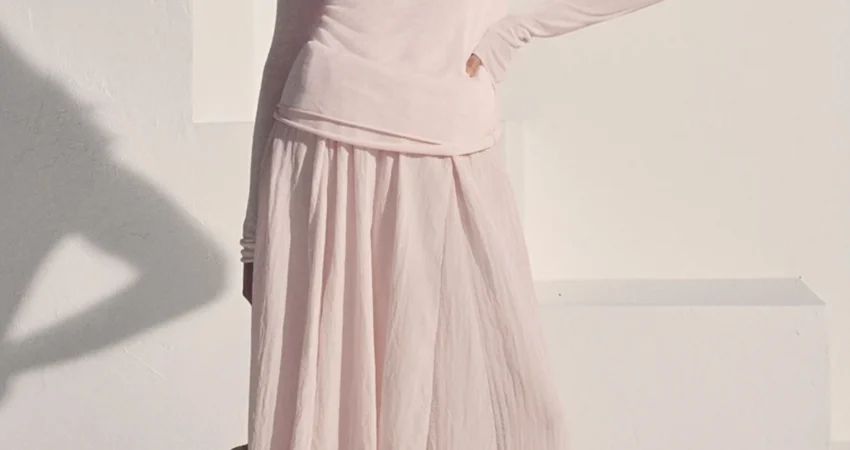
The Donna Karan Spring 2027 Ready-to-Wear collection serves as a definitive testament to the enduring power of archival inspiration in contemporary fashion. In an era where the industry increasingly looks backward to move forward, the design team at Donna Karan has successfully navigated the brand’s extensive history to produce a collection that feels both nostalgic and remarkably current. The cornerstone of the season’s aesthetic was a singular, evocative image from the late 20th century: a 1999 editorial photograph of Spanish supermodel Esther Cañadas. In the image, Cañadas is enveloped in a monochrome, long-sleeve ensemble of soft pink, a visual cue that set the tone for a collection defined by tonal harmony, fluid silhouettes, and a sophisticated take on nineties athleticism.
This season’s reliance on the archives is not merely a stylistic choice but a strategic one. As the brand continues to redefine its identity under its current creative leadership, it has consistently returned to the foundational principles established by Donna Karan herself—specifically the concept of "Seven Easy Pieces" that can transition seamlessly from day to night. The Spring 2027 collection honors this legacy while adapting to the specific demands of the modern luxury consumer, who prioritizes comfort, versatility, and a sense of historical continuity.
A Strategic Pivot to Soft Pink and Color Theory
The dominant hue of the collection, a "soft pink," was carefully calibrated to distinguish itself from previous color trends. While the fashion world experienced a saturation of "millennial pink" approximately a decade ago—a shade characterized by its dusty, muted undertones—the Spring 2027 palette is notably cheerier and more luminous. Industry analysts note that this shift in color reflects a broader movement toward "dopamine dressing" and optimism in the post-pandemic luxury market.
The soft pink appeared across a variety of textures and silhouettes, most notably in light, breathable fabrics that align with the current resurgence of 1990s sports-inspired apparel. By utilizing this specific shade, the design team managed to evoke the minimalism of the late nineties without succumbing to the starkness often associated with that decade. The palette was further balanced by the inclusion of a specific, vibrant green—reminiscent of the iconic ensemble worn by Gwyneth Paltrow in the 1998 film Great Expectations. This "Great Expectations green" provided a sharp, verdant contrast to the softer blushes, grounding the collection in a cinematic and cultural context that resonates deeply with the Gen X and Millennial demographics.
Chronology of the Spring 2027 Presentation
The unveiling of the collection followed a logical progression that mirrored the daily life of the Donna Karan woman. The show opened with the most literal interpretations of the 1999 archival inspiration. These initial looks featured monochrome layering and soft, jersey-based silhouettes that emphasized movement and ease.
Following the archival opening, the collection transitioned into "sporty-chic" territory. This segment introduced technical fabrics, such as pre-crinkled nylon, which were utilized in maxi skirts and lightweight knits. A standout piece from this phase was the blouson-style mockneck jacket in a taupe-tinged blush. Fashion historians and critics immediately noted the silhouette’s resemblance to the prom attire seen in the 1999 cult classic 10 Things I Hate About You, specifically the structured yet feminine lines of the character Bianca Stratford’s wardrobe.
The final movement of the presentation focused on "Metropolitan Utility." Here, the soft pinks and sporty nylons gave way to richer, more substantial materials. Caramel-colored leathers and suedes were introduced through bomber jackets and pencil skirts, offering a stark, sophisticated contrast to the earlier, lighter segments. The show concluded with a series of black evening-ready trousers featuring sheer skirt overlays, demonstrating the "day-to-night" versatility that has been a hallmark of the Donna Karan brand since its inception in 1984.
Technical Innovation and Materiality
The use of materials in the Spring 2027 collection reflects a commitment to both aesthetic appeal and practical functionality. The design team’s choice of pre-crinkled nylon is particularly significant. This fabric choice addresses a growing consumer demand for luxury garments that are travel-friendly and low-maintenance. By intentionally crinkling the material, the designers have created a texture that is resistant to the unsightly wrinkling often associated with traditional luxury textiles, making it ideal for the "from-the-city-straight-to-the-weekend" lifestyle highlighted in the collection’s mission statement.
Key material highlights include:
- Lightweight Knits: Layered pieces designed for transitional weather, emphasizing the "Seven Easy Pieces" philosophy.
- Tie-Front Jersey: A direct recreation from the 1990s archives, this fabric offers a drape that is both flattering and comfortable.
- Suede and Leather: Used to provide structure and weight, these materials were rendered in rich caramel tones to suggest a sense of grounded luxury.
- Sheer Overlays: Utilized on tailored trousers to create a "literal" day-to-night transition, allowing the wearer to adapt their look for formal evening settings without a full wardrobe change.
Market Context and Economic Implications
The Spring 2027 collection arrives at a time when the "quiet luxury" and "archival revival" trends are reaching a peak in the global fashion market. Data from retail analytics firms suggest that heritage brands—those with a clear and accessible history—are currently outperforming newer labels that lack a deep archival well to draw from. By leaning into the 1999 aesthetic, Donna Karan is tapping into a period that is currently highly coveted by both older consumers who remember the era and younger "Gen Z" consumers who view the nineties as a pinnacle of minimalist cool.
Furthermore, the focus on versatile, multi-setting pieces is a response to the shifting economic landscape. As the luxury market faces fluctuations, consumers are increasingly looking for "investment pieces" that offer a high cost-per-wear ratio. A trench coat or a leather bomber jacket that can be worn in professional, social, and travel contexts represents a more viable purchase for the modern affluent shopper than a single-use statement piece.
Analysis of Brand Heritage and Future Direction
The decision to recreate pieces "directly from the archives," such as the tie-front jersey combo skirt set, signals a move toward brand authenticity. In the decades following Donna Karan’s departure from her namesake label, the brand underwent various transformations under different creative directions. The current strategy appears to be a focused effort to reclaim the original DNA of the brand: the empowered, busy New York woman who requires a wardrobe that is as resilient and adaptable as she is.
Industry observers have reacted positively to this direction, noting that the Spring 2027 collection feels like a return to form. By blending the retro sportiness of the late nineties with modern suiting and technical fabrics, the brand has found a middle ground that honors its past without becoming a costume of it. The "10 Things I Hate About You" aesthetic, while nostalgic, is updated with uncinched sleeves and slight crops that align with 2027 proportions.
Broader Impact on the Fashion Industry
Donna Karan’s Spring 2027 collection is likely to influence the broader ready-to-wear market in several ways. First, the specific "soft pink" and "caramel" color pairing is expected to permeate high-street fashion in the coming seasons, as retailers look to the New York runways for color direction. Second, the emphasis on crinkled, technical fabrics in high-fashion silhouettes reinforces the "Gorpcore" influence on luxury, suggesting that the intersection of outdoor utility and high-end tailoring is here to stay.
Finally, the collection underscores the importance of the "muse" in fashion marketing. By centering the collection around the image of Esther Cañadas, the design team has provided a narrative hook that transcends the clothes themselves. It tells a story of a specific moment in time—1999—reimagined for a future where elegance and athleticism are no longer mutually exclusive.
In conclusion, the Donna Karan Spring 2027 Ready-to-Wear collection is a sophisticated exercise in brand stewardship. It successfully leverages nostalgia not as a crutch, but as a foundation for innovation. Through its careful selection of archival references, its strategic use of color, and its commitment to functional luxury, the collection reaffirms Donna Karan’s position as a cornerstone of American fashion. As these pieces move from the runway to the retail floor, they will undoubtedly find a home in the wardrobes of women who value the seamless blend of historical significance and contemporary utility.

0 Comments