
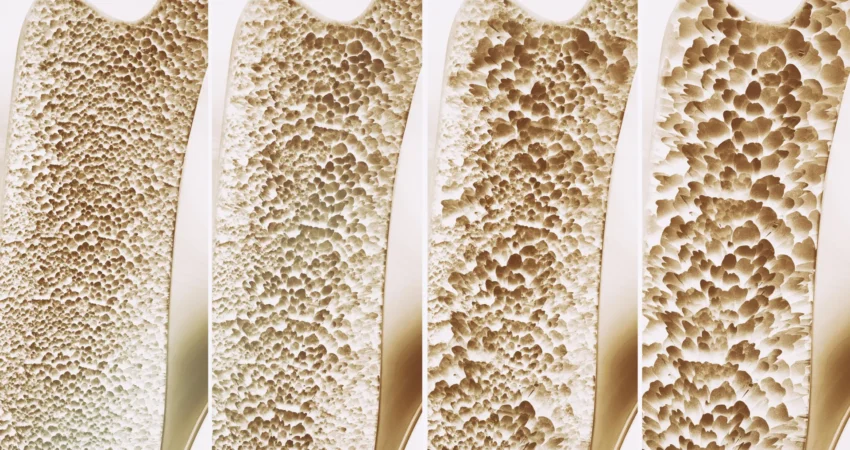
Osteoporosis, a pervasive skeletal disorder characterized by diminished bone density and structural integrity, continues to pose a significant global health challenge. Affecting an estimated 200 million individuals worldwide, it dramatically elevates the risk of fractures, leading to substantial morbidity, mortality, and economic burden. In Germany alone, approximately six million people grapple with this condition, with women disproportionately affected, particularly following menopause. The quest for safe, long-term therapeutic strategies that can effectively preserve or even rebuild bone mass remains a paramount objective for the medical community. Existing treatments, while beneficial, often present limitations, including potential side effects and varying degrees of efficacy, prompting a relentless pursuit of novel biological targets.
In a significant development stemming from Leipzig University, scientists have identified a novel target with the potential to revolutionize osteoporosis management: GPR133, a receptor that appears to play a crucial role in maintaining bone strength. This discovery, detailed in recent research, offers a glimmer of hope for millions struggling with this debilitating condition.
Unveiling the Role of GPR133 in Bone Health
The newly identified target, GPR133, belongs to the enigmatic family of adhesion G protein-coupled receptors (aGPCRs). These receptors, embedded in the cell membrane, act as crucial intermediaries, translating external signals into cellular responses. While the full functional spectrum of aGPCRs is still being elucidated, the Leipzig University findings strongly implicate GPR133 in the intricate processes that govern bone formation and maintenance.
"Our research has pinpointed GPR133 as a key player in skeletal integrity," stated Professor Ines Liebscher, the lead investigator from the Rudolf Schönheimer Institute of Biochemistry at the Faculty of Medicine, Leipzig University. "When this receptor is compromised by genetic mutations, we observe a pronounced loss of bone density in mice at an early age, mirroring the pathological hallmarks of human osteoporosis. Crucially, by utilizing AP503, a compound recently identified through computational screening as a GPR133 stimulator, we were able to achieve a significant enhancement in bone strength in both healthy and osteoporotic mouse models."
This pivotal observation underscores GPR133’s potential as a therapeutic target for osteoporosis. The research team meticulously documented that stimulating GPR133 with AP503 not only fortified the bones of healthy mice but also demonstrably improved bone density and strength in mice exhibiting osteoporosis-like bone loss. This dual efficacy is particularly encouraging, suggesting a broad applicability for the therapeutic approach.
The Molecular Mechanism: How GPR133 Fortifies Bones
Delving deeper into the cellular mechanisms, the Leipzig University study reveals that GPR133 within bone tissue is responsive to both physical forces and the intricate communication networks between neighboring bone cells. Upon activation, GPR133 initiates a cascade of intracellular signaling events that precisely modulate the delicate equilibrium between bone-forming cells (osteoblasts) and bone-resorbing cells (osteoclasts).
Bone, a dynamic tissue, undergoes continuous remodeling throughout life. Osteoblasts are responsible for synthesizing new bone matrix, while osteoclasts are tasked with the removal of old or damaged bone, a process essential for maintaining skeletal health and adapting to mechanical loads. A healthy skeleton relies on a finely tuned balance between these two opposing cellular activities. Disruptions to this balance, often exacerbated by aging, hormonal changes, or genetic predispositions, can lead to conditions like osteoporosis.
The research indicates that activation of GPR133 favorably shifts this balance. Specifically, it appears to promote the activity of osteoblasts, thereby increasing bone formation, while simultaneously suppressing the activity of osteoclasts, thereby reducing bone resorption. This concerted action results in a net gain in bone mass and an improvement in bone architecture, leading to stronger and more resilient skeletal structures.
The compound AP503, employed in the study, acts by mimicking the natural activation of GPR133. This suggests that AP503, or similar GPR133-stimulating agents, could potentially be developed into therapeutic interventions designed to bolster bone strength or even facilitate the repair of bone tissue that has already been compromised. A particularly relevant application could be in the management of postmenopausal osteoporosis, a condition where declining estrogen levels accelerate bone loss, leading to a significant increase in fracture risk among women.
Beyond Bone: Implications for Muscle Strength and Aging Populations
The implications of this groundbreaking research may extend beyond skeletal health. In an earlier, related study conducted by Leipzig University researchers, it was discovered that AP503 also possesses the capacity to strengthen skeletal muscle. This dual action – simultaneously enhancing both bone and muscle – holds profound significance for the well-being of aging populations.
"The newly demonstrated parallel strengthening of bone, in addition to our prior findings on muscle, once again highlights the immense potential this receptor holds for medical applications, particularly in an aging demographic," commented Dr. Juliane Lehmann, the lead author of the study and a researcher at the Rudolf Schönheimer Institute of Biochemistry. "As individuals age, they frequently experience concurrent declines in both bone and muscle mass and strength. A therapeutic agent capable of addressing both of these critical aspects could dramatically improve quality of life, enhance mobility, and reduce the incidence of falls and fractures."
The synergistic improvement in bone and muscle strength could offer a comprehensive approach to mitigating the frailty and disability often associated with advanced age. Stronger muscles can contribute to better balance, coordination, and overall physical function, thereby reducing the risk of falls. Concurrently, robust bones provide the structural support necessary to withstand the forces of daily life and resist fracture.
The Leipzig University team is actively pursuing several follow-up research projects to further unravel the multifaceted functions of GPR133. These investigations aim to gain a deeper understanding of the receptor’s precise signaling pathways, its role in different cell types, and its involvement in other physiological and pathological processes. Furthermore, the researchers are exploring the potential of AP503 and related compounds in treating other diseases and are continuing to map the receptor’s broader functions throughout the body.
A Decade of Dedicated Research in GPCRs at Leipzig University
The recent discoveries concerning GPR133 are not isolated incidents but rather the culmination of a long-standing commitment to research in the field of adhesion G protein-coupled receptors at Leipzig University. For over a decade, this area has been a central research priority, significantly supported by initiatives such as the Collaborative Research Center 1423, "Structural Dynamics of GPCR Activation and Signaling."
This comprehensive research program is dedicated to unraveling the complex mechanisms by which GPCRs undergo conformational changes, become activated by various stimuli, and subsequently transmit signals within cells. Leipzig University has established itself as an internationally recognized hub for pioneering research in GPCRs, fostering an environment of interdisciplinary collaboration and cutting-edge scientific inquiry. This sustained investment in fundamental research has created a fertile ground for discoveries like the identification of GPR133 as a critical regulator of bone health.
Broader Context and Future Outlook
The global burden of osteoporosis is substantial and projected to grow with an aging world population. According to the World Health Organization (WHO), osteoporosis is a major public health threat, contributing to an estimated 9 million fractures annually worldwide. The economic impact is equally significant, with direct medical costs associated with osteoporosis-related fractures in the United States alone estimated to be over $19 billion annually.
The development of new therapeutic strategies is therefore not only a scientific imperative but also an economic and societal necessity. The identification of GPR133 and the potential of compounds like AP503 represent a promising stride forward. However, it is crucial to acknowledge that this research is still in its preclinical stages. The transition from promising findings in animal models to safe and effective treatments for humans involves rigorous clinical trials, which can take many years to complete.
The implications of this research extend beyond direct osteoporosis treatment. Understanding the role of GPR133 in bone and muscle could also inform strategies for managing other age-related conditions, such as sarcopenia (age-related muscle loss) and generalized frailty. Furthermore, the research could shed light on the interplay between skeletal health and other organ systems, potentially uncovering novel therapeutic targets for a range of chronic diseases.
The scientific community will be closely watching the continued progress of the Leipzig University team as they endeavor to translate these exciting preclinical findings into tangible benefits for patients. The discovery of GPR133’s pivotal role in bone health underscores the power of fundamental scientific research to address some of the most pressing health challenges of our time.

0 Comments