
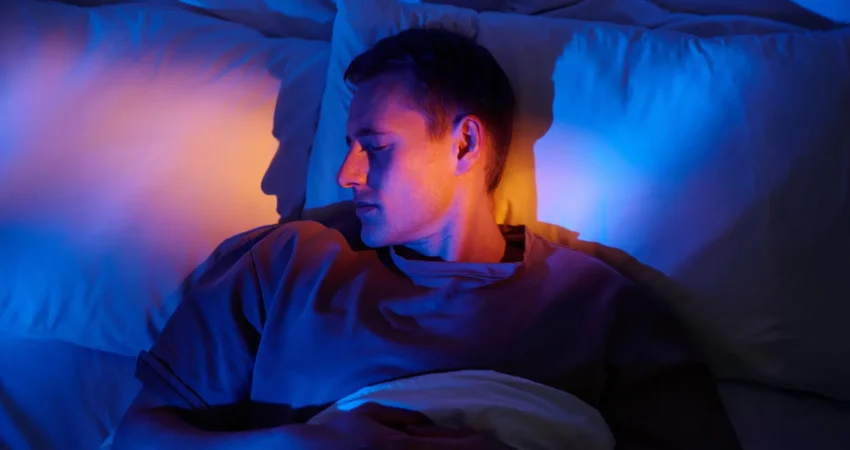
A groundbreaking study involving over 11,000 participants has revealed a significant association between exposure to light at night and potentially harmful alterations in both the structure and function of the human heart. The findings, published on September 9th in the prestigious European Heart Journal, shed new light on the insidious impact of light pollution on cardiovascular health, an environmental hazard increasingly recognized for its broad public health implications.
Unveiling the Cardiac Consequences of Nocturnal Illumination
The research, spearheaded by Professor Lu Qi of Tulane University in New Orleans, USA, aimed to address a critical gap in scientific understanding. While prior observational studies had suggested a correlation between nighttime light exposure and an increased risk of cardiovascular disease, the specific mechanisms by which this occurs at the cardiac level remained largely unknown. "Previous observational studies have linked nighttime light exposure with a higher risk of cardiovascular disease, but little is known about the related cardiac structure and functional changes," Professor Qi stated. "We carried out this research to find out what happens to the heart over time when people are exposed to too much light at nighttime."
A Comprehensive Approach to Measuring Light Exposure and Cardiac Health
To investigate this crucial question, the research team meticulously tracked the nocturnal light exposure of 11,071 participants recruited from the UK Biobank. This large cohort provided a robust sample size for statistical analysis. For a continuous period of seven days, each participant wore a light sensor on their wrist. This device enabled researchers to objectively quantify the precise levels of light exposure experienced during nighttime hours, moving beyond subjective self-reporting.
Following this initial data collection phase, the participants underwent a comprehensive cardiac assessment approximately three years later. This assessment utilized cardiac magnetic resonance imaging (MRI) scans, a highly advanced diagnostic tool that provides detailed, non-invasive visualization of the heart. These sophisticated images allowed scientists to meticulously examine the intricate structure of the heart, including the size and thickness of its chambers and walls, as well as to assess its functional capacity – how effectively it was pumping blood with each beat.
The subsequent analysis involved a rigorous comparison between participants who consistently experienced nighttime light levels exceeding three lux (a measure of illuminance) and those who were exposed to minimal or virtually no light during the night. This comparative approach allowed researchers to isolate the potential impact of elevated nocturnal light exposure on cardiac parameters.
Documenting Structural and Functional Heart Changes
The results of the cardiac MRI scans revealed striking differences in the hearts of individuals exposed to higher levels of nighttime light. A key finding was the observation of significant thickening in the wall of the left ventricle, one of the heart’s primary pumping chambers. This thickening is a form of cardiac remodeling, a process where the heart’s structure changes in response to stress or injury. As the left ventricular wall thickened, the internal volume of the chamber was consequently reduced. This reduction in space can impair the heart’s ability to fill with blood efficiently, a critical step in the cardiac cycle.
Furthermore, the scans provided evidence of diminished cardiac function. The heart muscle was observed to be less able to flex and contract normally during each heartbeat. This reduced flexibility is considered an early indicator that the heart’s pumping efficiency may be beginning to decline. The study also identified concerning changes in other areas of the heart, including the right ventricles and the left atria, suggesting a more widespread impact of nocturnal light exposure on cardiac architecture and performance.
Professor Qi elaborated on the significance of these findings: "This is the first study of its kind, and it shows that exposure to higher levels of light at nighttime is linked to cardiac remodeling. This is where the structure and function of the heart changes, and we typically see it in response to chronic stress or injury to the heart. It’s our body’s way of adapting to that stress, but ultimately it weakens the heart and can lead to heart failure."
Light Pollution: An Emerging Cardiovascular Risk Factor
The implications of this research extend beyond individual health, highlighting light pollution as a potential public health crisis. Professor Qi emphasized this point: "Light pollution has emerged as a new risk factor for cardiovascular disease. Our findings, together with evidence from other studies, suggest that reduction of nighttime light exposure should be considered as one of the potential strategies for preventing heart disease by clinicians and policy makers."
Expert Endorsement and Practical Recommendations for Darker Bedrooms
Accompanying the study’s publication was an influential editorial penned by Professor Thomas Münzel of University Medical Center Mainz, Germany, and his colleagues. The editorial strongly supported the study’s conclusions and argued for a more proactive role for clinicians in addressing the impact of nighttime light exposure on their patients’ cardiovascular health.
The editorialists suggested that physicians should routinely inquire about their patients’ sleep environments, particularly for those already managing pre-existing heart conditions. This includes assessing the darkness of the bedroom, the prevalence of night shift work, and the extent of screen usage after sunset. The advice offered is practical and cost-effective. "The advice is simple and inexpensive: blackout curtains, warm-coloured bedside lighting, and covering the small standby LEDs on household electronics," the editorialists stated.
From a public health perspective, the implications are far-reaching. "Light pollution is one of the few environmental hazards that cities can control directly and affordably," they noted. The editorial highlighted the availability of energy-efficient and climate-friendly solutions such as shielded light fixtures, warm-spectrum bulbs, and dimming or motion-activated streetlights.
The editorial underscored the profound connection between global light pollution trends and the rising incidence of cardiovascular ailments. "Ultimately, this study is more than an interesting observation. It provides a crucial link between what satellites already show us, i.e. a planet glowing ever brighter at night, and the clinical reality unfolding inside our chests: hearts that are becoming stiffer, weaker, and less efficient. The relationship is biologically coherent, the effect sizes are clinically meaningful, and the dose-response is unambiguous: more light, worse outcomes." The researchers concluded with a powerful assertion: "The takeaway is clear, darkness deserves recognition as a vital sign, as essential to cardiovascular health as blood pressure control and clean air."
Background and Broader Context
The increasing prevalence of artificial light at night (ALAN) is a relatively recent phenomenon, largely a byproduct of industrialization and urbanization. While artificial lighting has brought undeniable benefits, its pervasive nature has led to significant disruption of natural light-dark cycles. This disruption is believed to impact circadian rhythms, the body’s internal biological clock that regulates sleep-wake cycles, hormone release, and other physiological processes. The disruption of these rhythms has been implicated in a wide range of health issues, including metabolic disorders, mood disturbances, and now, cardiovascular disease.
The UK Biobank, a large-scale biomedical research resource, has been instrumental in facilitating such large-scale epidemiological studies. Its extensive collection of health and lifestyle data, coupled with genetic information, allows researchers to investigate complex relationships between environmental factors and disease. The inclusion of objective light sensor data in this study represents a significant advancement in accurately quantifying environmental exposures.
Timeline of the Study
- Prior to 2020: Observational studies had identified a link between nighttime light exposure and increased cardiovascular disease risk, but specific cardiac changes were not well understood.
- Undisclosed Study Initiation: Professor Lu Qi and his team at Tulane University conceptualized and designed the study to investigate the impact of nighttime light on cardiac structure and function.
- Seven-Day Period: Participants from the UK Biobank wore light sensors on their wrists to measure nocturnal light exposure.
- Approximately Three Years Post-Exposure Measurement: Participants underwent cardiac MRI scans to assess heart structure and function.
- Data Analysis: Researchers compared cardiac data based on levels of nighttime light exposure.
- September 9th (Specific Year Not Provided in Original Text): The study’s findings were published in the European Heart Journal, accompanied by an editorial from Professor Thomas Münzel and colleagues.
Supporting Data and Epidemiological Trends
While the study itself provides specific data on the association between light exposure and cardiac remodeling, it aligns with broader epidemiological trends. Global urban areas are experiencing significant increases in light pollution. For instance, satellite imagery has consistently shown a brightening of the Earth at night, with estimates suggesting that the amount of artificial light has increased by at least 49% globally between 1992 and 2016. This trend is particularly pronounced in rapidly developing regions.
Studies on shift workers, who by definition experience disrupted circadian rhythms and often increased light exposure at night, have also shown a higher prevalence of cardiovascular risk factors such as hypertension, obesity, and metabolic syndrome. While this study focuses on general population exposure to ambient light, it provides a biological mechanism that could explain some of these observed associations.
Broader Impact and Future Directions
The implications of this research are profound, suggesting that efforts to mitigate light pollution could have tangible benefits for public health. For individuals, simple lifestyle adjustments such as using blackout curtains, reducing screen time before bed, and utilizing dim, warm-toned lighting can contribute to a darker sleep environment.
From a public health and policy perspective, the study provides a compelling argument for urban planning strategies that prioritize reduced light pollution. This includes the implementation of energy-efficient lighting technologies, responsible placement of streetlights, and the development of "dark sky" initiatives in urban and suburban areas. The editorial’s call to recognize "darkness as a vital sign" underscores the need for a paradigm shift in how we perceive and manage artificial light.
Future research could explore the specific wavelengths of light that are most detrimental to cardiac health, investigate the role of individual genetic susceptibility, and examine the long-term cardiovascular consequences of sustained nighttime light exposure. Longitudinal studies that track individuals over longer periods, incorporating regular cardiac assessments, would further strengthen the evidence base. The study also opens avenues for investigating the potential for light therapy interventions to counteract some of the negative effects of light pollution, though this remains a speculative area.
In conclusion, this seminal study published in the European Heart Journal provides compelling evidence linking nighttime light exposure to detrimental changes in heart structure and function. It elevates light pollution from an aesthetic nuisance to a recognized public health concern with significant implications for cardiovascular well-being, urging concerted action from individuals, healthcare professionals, and policymakers to embrace the restorative power of darkness.

0 Comments