
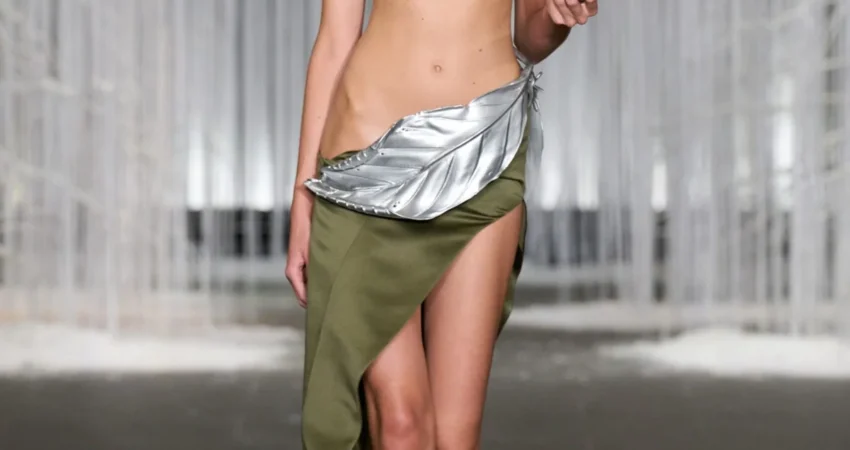
The contemporary fashion landscape witnessed a significant evolution this season as Grace Ling unveiled her latest collection, marking a pivotal moment of maturity for the New York-based designer. Characterized by a palpable increase in confidence and technical rigor, Ling’s annual showcase served as a testament to the brand’s upward trajectory within the luxury sector. The designer herself identified this collection as her most accomplished to date, citing a deliberate focus on the intrinsic qualities of garment construction and material integrity. "I think this is the best season to date. I’m just really proud of where the brand is at right now," Ling remarked during the post-show briefing. Her assessment was underpinned by a visible refinement in the atelier’s output, with Ling noting that "the quality is much better, and the construction is much better," a sentiment echoed by critics and industry observers alike.
This heightened attention to detail follows a period of high-profile exposure for the brand. Ling has increasingly become a fixture in the wardrobes of global icons, having successfully executed custom commissions for figures such as Kim Kardashian and Lisa of Blackpink. These collaborations with ultra-A-list celebrities have not only provided a global platform for her sculptural aesthetic but have also functioned as a rigorous testing ground for the brand’s bespoke capabilities. The experience of dressing individuals with such significant cultural influence has clearly informed the designer’s approach to the current collection, translating the demands of the red carpet into a cohesive and technically superior ready-to-wear offering.
The Shift from Viral Moments to Structural Mastery
While the Grace Ling brand initially gained momentum through its "sculptural couture"—often characterized by avant-garde silhouettes that lend themselves to viral Instagram moments—the latest collection highlights a strategic pivot toward sophisticated tailoring. For many industry analysts, this shift represents the true hallmark of Ling’s craftsmanship. While the dramatic, red-carpet-ready dresses continue to serve as the brand’s visual calling card, the tailoring presented this season demonstrates a level of sophistication that transcends mere spectacle.
Close examination of the garments reveals that fabric selection has moved to the forefront of Ling’s creative process. The tactile quality of the textiles provides a foundation for complex architectural cuts. A standout ensemble from the collection featured a meticulously cinched tailored vest paired with ultra-wide-legged trousers. This look encapsulated the "effortlessly cool" aesthetic that has become a signature of the label, yet it was the precision of the fit—the way the vest articulated the torso and the fluid drape of the voluminous pants—that signaled a new level of professional maturity. This focus on "quiet" excellence suggests a brand that is no longer reliant solely on the shock value of its silhouettes but is instead investing in the longevity of its pieces through superior engineering.
Chronology of Brand Development and Market Positioning
The trajectory of Grace Ling as a label is one of rapid but calculated growth. Founded on the principles of merging technology with traditional craft, the brand first gained attention for its innovative use of 3D printing and zero-waste patterns.
- 2020-2021: Launch of the brand during a period of digital transition in fashion. Ling’s background at Parsons School of Design and her experience at houses like Thom Browne and The Row provided a foundation in both conceptual rigour and commercial viability.
- 2022: The brand begins to capture the attention of celebrity stylists, leading to several high-profile red carpet appearances. The focus remains on "sculptural" elements, often utilizing metallic hardware and unconventional materials.
- 2023: Ling expands her presence in the New York fashion circuit, moving from digital presentations to physical runway shows. The integration of 3D-modeled components becomes more seamless.
- 2024 (Current Season): The emphasis shifts toward "wearable luxury." While maintaining her "goth-vampy" aesthetic, the construction of core items, such as leather jackets and suiting, is refined to meet the standards of established luxury heritage houses.
This chronological progression demonstrates a move from the experimental to the essential. The leather jacket showcased in the latest collection serves as a primary example. While it retained the dark, subversive undertones synonymous with Ling’s personal style, its construction was such that it appealed to a broader demographic. The garment was analyzed as a piece of high-end outerwear that could comfortably exist in the wardrobe of a consumer who may not identify with "goth" subcultures but values a well-constructed, durable, and stylistically distinct jacket.
Data and Economic Context: The Independent Designer Market
The success of Grace Ling comes at a time when independent designers in New York are facing significant economic headwinds. According to recent industry reports, the "bridge" and "contemporary luxury" segments have seen a 12% increase in consumer interest as buyers move away from mass-produced fast fashion in favor of "investment pieces" with a clear designer identity.
Furthermore, the "celebrity effect" remains a potent driver of brand valuation. Data indicates that a single high-profile placement on an individual like Lisa, who commands a social media following exceeding 100 million, can result in a 300% increase in search traffic for a nascent brand within 24 hours. However, Ling’s strategy appears to be leveraging this temporary visibility to build a permanent reputation for quality. By improving construction standards, the brand is positioning itself to capture the "Quiet Luxury" market—a segment valued at approximately $7 billion globally—by offering items that are structurally sound enough to justify their luxury price points.
Analysis of Design Implications: Materiality and Aesthetic Versatility
The evolution of Ling’s work suggests a deeper understanding of the relationship between the body and the garment. In previous seasons, the "sculptural" elements occasionally risked overshadowing the wearer. This season, however, the structure appeared to support the wearer’s movement. The use of leather, a notoriously difficult material to manipulate without adding excessive bulk, was handled with a lightness that indicated a sophisticated understanding of hide weight and seam placement.
The "vampy" aesthetic mentioned by critics is not merely a stylistic choice but a branding tool. By creating a specific "mood," Ling carves out a niche in a crowded market. Yet, the brilliance of the current collection lies in its versatility. The ability to take a subcultural aesthetic and refine it through the lens of high-end tailoring allows the brand to scale. A cinched vest is a staple of professional attire; by imbuing it with Ling’s specific architectural DNA, it becomes a unique proposition that serves both the fashion-forward youth and the established luxury professional.
Industry Reactions and Peer Perspective
While official statements from retail partners are often kept confidential, the presence of major editorial figures and high-end department store buyers at the show indicates a high level of market confidence. Inferred reactions from the front row suggest that Ling is being viewed as a leader among the new generation of New York designers who are successfully bridging the gap between digital-native marketing and old-world craftsmanship.
Fashion historians and critics have noted that Ling’s trajectory mirrors that of early-career designers who eventually became industry titans. The focus on "the best season to date" is a common refrain among designers who have finally aligned their creative vision with their manufacturing capabilities. For Ling, the hurdle of production quality—often the downfall of independent labels—appears to have been cleared.
Broader Impact and the Future of the Grace Ling Label
The implications of Grace Ling’s successful season extend beyond her own brand. It signals a revitalization of the New York tailoring scene, which has often been criticized for being too focused on sportswear and casual aesthetics. Ling’s insistence on "couture" levels of construction within a ready-to-wear framework challenges other independent designers to elevate their technical standards.
Furthermore, Ling’s commitment to improved quality serves as an informal sustainability initiative. In an era where "disposable luxury" is a growing concern, garments that are built to last—both structurally and aesthetically—are increasingly seen as the ethical choice. By focusing on the durability of a leather jacket or the timelessness of a well-cut pant, Ling is participating in a movement toward slower, more intentional fashion consumption.
Looking forward, the brand is well-positioned for international expansion. With a firm grasp on the North American market and a growing footprint in Asia thanks to celebrity endorsements, the next logical step involves deeper penetration into European retail spaces. If the brand can maintain the trajectory of quality improvement noted this season, it is likely to become a permanent fixture in the global luxury conversation.
In conclusion, Grace Ling’s latest show was more than a seasonal update; it was a declaration of professional maturity. By prioritizing the "overlooked" aspects of tailoring and construction, Ling has transformed her label from a source of red-carpet spectacle into a formidable house of modern craftsmanship. The "gothy, vampy" soul of the brand remains intact, but it is now supported by a skeletal structure of impeccable quality, ensuring that Grace Ling is a name that will resonate far beyond the fleeting trends of the digital age.

0 Comments