
The shadow of the plague, a disease inextricably linked with the grim imagery of teeming medieval cities, swarms of rats, and catastrophic epidemics that decimated populations across Europe, has long been cast over our understanding of human history. However, groundbreaking new research published in the esteemed scientific journal Nature is dramatically reshaping this narrative. This extensive study, drawing on sophisticated ancient DNA analysis, suggests that Yersinia pestis, the bacterium responsible for the plague, was already a formidable and highly lethal pathogen approximately 5,500 years ago. This ancient threat stalked small, mobile hunter-gatherer communities, long before the advent of agriculture and the subsequent rise of densely populated urban centers, conditions previously thought to be prerequisites for widespread and devastating plague outbreaks.
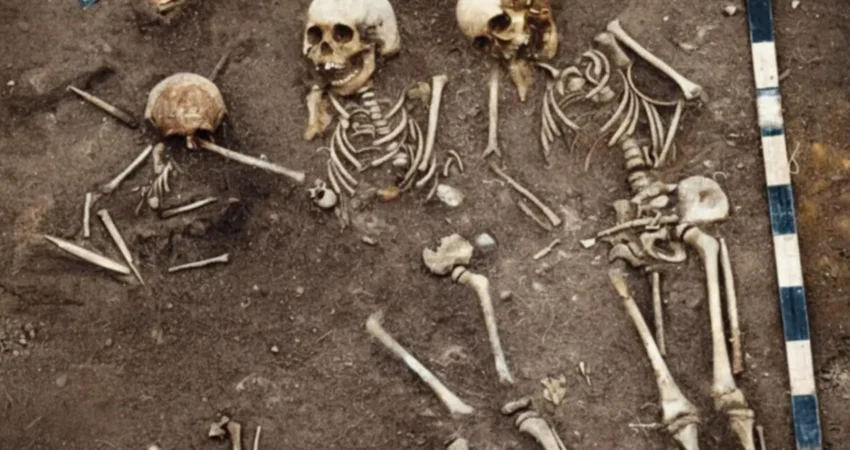
The research team, an international consortium of leading scientists, meticulously examined ancient DNA extracted from human remains discovered at four distinct hunter-gatherer burial sites situated in the geographically significant Lake Baikal region of East Siberia. By employing advanced genomic sequencing techniques on genetic material remarkably preserved within the dental structures of these ancient individuals, the scientists were able to reconstruct complete ancient bacterial genomes. This painstaking process allowed for the identification of previously unrecognized early strains of the plague bacterium.
"The question of whether the earliest forms of plague were mild or virulent has been a subject of ongoing scientific debate for years," stated Professor Eske Willerslev of the University of Copenhagen and the University of Cambridge, a senior author on the study. "However, our findings provide unequivocal evidence that these ancient strains were already remarkably potent and capable of causing significant mortality."
To achieve a comprehensive understanding of the dynamics of these prehistoric outbreaks, the researchers integrated their genetic findings with extensive archaeological data and precise radiocarbon dating. This multi-faceted approach allowed them to construct a detailed and coherent picture of the events that transpired within these ancient communities.
"By meticulously combining the plague DNA evidence, the genetic relationships inferred between the victims, detailed archaeological analyses, and robust radiocarbon dating, we have successfully pieced together a remarkably clear and complete narrative of what occurred during these outbreaks," explained lead author Ruairidh Macleod, who conducted this pivotal research as a PhD student at the University of Cambridge and is now a Research Fellow at the University of Oxford.
The analysis revealed the presence of Yersinia pestis DNA in a striking 18 out of the 46 individuals tested. This translates to nearly 40 percent of the individuals examined carrying definitive evidence of plague infection. Notably, this detection rate is even higher than that observed in some documented medieval plague burial sites, underscoring the pervasive and deadly nature of the disease in these prehistoric populations.
Challenging Preconceptions: Early Plague’s Virulence
Prior scientific understanding of ancient plague strains had often posited that they were less virulent than their later counterparts. This assumption was largely based on the observation that these earlier versions of Yersinia pestis were missing certain genetic elements that are crucial for the efficient transmission of bubonic plague through fleas and rodent hosts. Consequently, many scientists had theorized that these primitive strains were unlikely to have been capable of triggering large-scale epidemics.
The findings from the Lake Baikal region directly challenge this long-held view. At the two largest cemeteries investigated, the research team observed an unusually high concentration of deceased children and young adolescents. For decades, archaeologists had grappled with explaining this peculiar demographic anomaly, struggling to account for the disproportionately large number of young individuals buried in these sites over relatively short periods.
"The unusually high number of children, coupled with the compressed timeframe of deaths, presented a significant puzzle that has eluded us since the 1990s," commented archaeologist Andrzej Weber of the University of Alberta, who serves as a Principal Investigator for the Baikal Archaeology Project. "Discovering that plague was the underlying cause is extraordinary, but it also makes a great deal of sense in retrospect. It elegantly resolves a long-standing archaeological mystery."
Radiocarbon dating provided further crucial insights, indicating that many of these deaths occurred in close temporal proximity. In several instances, evidence suggests that siblings may have succumbed to the disease together, while other graves contained the remains of parents and children, strongly implying they perished during the same catastrophic outbreak.
Unveiling a Potent Weapon: The Role of Superantigens
A particularly significant discovery was the presence of a distinctive superantigen within the ancient plague strains. Superantigens are genetic factors that enable bacteria to produce potent toxins. Crucially, this specific superantigen has not been identified in later, historically documented plague strains. Superantigens are known to provoke an exaggerated and potentially harmful immune response in the host, leading to severe inflammation and significantly increasing the lethality of an infection.
"This discovery fundamentally alters our perception of the earliest plague outbreaks," explained senior author Martin Sikora, an Associate Professor at the University of Copenhagen. "Even before the bacterium evolved the highly efficient flea-borne transmission mechanisms that characterize later bubonic plague, these ancient strains appear to have possessed a potent arsenal of virulence factors that could render an infection extremely deadly."
Taken in its entirety, the evidence presented in this study strongly suggests that some of the earliest identifiable plague outbreaks may have been as devastating as the notorious epidemics that ravaged Europe centuries later. The findings indicate that these ancient strains were particularly lethal to children, and this high mortality rate was achievable even without the sophisticated flea-based transmission routes that became synonymous with the plague’s later infamous spread.
Tracing the Origins: A Link to Wild Rodents
The research also lends substantial support to the prevailing theory that the plague may have first emerged in Central or North-East Asia. From this presumed epicenter, it is believed to have disseminated more widely across Eurasia, facilitated by populations of wild rodents.
Archaeological evidence from the Lake Baikal region points to a close ecological and behavioral relationship between the hunter-gatherer communities inhabiting the area and marmots, a species of large burrowing rodents that are known carriers of the plague bacterium even today. The researchers posit that these prehistoric outbreaks may have originated when the disease jumped directly from infected marmots to humans.
If this hypothesis holds true, it signifies that the plague was already capable of instigating deadly epidemics within small, isolated human populations thousands of years before the development of large cities, densely packed settlements, and the flea-driven transmission cycles that ultimately cemented the disease’s infamous historical reputation.
Broader Implications for Public Health and Evolutionary Biology
The implications of this research extend far beyond historical understanding. By pushing back the known timeline of plague’s lethality, the study necessitates a re-evaluation of early human population dynamics and migration patterns. The presence of such a virulent pathogen in small, mobile groups could have significantly influenced their survival strategies, social structures, and territorial movements.
Furthermore, understanding the evolutionary trajectory of Yersinia pestis is crucial for contemporary public health efforts. The identification of novel virulence factors, like the superantigen found in these ancient strains, could provide valuable insights into how the bacterium has adapted and evolved over millennia. This knowledge might contribute to the development of more effective diagnostic tools and therapeutic interventions for current and future plague threats.
The study also highlights the power of interdisciplinary research, demonstrating how the integration of genetics, archaeology, and radiocarbon dating can unlock profound secrets about our past. The ability to analyze ancient DNA has revolutionized our understanding of infectious diseases and their historical impact, offering a window into the biological challenges faced by our ancestors.
The Lake Baikal region, with its rich archaeological record and favorable conditions for DNA preservation, continues to be a fertile ground for such discoveries. Future research in this area may yield further revelations about the early evolution and spread of other ancient pathogens, painting an even more detailed picture of humanity’s long and often perilous journey through disease. The findings serve as a potent reminder of the enduring power of nature’s microscopic agents and their profound, often devastating, influence on the course of human civilization.

0 Comments