
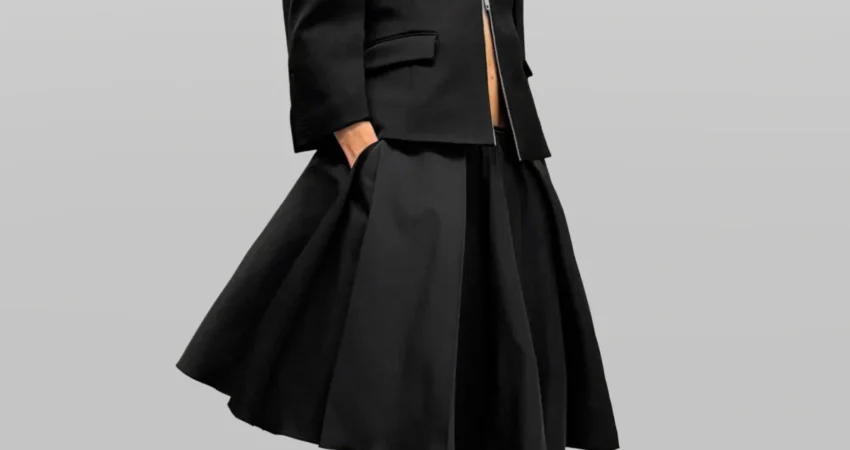
The evolution of an independent fashion label often mirrors the personal growth of its founders, a trajectory vividly illustrated by the latest Spring collection from the New York-based brand Commission. Designers Jin Kay and Dylan Cao, who established the label in 2018, have transitioned from being perceived as the industry’s "coolest disruptors" to mature architects of a refined, yet subversive, aesthetic. This season marks a significant pivot for the brand, as it seeks to balance its reputation for "edgy, thought-provoking work" with a newfound emphasis on elevation and chic wearability. As the designers move from their mid-20s into their 30s, the collection serves as a "second coming-of-age," reflecting a sophisticated maturation that maintains the brand’s core identity of challenging traditional notions of beauty through the lens of American sportswear.
The Evolution of the Commission Identity
Since its inception, Commission has carved out a niche by deconstructing the visual language of the 1980s and 90s, particularly the "working woman" wardrobe often associated with the designers’ mothers. However, the Spring collection signals a shift toward a more personal and introspective timeline. By focusing on the "scrappiness" of youth and the aesthetics of suburban life in the early 2000s, Kay and Cao are not merely chasing nostalgia; they are translating a rebellious, DIY attitude into a structured, "grown-up" wardrobe.
This transition is critical for an independent label in the competitive New York fashion ecosystem. According to industry analysts, brands that survive the five-year mark often do so by refining their commercial viability without sacrificing the creative "edge" that initially garnered attention. Commission’s Spring collection appears to be a direct response to this market reality, moving away from purely "editorial" pieces toward garments that "you can live in," as Kay noted during the collection’s unveiling.
Chronology of a Brand: From Disruption to Refinement
To understand the significance of the Spring collection, one must look at the brand’s chronological development:
- 2018: The Inception. Jin Kay, Dylan Cao, and Huy Luong (who was part of the original trio) founded Commission with a focus on reimagining Asian-American heritage through the lens of 1980s corporate wear.
- 2019-2020: Rapid Recognition. The brand quickly became a favorite among fashion editors for its sharp tailoring and "off-kilter" silhouettes. They were recognized as finalists for the LVMH Prize in 2020, solidifying their status as rising stars.
- 2021-2022: Expansion into Menswear. Commission expanded its vocabulary, bringing its subversive take on "dad style" and classic menswear staples to a broader audience.
- Present: The Second Coming-of-Age. The current season represents a synthesis of these previous eras, blending the technical rigor of their early tailoring with a more relaxed, authentic exploration of the designers’ own youth.
Technical Execution in Womenswear: Reimagining the Professional Silhouette
The Spring womenswear lineup serves as a masterclass in "familiar yet fresh" design. The collection opened with a black blazer—a staple of professional attire—that was reimagined with princess seams along the front and back. This technical choice creates a slight flare, moving the garment away from the "stuffy" connotations of traditional corporate wear. The addition of a buckled neckline further subverts the piece, adding a hint of utilitarian rebellion.
The Little Black Dress (LBD), another foundational wardrobe element, was presented in a satin boxy version featuring faux epaulettes on the back. This play on military and corporate tropes is a hallmark of Commission, but here it is executed with a lighter, more fluid touch.
One of the collection’s most discussed pieces is a plaid cotton dress that merges Western-style yokes with an innovative "shirt sleeve" waist-tie system. The use of a horsehair underlay to achieve a full skirt demonstrates a high level of garment construction, elevating a "not too precious" flannel material—reminiscent of suburban childhood—into a piece of high-fashion architecture. This juxtaposition of "low" materials (suburban flannel) and "high" construction (horsehair underlays) encapsulates the brand’s current mission.
Menswear and the Art of the "Frankenstein" Splicing
The menswear offerings for Spring mirror the complexity of the womenswear, focusing on what the designers call "Frankensteined" garments. A standout piece is a tuxedo shirt comprised of two different styles spliced together. The shirt features mismatched stripes on the front and back, with sleeves of varying lengths and cuff styles. This "spliced" technique requires meticulous pattern-making to ensure that the final garment remains wearable despite its intentional asymmetry.
The leather moto vest also highlighted this season’s "slightly-off" charm. By cropping the silhouette and adding the brand’s signature "sleeve" piping along the front—paired with Western fringing on the back—Kay and Cao created a garment that feels like a curated artifact of various subcultures. It is this ability to blend disparate influences—the biker, the cowboy, and the suburban teenager—that maintains Commission’s reputation for thought-provoking design.
Supporting Data: The Market for Upcycled and Nostalgic Fashion
Commission’s use of upcycled materials this season aligns with broader industry trends toward sustainability and "unique" luxury. The collection featured a statement top constructed from strategic strips of several upcycled band tees, featuring icons like Elvis Presley and Led Zeppelin.
Data from the 2023 Fashion Transparency Index and various luxury resale platforms indicate a growing consumer demand for "one-of-a-kind" pieces that incorporate vintage elements.
- Growth in Upcycling: The global upcycled fashion market is projected to grow significantly as consumers seek alternatives to mass-produced luxury.
- Nostalgia Factor: Search volume for "2000s fashion" and "Y2K aesthetics" has remained high, but the market is shifting toward "refined nostalgia"—moving away from costume-like recreations toward sophisticated interpretations like those seen in Commission’s suburban-inspired flannel pieces.
Analysis of Implications: A New Era for New York Sportswear
The Spring collection from Commission has broader implications for the New York fashion landscape. For years, "American sportswear" was defined by a specific set of rules: clean lines, practicality, and a certain degree of conservatism. Commission is part of a new guard that is rewriting these rules.
By integrating "weird" details—such as C-shaped belt loops on denim and contrast dark brown back pockets on leather pants—into highly wearable silhouettes, Kay and Cao are proving that "thought-provoking" fashion does not have to be unwearable. Their focus on the "frontal-lobe-developing" demographic suggests a target audience that is intellectually engaged with fashion but requires functionality for daily life.
Industry observers suggest that this shift toward "wearable weirdness" may be the key to longevity for independent New York labels. As wholesale markets become more selective, brands that can offer a distinct creative voice alongside high-quality, functional garments are more likely to secure long-term partnerships with major retailers like SSENSE, Net-a-Porter, and Nordstrom, all of whom have previously carried Commission.
Official Responses and Industry Reception
While formal reviews from major critics are still emerging, the initial reception within the industry has been overwhelmingly positive. Buyers have noted that the "toning down" of the brand’s more "bizarro" elements in favor of "refined elegance" makes the collection more accessible to a global market.
"We’re trying to make sure it’s not just for photos or editorial, but something that you can live in," Jin Kay stated. This sentiment resonates with a post-pandemic consumer base that values both comfort and a strong sense of personal identity. The designers’ move to their 30s has clearly brought a level of pragmatic confidence to their work, allowing them to look back at their youth with clarity rather than just sentimentality.
Conclusion: The Future of Commission
As Commission continues to navigate its "second coming-of-age," the Spring collection stands as a testament to the power of evolution. By refining their silhouettes and deepening their exploration of personal history, Jin Kay and Dylan Cao have created a body of work that is both a reflection of their past and a roadmap for their future. The brand has successfully transitioned from a "label to watch" to a foundational piece of the modern New York fashion narrative, proving that growing up doesn’t have to mean losing one’s edge—it simply means sharpening it.

0 Comments