
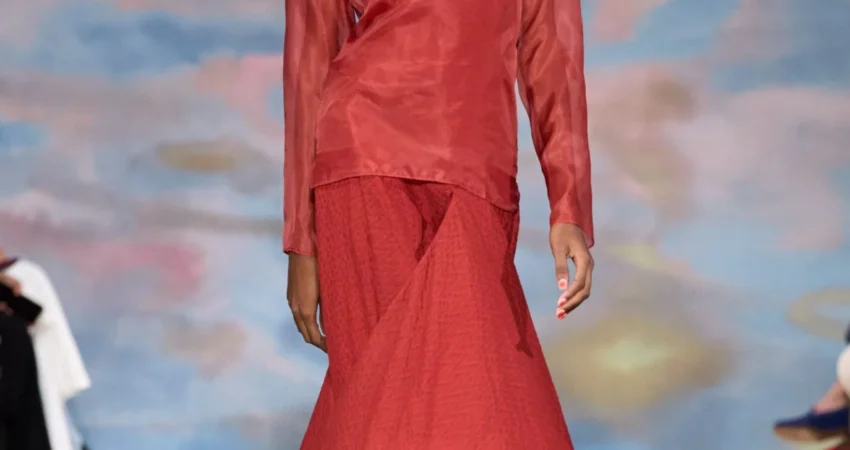
The basement of the Rosewood London recently served as the backdrop for a significant moment in contemporary British fashion as Priya Ahluwalia presented a collection that successfully navigated the complex intersection of historical homage, political resistance, and commercial viability. Ahluwalia, a designer known for her ability to weave her Indian and Nigerian heritage into the fabric of modern menswear and womenswear, utilized her latest runway show to explore the profound cultural impact of the Second World Black and African Festival of Arts and Culture, popularly known as Festac ’77. By blending the architectural geometry of 1970s Lagos with the utilitarian aesthetics of the Black Panther Party, the collection articulated a narrative of "revelry and resistance," supported by high-profile corporate partnerships that highlight the logistical realities of the modern independent fashion house.
The Historical Catalyst: Festac ’77 and Pan-Africanism
To understand the aesthetic choices of the Spring/Summer 2025 collection, one must examine the monumental event that served as its primary inspiration. Festac ’77 was a month-long international festival held in Lagos, Nigeria, from January 15 to February 12, 1977. It remains one of the largest and most significant cultural events held on the African continent, drawing approximately 16,000 participants from 56 African nations and countries across the Black diaspora.
The festival was designed as a showcase of Black excellence, creativity, and intellectual rigor, intended to promote Pan-African unity and challenge the colonial narratives that had long dominated the global perception of African culture. Ahluwalia specifically drew from the architectural floor plans and aerial photography of the National Arts Theatre in Lagos, the central hub of the festival. This building, with its distinctive shape resembling a military hat (specifically a Bulgarian-designed structure inspired by the Palace of Culture and Sports in Varna), provided the geometric foundation for the collection’s signature prints.
By translating these architectural blueprints into an abstract red-and-green-on-white print, Ahluwalia grounded her garments in a specific moment of Nigerian history. The print appeared across a variety of silhouettes, including off-the-shoulder "wiggle" dresses, sectioned soccer jerseys, and coordinated shirt-and-short sets, effectively turning the physical memory of the venue into a wearable map of cultural history.
The Aesthetic Narrative: Revelry and Resistance
The collection was structured around the duality of "revelry and resistance," a theme that Ahluwalia explored through the lens of historical activism. In addition to the celebratory atmosphere of Festac ’77, the designer’s research led her to the visual identity of the Black Panther Party. While the Panthers are often remembered for their paramilitary attire, Ahluwalia focused on photographs of members in "off-duty" moments—periods of rest and social interaction that humanized the political movement.
This influence was manifested in the styling of the runway show, most notably through the use of angled berets. These were paired with sophisticated, double-layered suiting and slouchy, top-stitched denim, suggesting a wardrobe that is both prepared for political engagement and designed for leisure. The integration of "casualized military shirting" further emphasized this point, softening the harsh lines of traditional uniforms into "wearable postures of pleasure."
For the womenswear components, Ahluwalia utilized silk organza to create sculptural silhouettes. These garments often featured divisions at the midriff, a design choice intended to evoke the formal uniforms worn during national celebrations. The inclusion of fringed dresses and tuxedo-hemmed tunics for men bridged the gap between traditional occasion wear and contemporary streetwear, a signature of the Ahluwalia brand since its inception in 2018.
Strategic Partnerships and the "Hustle" of Independent Design
A notable aspect of the presentation was the overt transparency regarding its commercial backing. In a move that reflects the economic pressures facing independent designers in the United Kingdom, the collection notes were accompanied by four pages of sponsor acknowledgments. Ahluwalia herself addressed this reality, stating, "I’m going to hustle as much as I can to make my dreams come true. Basically, I think that’s all you can do."
The show featured several key collaborations that integrated seamlessly into the collection’s aesthetic:
- Puma: The German sportswear giant partnered with Ahluwalia on the footwear and the sectioned soccer shirts, leveraging the designer’s ability to elevate athletic gear into high-fashion contexts.
- Calico Wallpaper: The runway backdrop featured custom-designed wallpaper by Calico, based on Ahluwalia’s prints, creating an immersive environment in the Rosewood London basement.
- Poppi: The beverage company provided refreshments for the event, illustrating the multi-sensory approach to modern fashion sponsorships.
This "spon-con" (sponsored content), as noted by industry observers, did not detract from the artistic integrity of the garments. Instead, it served as a case study in how emerging brands can utilize corporate synergy to fund ambitious, research-heavy collections. The presence of Puma, in particular, aligns with the collection’s focus on soccer culture, a sport that holds significant cultural weight in both Nigeria and the United Kingdom.
Timeline of the Ahluwalia Brand Evolution
The Spring/Summer 2025 collection represents a mature phase in Priya Ahluwalia’s career. A brief chronology of the brand highlights its rapid ascent within the industry:
- 2018: Priya Ahluwalia graduates from the University of Westminster and launches her namesake label, focusing on sustainable practices and heritage storytelling.
- 2019: The brand wins the prestigious H&M Design Award and is shortlisted for the LVMH Prize.
- 2020: Ahluwalia is one of the eight winners of the LVMH Prize (split due to the COVID-19 pandemic) and receives the BFC/GQ Designer Fashion Fund.
- 2021: The designer is awarded the Queen Elizabeth II Award for British Design, presented by the Princess Royal.
- 2022-2024: The brand expands its global footprint through collaborations with Ganni, Microsoft, and Mulberry, while consistently appearing on the London Fashion Week schedule.
This timeline underscores the designer’s ability to maintain a consistent creative voice while scaling her business through strategic alliances and critical acclaim.
Industry Implications and the "Ahluwalia Girl"
Central to the collection’s philosophy is the concept of plurality. When questioned about the identity of the "Ahluwalia girl," the designer responded that her target demographic is a "myriad of people and their own experiences." This inclusive approach is reflected in the diversity of the casting and the breadth of the collection, which spans from utilitarian denim to high-end occasion wear.
From an industry perspective, Ahluwalia’s work serves as a vital bridge between the historical archives of the Global South and the luxury markets of the West. By centering Festac ’77, she brings a specific African historical event into the mainstream fashion dialogue, encouraging a more nuanced understanding of Pan-Africanism beyond stereotypical motifs.
Furthermore, the collection highlights the ongoing challenges of the London fashion ecosystem. As many independent designers struggle with the rising costs of production and the logistical hurdles of post-Brexit trade, Ahluwalia’s "hustle"—characterized by high-quality output supported by robust corporate partnerships—offers a potential blueprint for survival and growth.
Conclusion: A Synthesis of History and Modernity
The Ahluwalia Spring/Summer 2025 presentation at the Rosewood London was more than a display of new apparel; it was a sophisticated synthesis of architectural history, political symbolism, and modern business strategy. By mining the floor plans of the National Arts Theatre in Lagos and the off-duty wardrobes of the Black Panthers, Priya Ahluwalia created a collection that honors the past while remaining firmly rooted in the present.
The collection’s success lies in its ability to carry the weight of its numerous sponsorships without losing its specific, authoritative voice. As the brand continues to evolve, its focus on "revelry and resistance" provides a compelling narrative for a global audience that increasingly demands both aesthetic innovation and cultural depth from the fashion industry. Through her meticulous research and strategic "hustle," Ahluwalia remains a pivotal figure in the movement to diversify the stories told on the world’s most prominent runways.

0 Comments