
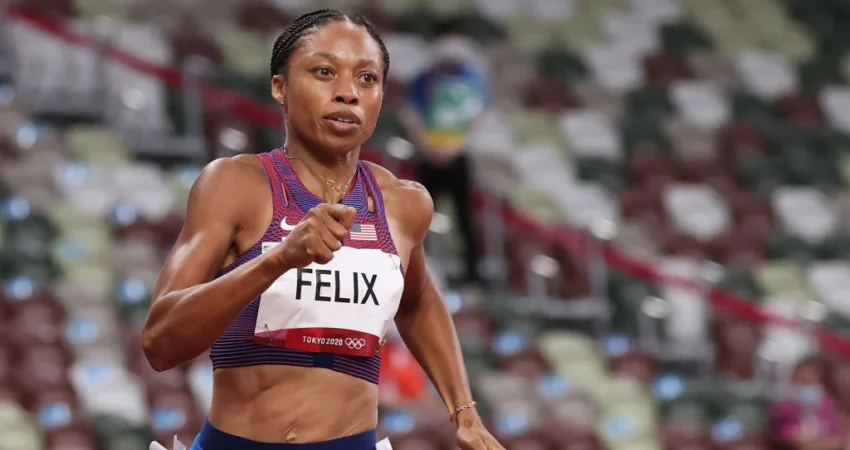
Allyson Felix, the most decorated track and field athlete in history, has officially signaled her intention to return to the global stage for the 2028 Olympic Games in Los Angeles. At 42 years old and a mother of two, Felix is positioning her comeback not merely as a pursuit of further hardware, but as a direct challenge to the prevailing societal expectations regarding age, motherhood, and the longevity of female professional athletes. The announcement marks a significant pivot for the sprinter, who had previously stepped away from elite competition, and it highlights an evolving landscape where veteran athletes are increasingly leveraging advanced sports science and advocacy to extend their careers well into their fourth decade.
A Legacy Defined by Excellence and Advocacy
To understand the weight of Felix’s return, one must consider the breadth of her existing resume. Over the course of five Olympic Games—spanning from Athens 2004 to Tokyo 2020—Felix amassed 11 Olympic medals, including seven gold, three silver, and one bronze. This tally surpassed Carl Lewis for the most Olympic medals won by an American track and field athlete. Beyond the Olympics, her 20 World Championship medals (14 of them gold) further cement her status as a titan of the sport.
However, Felix’s legacy is equally defined by her actions off the track. In 2019, she became a central figure in the movement for maternal protections in sports. After breaking her silence regarding a contentious contract dispute with Nike—which included a proposed 70% pay cut following the birth of her daughter, Camryn—Felix sparked a global conversation about how the sports industry treats pregnant women and mothers. Her advocacy led to significant policy changes at Nike and other major athletic brands, ensuring that female athletes would no longer face financial penalties for starting families. This history of advocacy provides the foundation for her current comeback, as she seeks to prove that "success" at 42 is defined by the courage to compete rather than just the final time on the clock.

The Motivation: Curiosity and Defying the "Slow Down" Narrative
Felix describes the genesis of her return as a "deep curiosity" about the limits of the human body in its fourth decade. Speaking on her decision, Felix noted that she began a "deep dive" into the history of master’s athletes and those who continued to compete at elite levels as they aged. She found herself mulling over specific logistical questions: Could she still make the U.S. Olympic team? Could she contribute to a relay pool?
This internal inquiry was met with external societal pressures that Felix felt compelled to resist. She noted that women over the age of 40 are frequently met with messages suggesting they should "slow down" or "get smaller." By returning to the track, Felix aims to serve as a visible counter-narrative to these limitations. Supported by her peers and family, she decided that being "vulnerable and living it out loud" was more impactful than a quiet retirement.
Strategic Training and the Evolution of the Athlete’s Body
The road to the 2028 Los Angeles Olympics will not mirror the traditional, high-volume competition circuits of Felix’s younger years. Elite track and field typically requires a grueling schedule of Diamond League events across multiple continents, often keeping athletes away from home for months at a time. Felix has explicitly stated that she will not be returning to this traditional circuit. Instead, her approach will be "very strategic," designed to maximize her physical output while minimizing the toll on her body.
Sports science for athletes over 40 emphasizes recovery and low-impact conditioning. Felix has adjusted her regimen to include:

- Increased Aquatic Conditioning: Utilizing pool work to maintain cardiovascular fitness without the joint stress of track repetitions.
- Stationary Cycling: Integrating high-intensity interval training (HIIT) on the bike to preserve explosive power.
- Intentional Recovery: A heightened focus on sleep hygiene, physical therapy, and anti-inflammatory nutrition—factors she admits were secondary concerns earlier in her career.
By focusing on the "relay pool"—a group of six athletes selected to represent the U.S. in the 4x100m or 4x400m relays—Felix is targeting a role that allows her to utilize her immense experience and tactical intelligence. This strategy acknowledges the reality of age-related changes in raw top-end speed while leveraging her status as one of the world’s premier relay "anchors" and transition specialists.
The Family Team Effort and Home-Field Advantage
Central to Felix’s 2028 campaign is her family. Married to Kenneth Ferguson, himself a former elite sprinter and hurdler, Felix describes the comeback as a "family team effort." Her children—seven-year-old Camryn and two-year-old Kenneth—are the primary drivers of her new definition of success. Felix intends for her children to be active participants in the journey, often bringing them to the track or involving them in discussions about her training progress.
The choice of the 2028 Games is also deeply personal. As a native of Los Angeles, Felix would be competing in her backyard for what would likely be the final chapter of her competitive story. The "home-field advantage" offers a logistical benefit, allowing her to maintain her domestic routine, including school drop-offs and daily affirmations with her daughter, which she cites as the "favorite part" of her day. This balance between the domestic and the professional is a cornerstone of her partnership with Momcozy, a postpartum product company, where she works alongside activists like Reshma Saujani to highlight the needs of working mothers.
Chronology of the Comeback Trail
The timeline for Felix’s return is expected to follow a structured ramp-up leading into the 2027 World Championships and the 2028 Olympic Trials:

- 2024-2025: Foundation building and base conditioning. This phase focuses on re-establishing aerobic capacity and core strength following her second pregnancy.
- 2026: Selective domestic competition. Felix is expected to participate in limited U.S.-based meets to gauge her speed against current collegiate and professional talent.
- 2027: World Championship Qualification. Attempting to make the U.S. relay pool for the World Athletics Championships will serve as the ultimate litmus test for the 2028 Olympic goal.
- 2028: The Los Angeles Olympic Trials. Felix will need to finish within the top tier of U.S. sprinters to secure her spot on the roster.
Broader Implications for the Sports Industry
Felix’s return is being closely watched by sports analysts and corporate sponsors alike. Historically, female athletes were often considered "past their prime" by their early 30s. However, the success of athletes like Shelly-Ann Fraser-Pryce, who won world titles in her mid-30s after childbirth, has begun to shift the paradigm.
The implications of Felix’s 2028 run include:
- Sponsorship Innovation: Felix’s own brand, Saysh, which she launched after her split with Nike, represents a new model of athlete-owned commerce. Her success could encourage more veteran athletes to move away from traditional endorsement models toward equity-based entrepreneurship.
- Advocacy for Maternal Health: Felix has used her platform to address the disproportionate maternal mortality rates among Black women in the United States—a crisis she personally experienced during the traumatic birth of her daughter. Her continued presence in the spotlight ensures these issues remain at the forefront of the national conversation.
- Redefining "Master’s" Athletics: If Felix successfully makes the 2028 team, she will bridge the gap between "master’s" level competition and elite "open" competition, potentially opening doors for more veterans to receive funding and support.
Conclusion: A New Definition of Success
As Allyson Felix prepares for the four-year journey toward Los Angeles, she is clear that the outcome is not solely dependent on a podium finish. "I’ll explain [to my kids] that it’s important to go after something even when you don’t know how it’s going to turn out," she said. By centering her comeback on "just trying" and demonstrating a resilient work ethic in the face of potential defeat, Felix is attempting to rewrite the script for what it means to be a champion.
In a sport where victory is usually measured in hundredths of a second, Felix’s greatest achievement in 2028 may not be the time she clocks on the track, but the fact that she chose to step into the blocks at all. Her journey stands as a testament to the power of the female voice and the enduring strength of an athlete who refuses to be defined by the calendar.

0 Comments