
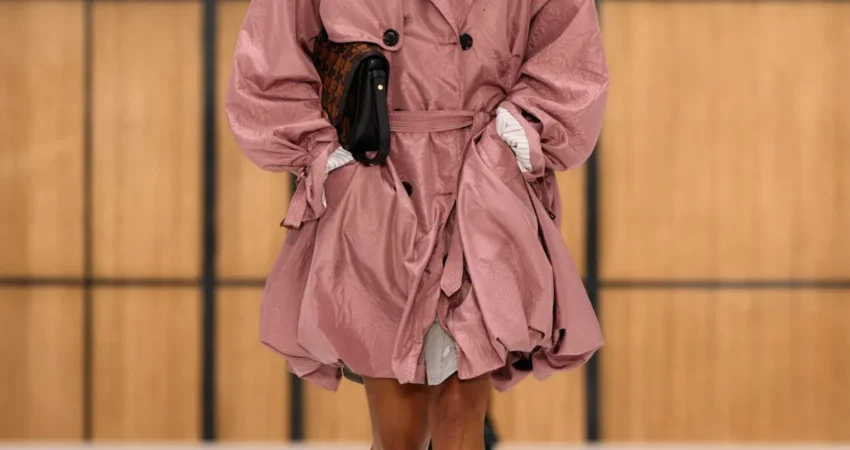
The latest presentation from Burberry, under the creative direction of Daniel Lee, marked a significant departure from the brand’s traditional reputation for rigid polish and immaculate tailoring. Staged at the Chelsea College of Arts, the Spring/Summer 2025 collection introduced a deliberate aesthetic of imperfection, characterized by rumpled fabrics, tarnished materials, and a collaboration with the legendary textile designer Celia Birtwell. This shift represents Lee’s ongoing effort to redefine British luxury by infusing it with a sense of "human" touch and youthful subversion, moving away from the hyper-controlled image that has historically defined the house.
A Strategic Shift Toward Human-Centric Luxury
Since his appointment, Daniel Lee has been tasked with revitalizing Burberry’s identity while maintaining its commercial viability as Britain’s preeminent fashion house. In this latest collection, Lee addressed the tension between commercial expectations and creative expression by leaning into what he describes as "emotional" luxury. During the post-show briefing, Lee noted that luxury products are often sought for their emotional resonance rather than pure necessity. By introducing ruffles, imperfections, and a "touched" texture, the collection aimed to create a more relatable and grounded version of the brand.
The choice of venue—the Chelsea College of Arts—served as a symbolic backdrop. The institution is not only a hub for contemporary British creativity but also a place where Celia Birtwell once taught. This connection bridged the gap between the brand’s heritage and the academic foundations of British design, setting the stage for a collection that prioritized artistic collaboration over sterile corporate branding.
The Influence of Celia Birtwell: A Textile Revolution
The most notable element of the collection was the involvement of 85-year-old Celia Birtwell, a figure who defined the visual landscape of British fashion in the late 1960s and early 1970s. Birtwell is best known for her work with her former husband, the late Ossie Clark, where her prints became synonymous with the "Romantic" era of London fashion. Lee referred to Birtwell as the "epitome of British fashion," highlighting her ability to create prints that remain timeless across decades.
The collaboration saw Birtwell’s signature floral motifs and hand-drawn "doodled" faces integrated into the Burberry DNA. The traditional Burberry check was reimagined as a trellis-like structure, upon which Birtwell’s vibrant florals were layered. These designs were not merely printed but were given three-dimensional life through beaded embellishments and badges. One specific reference point was the "Painted Lady" portrait of Birtwell created by David Hockney in 1985, which had previously graced the cover of Vogue France. The flattened, punchy aesthetic of Birtwell’s facial illustrations informed the color palette of the entire collection, introducing hues like swimming-pool blue and sunset orange.
Chronology of Creative Lineage at Burberry
The inclusion of Birtwell and the subsequent references to David Hockney place Daniel Lee within a specific lineage of Burberry creative directors. Christopher Bailey, who led the brand for nearly two decades, frequently cited Hockney as a primary influence, particularly regarding color theory and personal style. By revisiting these themes, Lee is tapping into a proven aesthetic of "Britishness" that balances eccentricity with tradition.
The timeline of the collection’s development began in May, when Lee and Birtwell first met. Lee admitted that he had rarely collaborated on a full collection before, suggesting that the partnership was born out of a genuine creative spark rather than a calculated marketing move. This collaboration follows a brief cameo Birtwell made for Valentino’s Fall 2015 collection, but the Burberry show marked her most substantial return to the runway in recent years.
Cultural Intersections: The Runway Debut of Central Cee
While Birtwell represented the heritage of British design, the show also looked toward the future of UK culture through the runway debut of rapper Central Cee. The artist, known for his global impact on the drill music scene and his distinct "Shepherd’s Bush" style, walked the runway in a manner that Lee described as "sagging past" in hard, youthful attire. This inclusion was a deliberate nod to the "ends"—a colloquial term for London’s suburban neighborhoods—and the street-level fashion that continues to influence global trends.
The presence of Central Cee on the runway served to anchor the collection in the contemporary moment, ensuring that the brand remains relevant to a younger, more diverse audience. It provided a stark contrast to the front-row presence of Birtwell, creating a cross-generational dialogue between the 1970s bohemian spirit and the 2020s urban aesthetic.
Materiality and Technical Innovation
The collection’s emphasis on "imperfection" was most evident in its material choices. Lee moved away from the "hyper-controlled gabardine grip" that had dominated his previous seasons. While the trench coat remained a staple, it was reimagined in various states of deconstruction:
- Taffeta Trenches: Featuring puffed hems and embroidered Birtwell florals, these garments offered a lighter, more tactile alternative to traditional heavy cotton.
- Washed Denim: Utilizing shades of pink, trench taupe, and black, the denim pieces were treated to look "roughened" and "touched," avoiding the pristine finish of typical luxury denim.
- Smudged Footwear: The collection featured vulcanized sneakers with intentionally smudged white soles, as well as 1970s-style strapped clogs and technical climbing moccasins.
- 3D Embellishments: Floral prints were transformed into badges and beaded structures, adding a craft-heavy element to the technical outerwear.
This focus on texture—specifically the "rumple and smudge"—suggests a move toward "lived-in" luxury. It acknowledges that the modern consumer often prefers garments that feel personal and worn rather than stiff and ceremonial.
Market Implications and Brand Strategy
Industry analysts suggest that Lee’s shift toward a more expansive and confident aesthetic is a necessary evolution for Burberry. While the brand has tightened its commercial operations over the last few fiscal quarters, there has been a perceived need for more creative "zing" to distinguish the label in a crowded luxury market. By broadening the range of references—from technical climbing gear to chiffon gowns—Lee is positioning Burberry as a versatile lifestyle brand rather than just a provider of outerwear.
The "remorseless merchandising" noted by observers indicates that despite the creative flourishes, the collection is built on a solid commercial foundation. Every "imperfect" detail, from the smudged sneaker soles to the rumpled taffeta, is a calculated design choice aimed at a market that increasingly values authenticity and "human" elements in their purchases.
Conclusion: Redefining the "British" Identity
The Spring/Summer 2025 collection demonstrates Daniel Lee’s growing confidence in his role at Burberry. By embracing the work of Celia Birtwell and the cultural presence of figures like Central Cee, he is synthesizing different eras of British creativity into a singular vision. The move away from "shiny, smooth, and polished" toward something more "cool and youthful" reflects a broader trend in the luxury sector where the emotional connection to a garment is becoming as important as its craftsmanship.
As Burberry continues to navigate a complex global economy, Lee’s focus on the "human" aspect of design may provide the emotional anchor the brand needs to maintain its status as a leader in international fashion. The collaboration with Birtwell, in particular, serves as a reminder that British fashion is at its best when it is subversive, collaborative, and unafraid of a little bit of rumple and smudge.

0 Comments