
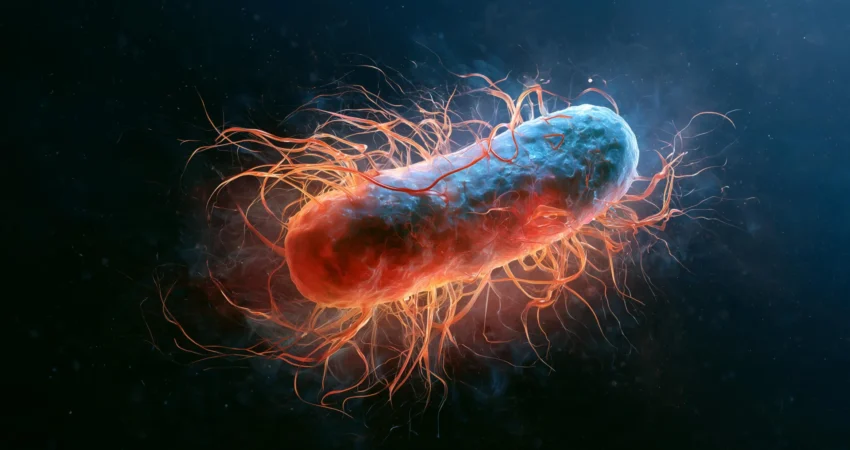
Researchers at the Hefei Institutes of Physical Science, Chinese Academy of Sciences, have unveiled a groundbreaking discovery that could redefine approaches to healthy aging. Their work, led by Professor An Xu, demonstrates that a specific strain of magnetotactic bacterium, Magnetospirillum magneticum AMB-1 (AMB-1), can significantly extend the healthy lifespan of the model organism Caenorhabditis elegans (C. elegans). The study, published in the esteemed journal Free Radical Biology and Medicine, further elucidates the intricate molecular mechanisms underlying this longevity effect, pointing to the suppression of ferroptosis, a specific form of cell death, as a key factor.
The Quest for Healthy Aging: A Persistent Challenge
Aging, a complex biological process characterized by the gradual decline of physiological functions, is intrinsically linked to an increased susceptibility to a myriad of chronic diseases. For decades, the scientific community has been engaged in a relentless pursuit of interventions that can not only extend lifespan but, more importantly, enhance healthspan – the period of life spent in good health. While pharmacological agents and genetic modifications have shown promise in preclinical studies, concerns regarding their safety profiles, potential side effects, and feasibility for widespread clinical application continue to present significant hurdles. The search for novel, safe, and effective anti-aging strategies remains a paramount objective in modern biomedical research.
Magnetotactic Bacteria: An Unconventional Ally in Longevity Research
Emerging from the realm of microbiology, magnetotactic bacteria (MTBs) offer a distinct and potentially transformative avenue for addressing aging. These unique microorganisms possess an extraordinary biological feature: the intracellular formation of magnetosomes, crystalline magnetic nanoparticles. This remarkable ability has already garnered substantial attention for their potential applications in diverse fields, including targeted drug delivery, magnetic resonance imaging (MRI) contrast agents, and even as therapeutic agents in cancer treatment, owing to their excellent biocompatibility and inherent magnetic properties. However, their influence on the aging process itself has been a relatively unexplored frontier until this recent investigation.
Unveiling the Longevity Potential of AMB-1 in C. elegans
To rigorously assess the anti-aging capabilities of MTBs, Professor Xu’s team strategically employed Caenorhabditis elegans (C. elegans) as their model organism. This nematode worm is a well-established and invaluable tool in aging research due to its short lifespan, genetic tractability, and conserved aging pathways that share remarkable similarities with those in mammals, including humans. The experimental design involved exposing populations of C. elegans to the Magnetospirillum magneticum AMB-1 strain.
The results were compelling. Worms treated with AMB-1 exhibited a statistically significant increase in their average lifespan, with an impressive extension of 43.39%. This substantial longevity enhancement was not merely a superficial increase in survival time; the treatment also demonstrably preserved critical physiological functions in aging worms. Specifically, the researchers observed the maintenance of neurological function, a crucial aspect of healthy aging, and the preservation of intestinal integrity, a vital organ system that often deteriorates with age. This dual benefit – extending lifespan while maintaining functional health – underscores the profound impact of AMB-1.
The Critical Role of Magnetosome Formation
A pivotal question that arose from these initial findings was the extent to which the bacteria’s ability to produce magnetosomes contributed to the observed longevity effects. The research team meticulously investigated this by comparing the effects of different AMB-1 variants. Their experiments revealed that the presence and functionality of magnetosomes were indeed central to AMB-1’s ability to extend lifespan.
Wild-type AMB-1, which actively produces magnetosomes, elicited a more robust longevity effect compared to a genetically modified strain, RNM-AMB-1. This variant was engineered to be reversibly non-magnetotactic, meaning it could lose its magnetotactic ability under certain conditions. Crucially, a non-magnetotactic strain of AMB-1, designated NM-AMB-1, which lacked the capacity to form magnetosomes altogether, failed to demonstrate any significant extension of lifespan. This differential outcome strongly implicates the magnetosomes, or processes directly linked to their formation and function, as the primary drivers of the observed anti-aging benefits.
Deciphering the Mechanism: Ferroptosis Suppression as a Cornerstone
Delving deeper into the molecular underpinnings of AMB-1’s longevity-promoting effects, the researchers conducted further experiments designed to pinpoint the cellular and biochemical pathways involved. Their findings pointed towards a significant reduction in cellular iron accumulation and a decrease in lipid peroxidation within the worms treated with AMB-1. These biochemical changes are directly implicated in the suppression of ferroptosis, a regulated form of cell death that has emerged as a critical player in aging and various age-related pathologies.
Ferroptosis is characterized by a distinct cell death program triggered by the accumulation of iron within cells, leading to the oxidative damage of cellular lipids. This process has been linked to the progression of neurodegenerative diseases, cardiovascular disorders, and cellular senescence, all of which are hallmarks of aging. By mitigating iron overload and lipid peroxidation, AMB-1 appears to effectively shield cells from this detrimental form of death.
Genetic analyses performed by the team further solidified this understanding. They identified several ferroptosis-related pathways that were significantly modulated by AMB-1, influencing lifespan regulation. Specifically, genes such as ftn-1 (involved in iron storage), bli-3 (a gene associated with lipid metabolism and cuticle formation), and ads-1 (involved in fatty acid synthesis) were found to be integral to the AMB-1-mediated lifespan extension. The coordinated action of AMB-1 on these pathways suggests a sophisticated mechanism for cellular protection and rejuvenation.
Implications for Geriatric Medicine and Future Research
The implications of this research are far-reaching, particularly for the field of geriatric medicine. The findings establish a novel microbial strategy for anti-aging interventions, moving beyond traditional drug-based approaches. The inherent biocompatibility of magnetotactic bacteria, coupled with their demonstrated ability to promote healthy aging by suppressing a key aging-related cell death pathway, provides a strong foundation for their broader exploration in the context of age-related diseases and overall well-being in older populations.
Professor Xu and his colleagues expressed optimism about the potential of their discovery. "Our work provides foundational evidence that could support the broader use of magnetotactic bacteria in geriatric medicine," they stated in their publication. This suggests that future research may focus on developing therapeutic formulations of AMB-1 or similar MTBs for human application, potentially offering a natural and effective way to combat the deleterious effects of aging.
Broader Context and Future Directions
This study represents a significant advancement in understanding the complex interplay between the microbiome and host aging. While the current research was conducted in a model organism, the translation of these findings to human health will necessitate further rigorous investigation. Future research directions could include:
- In-depth Mechanistic Studies: Further elucidating the precise molecular interactions between AMB-1 and host cells, particularly concerning iron metabolism regulation and lipid peroxidation pathways.
- Mammalian Model Studies: Investigating the efficacy and safety of AMB-1 in mammalian models of aging to bridge the gap between nematode research and human application.
- Strain Optimization: Exploring other MTB strains with potentially enhanced anti-aging properties or tailored functional characteristics.
- Delivery and Formulation: Developing effective and safe methods for delivering MTBs to target tissues or the systemic circulation in humans.
- Long-Term Safety Assessment: Conducting comprehensive toxicological studies to ensure the long-term safety of MTB-based interventions.
The identification of ferroptosis suppression as a key mechanism is particularly exciting, as ferroptosis is implicated in a wide range of human diseases. If AMB-1 can effectively modulate this pathway, its therapeutic potential could extend beyond aging to encompass the treatment of various pathologies.
In conclusion, the research by Professor An Xu’s team at the Hefei Institutes of Physical Science marks a pivotal moment in aging research. By demonstrating the remarkable ability of the magnetotactic bacterium Magnetospirillum magneticum AMB-1 to extend healthy lifespan in C. elegans through the suppression of ferroptosis, this study opens new avenues for developing innovative and potentially natural interventions to promote longevity and improve the quality of life in older adults. The journey from laboratory discovery to clinical application is often long and complex, but this groundbreaking work provides a compelling roadmap for future exploration in the exciting and ever-evolving field of healthy aging.

0 Comments