
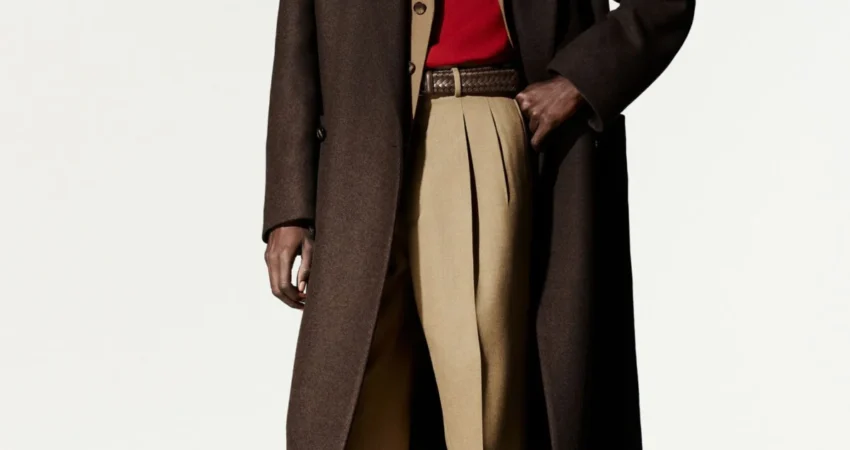
The esteemed Italian luxury house Loro Piana recently unveiled its latest collection within the hallowed, leather-bound halls of Milan’s Biblioteca Nazionale Braidense, signaling a profound shift in the way high-end fashion is presented and perceived. Moving away from traditional garment categorization, the house opted for a thematic structure that mirrored the self-help genre of literature, presenting each ensemble as a "solution" to the multifaceted challenges of modern life. This strategic choice of venue—the third-largest library in Italy, founded in 1770—served as a poignant backdrop for a collection that sought to bridge the gap between historical craftsmanship and the rigorous demands of contemporary high-society living.
The Philosophical Framework of the Collection
In an era where luxury consumers are increasingly seeking utility and purpose alongside aesthetic value, Loro Piana’s decision to frame its garments as "solutions" reflects a calculated response to shifting market psychology. The presentation moved through various vignettes of the modern wardrobe, addressing specific psychological and physical needs. A camel blazer was not merely a piece of outerwear but was described as a "solution for natural authority," aimed at the professional who requires a commanding presence without the rigidity of traditional corporate attire. Similarly, the hunting jacket was positioned as a "solution for following your goals," and the pleated skirt as a "solution for natural fluidity."
This nomenclature suggests a move toward "lifestyle curation," where the brand acts as a consultant for the wearer’s daily life. For the more pragmatic traveler, the field jacket addressed the necessity of "adaptation," while the summer tailleur was presented as the definitive solution for maintaining composure and "staying unflustered" during the increasingly frequent extreme heat of the Mediterranean summer. By aligning their products with personal empowerment and problem-solving, Loro Piana is tapping into a broader cultural trend toward intentional living and the "quiet luxury" movement, which prioritizes quality and function over overt branding.
Technical Innovations and the Evolution of Natural Fibers
Central to the Loro Piana identity is its status as a vertically integrated textile manufacturer, and this collection served as a showcase for its latest advancements in fabric technology. The house has long been a pioneer in treating natural fibers with technical capabilities, and this season saw the further refinement of its proprietary "Storm System" technology. A standout piece was a hunting jacket in burnt orange, layered under an olive-green gilet. While the garment featured a full utility apparatus—including a hood, drawcords, and protective layering—it was executed entirely in Storm System silk. This treatment allows the delicate natural fiber to perform like high-tech synthetic outerwear, offering water and wind resistance without sacrificing the luxurious hand-feel of silk.
The collection also introduced significant material innovations, most notably the integration of banana fiber into knitwear. Used in items such as a cricket sweater designed for the golf course, banana fiber offers a sustainable, highly breathable, and durable alternative to traditional yarns. This move highlights Loro Piana’s commitment to Research and Development (R&D) in an industry under increasing pressure to find sustainable yet high-performance materials. Additionally, the house’s iconic Spagna jacket was reimagined in a cropped version, and the "Traveller" field jacket was presented in a heathery silk blend, offering a softer, more urbane interpretation of a classic utility silhouette.
Chronology of the Presentation and Strategic Context
The event took place during the peak of Milan Fashion Week, a time when the city becomes the global epicenter for luxury commerce. The choice of the Biblioteca Nazionale Braidense was not merely aesthetic but chronological, linking the brand’s 100th anniversary (celebrated in 2024) to the centuries-old tradition of Italian intellectualism. Attendees were guided through the library’s historic reading rooms, where the garments were displayed alongside ancient manuscripts, emphasizing the "library of attire" concept mentioned by the house’s creative leads.
Historically, Loro Piana has focused on the tactile experience of its fabrics—cashmere, vicuña, and extra-fine wools. However, the timeline of the brand’s evolution shows a steady move toward a complete lifestyle offering. The inclusion of a dedicated display for ties—a rarity for the house in recent seasons—marks a significant pivot. According to company representatives, this addition was a direct response to a detected renewal of consumer appetite for formal tailoring and structured dressing, following several years of dominance by "athleisure" and casual styles.
Market Data and the Luxury Economic Landscape
The presentation comes at a critical juncture for the luxury goods market. According to recent reports from LVMH (Loro Piana’s parent company), the "Selective Retailing" and "Fashion & Leather Goods" sectors have seen a stabilization of growth after the post-pandemic surge. In this climate, high-net-worth individuals (HNWIs) are shifting their spending toward "investment pieces"—garments that hold their value through timeless design and superior material quality.
Industry data suggests that Loro Piana remains one of the strongest performers within the LVMH portfolio, largely due to its insulation from the volatility of trend-led fashion. By focusing on technical treatments like the Storm System and rare fibers like the "Gift of Kings" wool, the brand maintains a high barrier to entry for competitors. The brand’s revenue growth has consistently outperformed the broader luxury market average over the last three years, driven by a 25% increase in demand for its "Vicuna" and "Cashmere" lines in the Asian and North American markets.
Inferred Industry Reactions and Consumer Sentiment
While official statements from Loro Piana executives focused on the "purity of form" and "technical excellence," industry analysts have noted the brand’s clever positioning within the "intellectual luxury" niche. Fashion critics present at the Milan showcase observed that the collection successfully balanced the brand’s traditional "Old Money" aesthetic with a modern, almost sporty edge. The "baroque Ian Poulter-ish golf references" and the use of brighter color accents were seen as an attempt to appeal to a younger, more active demographic of luxury buyers who split their time between the boardroom and the golf course.
The return of the tie and the emphasis on the summer tailleur indicate that Loro Piana is betting on a return to decorum. Analysts suggest that as the "Quiet Luxury" trend matures, brands must offer more than just beige cashmere to retain consumer interest. Loro Piana’s "solution-based" marketing is an attempt to create an emotional and functional bond with the consumer, making the brand an indispensable part of their daily problem-solving toolkit.
Impact on the Future of Textile Manufacturing
Loro Piana’s continued investment in the technical treatment of natural fibers has broader implications for the textile industry at large. By proving that silk and cashmere can perform with the same durability as petroleum-based synthetics, the house is setting a new standard for high-end performance wear. The use of banana fiber, in particular, points toward a future where luxury fashion is less dependent on traditional animal and plant fibers, potentially reducing the environmental footprint of high-fashion production.
Furthermore, the emphasis on the "Spagna" jacket and the "Traveller" series reinforces the trend of "trans-seasonal" dressing. As global travel patterns become more complex and climates more unpredictable, the demand for clothes that can "work hard without appearing to" is expected to rise. Loro Piana’s collection suggests that the future of luxury lies not in the loudest design, but in the most sophisticated engineering.
Conclusion: The Library of Attire
The presentation at the Biblioteca Nazionale Braidense concluded with the sentiment that a well-curated wardrobe should function like a personal library—a collection of knowledge, history, and tools that the owner can draw upon at any time. By merging the world of ancient literature with the cutting edge of textile science, Loro Piana has reaffirmed its position as a leader in the luxury sector.
The collection successfully demonstrated that even in a digital age, there is a profound desire for the physical, the crafted, and the enduring. Whether it is a silk jacket that repels rain or a sweater made from fruit fiber, the "solutions" offered by Loro Piana this season are built on a foundation of rigorous research and an unwavering commitment to the "Made in Italy" ethos. As the luxury market continues to evolve, the house’s ability to provide "natural authority" and "unflustered" elegance will likely remain its greatest asset, ensuring that its place in the global library of fashion remains secure for the next century.

0 Comments