
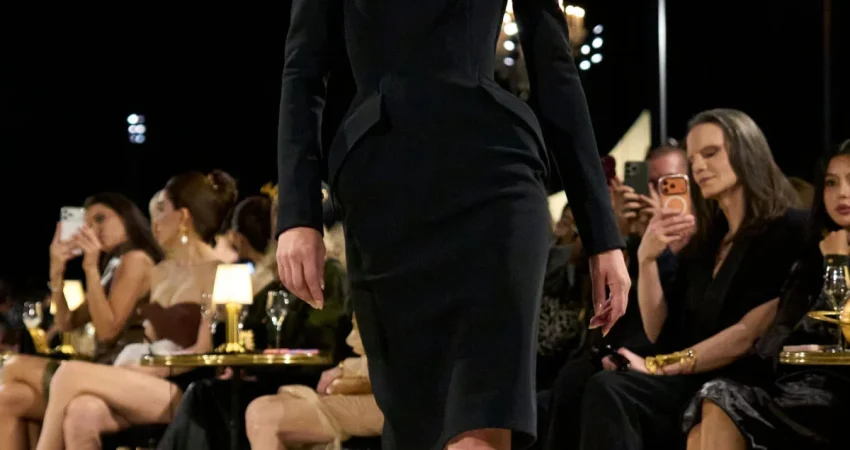
The latest Schiaparelli ready-to-wear collection, unveiled under the creative direction of Daniel Roseberry, represents a pivotal moment in the house’s contemporary history, signaling a strategic shift toward wearable luxury that maintains the brand’s signature surrealist edge. Transforming the traditional runway into an intimate, dimly lit nightclub atmosphere, Roseberry utilized a circuitous layout punctuated by small tables and low-hanging chandeliers to evoke a sense of after-dark sophistication. The auditory backdrop for the event featured a 1962 recording of Barbra Streisand performing "Cry Me a River," complete with her ad-libbed commentary regarding a boyfriend’s suit and the "bite" of herringbone fabric. This choice of soundtrack was not merely atmospheric; it served as a thematic bridge to the collection’s primary focus: the reinterpretation of the iconic "Schiap" jacket for a modern audience that demands both artistic expression and everyday utility.
The Historical Foundations of the Schiaparelli Silhouette
To understand the significance of Roseberry’s latest offering, one must look back at the foundational rivalry between Elsa Schiaparelli and Gabrielle "Coco" Chanel. While Chanel was famed for her pursuit of the understated and the comfortable—famously likening her suit jackets to cardigans—Schiaparelli viewed the garment as a medium for avant-garde expression. Her collaborations with surrealist masters such as Salvador Dalí and Jean Cocteau transformed the jacket into a canvas for the bizarre and the beautiful.
Roseberry’s current collection draws heavily from Schiaparelli’s "above the table" design philosophy. During the 1930s and 1940s, Schiaparelli noted that women frequently wore her jackets to dinner parties rather than traditional cocktail dresses. Because the lower half of the body remained obscured by the dining table, the designer concentrated her most elaborate embroideries and structural innovations on the torso, shoulders, and neckline. Roseberry has revived this concept, explaining that the intricate Schiaparelli embroideries were born from the necessity of being "attention-grabbing" in seated social environments. In the current collection, this manifests as rich velvets adorned with scrolling black threadwork and shimmering pink satins that appear to be inset with literal gemstones, creating a visual dialogue between the wearer and their dinner companions.
Strategic Evolution: From Couture to Daily Separates
A significant portion of the collection’s development was influenced by the brand’s interaction with high-profile muses, most notably Bella Hadid. Following the viral success of Hadid’s appearance at the Cannes Film Festival—where she wore a reimagining of Jane Birkin’s back-to-front broderie anglaise dress—the model inquired about the possibility of creating separates from the design. This request prompted Roseberry to translate high-concept couture into more accessible formats.
The result is a series of knits that decompose the complexity of couture into practical tops and skirts. By utilizing stretch fabrics and knitwear techniques, Roseberry has made the Schiaparelli aesthetic "easier" to wear, moving away from the rigid structures of traditional tailoring without sacrificing the brand’s visual identity. This transition is crucial for the house’s ready-to-wear business, which seeks to capture a market segment that values the prestige of Schiaparelli but requires garments that can be integrated with casual items like denim or plain trousers.
Technical Execution and the Influence of Geoffrey Beene
While the collection pays homage to its Parisian roots, it also incorporates the sleek, "aerodynamic" lines of American designer Geoffrey Beene. Roseberry, who is currently training for the New York City marathon and sporting a mohawk for physical efficiency, noted a desire for designs that feel streamlined and modern. The influence of Beene is most evident in the stretch-knit cocktail dresses, which prioritize fluid movement and body-con silhouettes.
The technical "trick" of the collection lies in the distillation of haute couture elements into ready-to-wear pieces. Roseberry noted that his clientele does not desire a separate, watered-down identity for the RTW line; rather, they want a concentrated version of the couture fantasy. To achieve this, he integrated inset breastplates on striped dresses and other garments—a direct reference to the silvery, "glowing" Marilyn Monroe dress featured in his July couture show. While the RTW versions lack the internal pyrotechnics and literal lighting of their couture predecessors, they maintain the same sculptural impact, ensuring they remain conversational centerpieces at any social gathering.
A Chronology of the House’s Modern Resurgence
The trajectory of Schiaparelli under Daniel Roseberry’s tenure has been marked by a rapid ascent from a niche heritage brand to a dominant force in global fashion. The following timeline highlights the key phases of this evolution:
- 2019: Daniel Roseberry is appointed Creative Director, tasked with reviving a house that had been largely dormant or quietly operating in the shadow of its historical reputation since its relaunch by Diego Della Valle (Chairman of Tod’s Group).
- 2020-2021: Roseberry captures global attention with high-profile dressing, including Lady Gaga’s inauguration gown and Bella Hadid’s "lungs" necklace at Cannes. These moments re-established Schiaparelli as the premier label for "Internet-breaking" fashion.
- 2022-2023: The brand focuses on expanding its accessory line, specifically the "Secret" bag and surrealist jewelry, which serve as entry-level luxury items for a broader consumer base.
- 2024: The current season marks a definitive push into "everyday surrealism," where the focus shifts from the red carpet to the wardrobe of the modern woman, blending couture craftsmanship with the practicality of knitwear and separates.
Market Data and Industry Implications
The expansion of Schiaparelli’s ready-to-wear line comes at a time when the luxury market is experiencing a shift toward "investment pieces"—garments that offer high artistic value but possess the durability and versatility for repeated wear. According to recent industry reports, the luxury RTW sector has seen a 7% increase in demand for "elevated basics" that feature unique designer signatures.
Schiaparelli’s decision to focus on the jacket as a core product is strategically sound. Historically, the jacket has the highest resale value and brand recognition among luxury garments. By positioning the "Schiap" jacket as a piece that can be worn with jeans, Roseberry is tapping into the "high-low" styling trend that has dominated the luxury sector for the past decade. Furthermore, the move toward knitwear and separates allows the brand to lower the price point slightly compared to structured tailoring, potentially increasing the volume of sales in the RTW category.
Critical Analysis: The Concept of the "Distilled" Wardrobe
The success of Roseberry’s approach lies in his psychological understanding of the Schiaparelli woman. He describes his design process as catering to "the same woman, just a different part of her life, a different corner of her brain." This philosophy rejects the idea that ready-to-wear should be a secondary, less imaginative version of couture. Instead, it treats RTW as a functional extension of the couture dream.
By incorporating elements like the "inset breastplates" and surrealist buttons (often shaped like ears, eyes, or padlocks), Roseberry ensures that even a simple knit top carries the "DNA" of the house. This creates a cohesive brand ecosystem where a customer might purchase a couture gown for a gala but return to the house for the "aerodynamic" knits they wear to a private dinner or a business meeting.
Broader Impact on the Fashion Landscape
Roseberry’s work at Schiaparelli is part of a broader movement in fashion that seeks to reclaim the "art" in "artisan." In an era of mass-produced fast fashion and often indistinguishable "quiet luxury," Schiaparelli stands as a bulwark for the eccentric and the hand-crafted. The emphasis on "above the table" dressing also reflects a post-pandemic reality where social interaction often occurs in seated environments—whether at dinner parties or via digital communication—where the upper body remains the primary focus of self-expression.
Furthermore, the influence of American sportswear (via Geoffrey Beene) on a French heritage house suggests a globalization of style where the boundaries between European structuralism and American pragmatism are increasingly blurred. As Roseberry continues to refine this balance, Schiaparelli is poised to remain a leader in the luxury sector, proving that even the most surrealist fantasies can find a place in the everyday lives of contemporary women.
The collection serves as a testament to the enduring power of Elsa Schiaparelli’s vision, reimagined through Roseberry’s lens of "aerodynamic" modernism. By prioritizing the "Schiap" jacket and expanding into versatile separates, the house has successfully navigated the transition from a historic curiosity to a vibrant, commercially viable luxury powerhouse. As the brand moves forward, the integration of couture-level detail into ready-to-wear garments will likely serve as a blueprint for other heritage houses seeking to maintain relevance in a rapidly evolving market.

0 Comments