
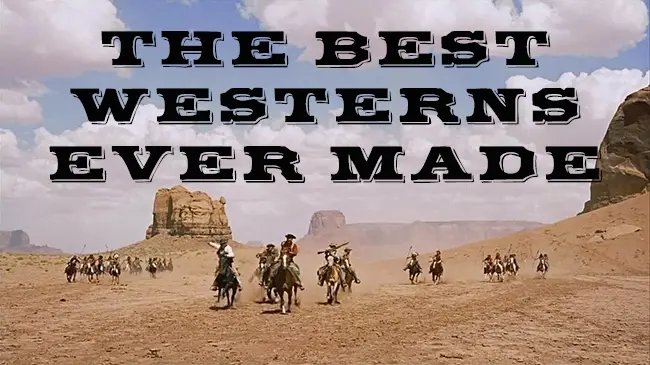
The Western film genre stands as a cornerstone of global cinema, serving as a foundational myth for American identity and a meditation on the complex relationship between masculinity, law, and the untamed frontier. While the mythologization of the cowboy began in the late 19th century through dime novels and Buffalo Bill’s Wild West shows, it was the advent of 20th-century motion pictures that solidified the Western as a primary vehicle for cultural storytelling. These films do more than depict historical events; they function as a modern canon of heroism and self-reliance, exploring the thin, often blurred line between civilization and savagery. As the genre evolved from the clear-cut moralism of the early Golden Age to the gritty, revisionist deconstructions of the late 20th century, it has remained an indelible part of the American artistic landscape.
The Foundation of the Western Canon: 1939 to 1950
The modern Western was effectively codified in 1939 with the release of John Ford’s Stagecoach. This period marked the transition of the genre from low-budget "B-movies" to prestige cinema. Stagecoach introduced John Wayne as a major star and established Monument Valley as the definitive visual backdrop for the American West. The film utilized a group of nine strangers—each representing a different social stratum—to explore themes of redemption and survival during an Apache uprising.
Following the success of Stagecoach, the 1940s saw a surge in character-driven narratives. John Ford’s My Darling Clementine (1946) offered a stylized retelling of the events leading up to the gunfight at the O.K. Corral, with Henry Fonda portraying Wyatt Earp. This era also produced Red River (1948), directed by Howard Hawks, which analyzed the psychological toll of obsession and leadership during a massive cattle drive. The film was notable for its portrayal of Thomas Dunson (John Wayne) as a dictatorial figure, signaling a shift toward more complex, flawed protagonists.
The decade concluded with The Ox-Bow Incident (1943), a seminal "Western noir" that challenged the concept of frontier justice. By focusing on the dangers of mob mentality and groupthink, the film served as an early critique of the vigilante justice that previous films often celebrated.
The Golden Age and Moral Complexity: 1952 to 1959
The 1950s represented a period of immense growth and introspection for the genre. In 1952, High Noon introduced a narrative structure that occurred in near real-time. Gary Cooper’s portrayal of Will Kane, a marshal abandoned by his town on his wedding day, was a stark departure from the invincible heroes of the past. The film dealt with themes of duty, civic cowardice, and isolation. Despite its critical success and four Academy Awards, it was famously loathed by John Wayne and Howard Hawks, who viewed Kane’s plea for help as "unmanly," leading them to create Rio Bravo (1959) as a thematic rebuttal.
Other significant entries during this decade included:
- Shane (1953): A "sheepdog" narrative where a mysterious gunslinger defends a family of homesteaders. It is frequently cited for its iconic cinematography and its exploration of the necessity—and the burden—of violence.
- The Searchers (1956): Often ranked by the American Film Institute (AFI) as the greatest Western of all time, this John Ford masterpiece featured John Wayne in his most complex role as Ethan Edwards. The film delved into themes of racism, obsession, and the psychological scarring of the frontier.
- 3:10 to Yuma (1957): Based on an Elmore Leonard short story, this film blurred the lines between the "good" rancher and the "bad" outlaw, emphasizing the psychological tension over physical action.
- The Big Country (1958): A grand-scale epic that focused on water rights and the refusal of a sea captain (Gregory Peck) to adhere to the violent expectations of the West.
The Rise of Revisionism and the Spaghetti Western: 1960 to 1969
By the 1960s, the traditional Western tropes were being dismantled. The "Spaghetti Western" movement, led by Italian director Sergio Leone, introduced a more cynical, violent, and visually operatic style. The Good, the Bad and the Ugly (1966) and Once Upon a Time in the West (1968) replaced the moral certainty of the 1940s with "anti-heroes" who were motivated by greed as much as honor.
Domestically, the decade saw the release of The Magnificent Seven (1960), an Americanized version of Akira Kurosawa’s Seven Samurai, and The Wild Bunch (1969). Directed by Sam Peckinpah, The Wild Bunch is often regarded as the film that signaled the "death" of the traditional Western. Set in 1913, it depicted outlaws rendered obsolete by the arrival of the automobile and organized government. Its unprecedented level of graphic violence and nihilism reflected the social upheavals of the Vietnam War era.
Other notable films from this period include Butch Cassidy and the Sundance Kid (1969), which utilized the "buddy film" dynamic to humanize historical outlaws, and the original True Grit (1969), which earned John Wayne his only Academy Award for Best Actor.

The Modern Era: Deconstruction and Genre Fusion (1970–Present)
While the frequency of Western production slowed after 1970, the quality of high-profile releases remained significant. Clint Eastwood emerged as a defining director-actor, producing works like The Outlaw Josey Wales (1976), Pale Rider (1985), and his magnum opus, Unforgiven (1992). Unforgiven served as a final deconstruction of the genre, stripping away the glamour of the gunfighter and focusing on the grim reality of killing. It became one of the few Westerns to win the Academy Award for Best Picture.
The 1990s and 2000s saw a resurgence of the "epic" Western and the "Neo-Western":
- Dances with Wolves (1990): Kevin Costner’s directorial debut won seven Academy Awards and was praised for its sympathetic and nuanced portrayal of Native American culture.
- Tombstone (1993): A fast-paced, stylized retelling of the Wyatt Earp legend that became a cult favorite due to Val Kilmer’s performance as Doc Holliday.
- No Country for Old Men (2007): A "Neo-Western" thriller that applied the themes of the frontier—lawlessness, fate, and the changing times—to a 1980s Texas setting.
- The Assassination of Jesse James by the Coward Robert Ford (2007): A meditative, visually stunning exploration of celebrity and obsession in the Old West.
Chronology of Major Western Cinematic Milestones
- 1939: Stagecoach establishes the Western as a prestige genre.
- 1948: Red River introduces the "psychological Western."
- 1952: High Noon challenges the invincibility of the Western hero.
- 1956: The Searchers explores the dark undercurrents of frontier life.
- 1966: The Good, the Bad and the Ugly popularizes the Spaghetti Western aesthetic.
- 1969: The Wild Bunch introduces extreme realism and nihilism.
- 1989: Lonesome Dove (Mini-series) revitalizes interest in Western long-form storytelling.
- 1990: Dances with Wolves wins Best Picture, marking a commercial comeback for the genre.
- 1992: Unforgiven deconstructs the morality of violence.
- 2007: No Country for Old Men wins Best Picture, demonstrating the genre’s adaptability to modern settings.
Industry Data and Critical Reception
The enduring relevance of these films is reflected in their preservation by the Library of Congress. Titles such as Stagecoach, High Noon, The Searchers, and 3:10 to Yuma have been inducted into the National Film Registry for being "culturally, historically, or aesthetically significant."
From a commercial perspective, the Western has seen extreme fluctuations. Dances with Wolves grossed over $424 million worldwide on a $22 million budget, proving the genre’s blockbuster potential. Conversely, films like The Assassination of Jesse James struggled at the box office (earning $15 million against a $30 million budget) but achieved critical immortality through home media and film studies.
Critical aggregators like Rotten Tomatoes show a high level of consistency among the "canon" films. How the West Was Won (1962) maintains a rare 100% critical rating, while The Searchers and Stagecoach are staples of the Sight & Sound "Greatest Films of All Time" critics’ poll.
Societal Impact and Broader Implications
The Western genre has functioned as a cultural mirror for over a century. In the post-WWII era, Westerns reflected the anxiety of the Cold War and McCarthyism (High Noon). In the 1960s and 70s, they mirrored the disillusionment with authority and the horrors of war (The Wild Bunch, The Outlaw Josey Wales).
Furthermore, the genre has played a pivotal role in the global perception of American identity. The archetype of the "Lone Ranger" or the "Man with No Name" has influenced international cinema, from the samurai films of Japan to the "Easterns" of the Soviet Union.
The evolution of the Western also tracks the progress of social representation in Hollywood. Early films often depicted Native Americans as monolithic antagonists. However, films like Broken Arrow (1950) and Dances with Wolves (1990) began the necessary process of humanizing indigenous populations and acknowledging the tragic costs of Westward expansion.
Ultimately, the Western remains a vital genre because it deals with universal human questions. As the character J.B. Books states in The Shootist (1976), "I won’t be wronged. I won’t be insulted. I won’t be laid a-hand on." This code of personal honor, set against the backdrop of a vast and indifferent wilderness, continues to resonate with audiences seeking to understand the balance between individual freedom and the requirements of a civilized society. Through these 30+ films, the "American Canon" of the West continues to inspire, challenge, and define the cinematic experience.

0 Comments