
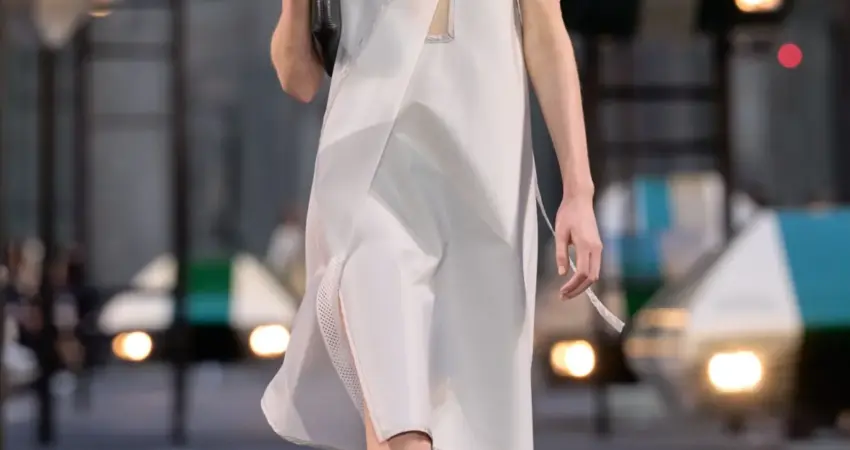
The Cour Carrée of the Louvre served as the backdrop for a significant shift in the aesthetic trajectory of Louis Vuitton’s womenswear during the unveiling of the Spring 2027 collection. Nicolas Ghesquière, the Creative Director of Women’s Collections, presented a vision that contrasted sharply with the high-concept, voluminous silhouettes of his recent seasons. While the set design leaned heavily into a retro-futuristic fantasy, the garments themselves signaled a pivot toward what Ghesquière described as an "ergonomic" and "body-first" approach to high fashion. This transition marks a notable moment in the designer’s decade-plus tenure at the house, suggesting a strategic move toward wearable luxury amidst a shifting global market.
Architectural Set Design and Visual Context
The show’s environment was a spectacle of cinematic proportions. The Cour Carrée was transformed into a stylized airfield reminiscent of mid-century science fiction, specifically echoing the aesthetic of The Jetsons. The set featured flying car installations, complete with glowing red tail lights and finished in Louis Vuitton’s signature Damier check. These vehicles hovered above the audience or appeared to be stationed on a faux-macadam runway, creating a surreal atmosphere that juxtaposed the ultra-modern with the nostalgic.
Despite the elaborate science-fiction staging, the collection was grounded in reality. Ghesquière, who famously introduced metallic "C3PO" leggings during his time at Balenciaga exactly 20 years ago, deliberately avoided the trap of "back to the future" tropes. Instead, the futuristic set served as a foil to the grounded, simplified nature of the clothing. The intention was to highlight the contrast between the chaotic, tech-driven world and the essential, streamlined needs of the human form.
A Departure from Voluminous Silhouettes
For several seasons, Ghesquière has been celebrated—and occasionally scrutinized—for his pursuit of "larger than life" silhouettes. His recent portfolios included heavy, traditional shepherd’s cloaks and dramatic, structural robes that seemed better suited for the desert landscapes of Dune than the streets of a modern metropolis. His work has frequently traversed time, blending 18th-century panniered frocks with 1980s-inspired party wear.
The Spring 2027 collection, however, opened with a startlingly simple ensemble: a sleeveless white shift dress paired with black men’s oxfords. This look set the tone for a collection defined by "purity" and "minimalism." Ghesquière noted that while the final products appear understated, the technical labor required to achieve such lightness and simplicity is immense. The collection moved through a series of collarless jackets and straight-leg trousers that carried the unadorned efficiency of a uniform, followed by floaty summer dresses constructed from lettuce-edged layers of chiffon.
Technical Mastery and "Flou" Construction
One of the technical highlights of the show was the use of "flou"—a French term referring to the dressmaking technique of creating soft, fluid garments as opposed to the rigid structure of tailoring. Ghesquière applied this to checked pantsuits, making them light enough to move with the ease of a silk gown. This "wearable Ghesquière" approach was further exemplified by elongated tanks made of embellished hammered satin. These pieces featured extended trains and were paired with fluid trousers, representing a sophisticated evolution of evening wear that prioritizes movement over restriction.
Industry analysts suggest that this focus on "ergonomic" fashion is a response to the "Quiet Luxury" movement that has dominated the industry for several years. By stripping away the more avant-garde structural elements, Louis Vuitton is positioning itself to capture a consumer base that seeks high-quality, relatable pieces that can integrate seamlessly into a daily wardrobe without sacrificing the brand’s high-fashion DNA.
The Designer’s Cultural Standing and Political Ties
The Spring 2027 show comes on the heels of a major personal and professional milestone for Nicolas Ghesquière. Last week, he was awarded the Legion d’Honneur, France’s highest order of merit, by President Emmanuel Macron. The ceremony at the Élysée Palace underscored Ghesquière’s significant influence on French culture and the global luxury economy.
Ghesquière has maintained a close professional relationship with France’s First Lady, Brigitte Macron, since the President’s first election. He has been responsible for many of her most high-profile public appearances, effectively making him an unofficial ambassador for French style. During the award ceremony, President Macron joked about Ghesquière’s prominence in the First Lady’s life, reflecting the deep trust and longevity of their partnership. This political and social capital provides Ghesquière with a level of stability and creative freedom rarely seen in the high-turnover world of luxury creative directors.
Chronology of Nicolas Ghesquière’s Tenure at Louis Vuitton
To understand the significance of the Spring 2027 shift, one must look at the timeline of Ghesquière’s evolution at the house:
- 2013: Ghesquière is appointed Creative Director, succeeding Marc Jacobs. His first collections focused on a "modern wardrobe" with a 1970s twist.
- 2017-2019: The brand enters a period of high experimentation, blending historical references from the French Revolution with futuristic sportswear.
- 2023: The Resort and Spring collections embrace maximalism, featuring oversized proportions and heavy theatricality.
- 2024: Ghesquière celebrates his 10th anniversary with a blockbuster show at the Louvre, revisiting his greatest hits while hinting at a new direction.
- 2026/2027: The current pivot toward minimalism and "ergonomic" design, responding to a post-pandemic world and a more cautious luxury market.
Market Context and the "Great Reset"
The fashion industry is currently undergoing what many insiders call a "great reset." Following a period of explosive growth post-COVID-19, the luxury sector has seen a cooling of demand, particularly in key markets like China and North America. This has led to a wave of leadership changes at major fashion houses, with new creative directors being tasked with delivering "customer-oriented" and "relatable" collections.
LVMH, the parent company of Louis Vuitton, reported a stabilization in organic revenue growth in recent quarters. For a brand as large as Louis Vuitton—which contributes a significant portion of LVMH’s profits—maintaining market share requires a delicate balance between artistic innovation and commercial viability. Ghesquière’s decision to recenter his aesthetic on wearable, "down-to-earth" clothing is seen by many as a strategic alignment with these market pressures.
Official Responses and Industry Reactions
While official sales data for the collection will not be available for months, early reactions from fashion critics and retail buyers have been largely positive. The emphasis on "perfect pants" and fluid evening wear has been highlighted as a potential driver for the brand’s ready-to-wear segment.
"There is a palpable sense that Ghesquière is listening to the contemporary woman," said one senior fashion editor in attendance. "While the space-age set was a nod to his love for sci-fi, the clothes themselves were an answer to the chaos of the modern world. They offer a sense of order and purity that is very attractive right now."
Ghesquière himself addressed the motivations behind the collection in his post-show remarks. "I wanted to express a sensation of simplicity," he explained. "It is an impression of minimalism, but the work behind this construction—making things extremely light—is really complex. It comes from a desire to find a sense of calm amid the noise."
Broader Impact and Implications for the Future
The Spring 2027 collection may signal a permanent shift in how Louis Vuitton approaches its seasonal offerings. By proving that he can master both the avant-garde and the "ergonomic," Ghesquière has solidified his position as one of the most versatile designers in the industry.
The focus on "ergonomic" design also reflects a broader societal trend toward wellness and functionality. As consumers increasingly prioritize comfort and longevity in their purchases, luxury brands are forced to reconsider the practicality of their designs. If Ghesquière’s "wearable" vision translates into strong retail performance, it could set a new standard for other heritage houses to follow, moving away from the "clout-chasing" viral moments of the past decade toward a more sustainable, product-focused model of luxury.
As the flying cars were dismantled in the Cour Carrée, the message left behind was clear: the future of Louis Vuitton is not just in the stars, but in the sophisticated, everyday reality of its global clientele. The Spring 2027 collection stands as a testament to the idea that true luxury lies in the perfect execution of the simple, the light, and the wearable.

0 Comments