
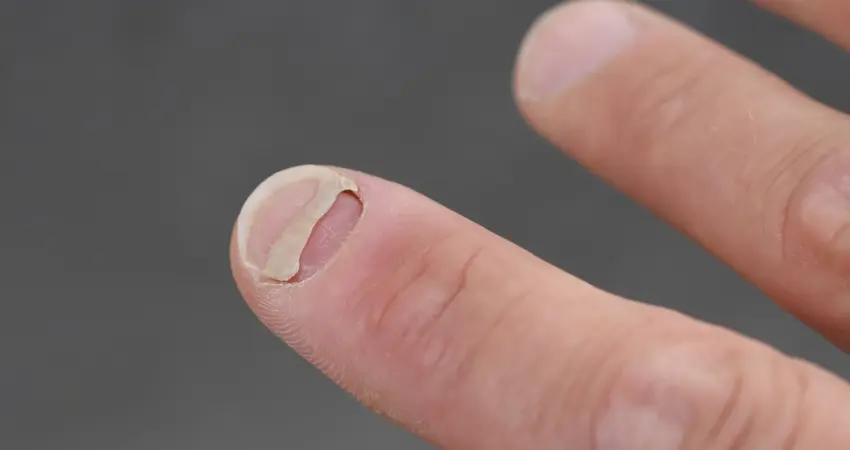
The groundbreaking therapeutic advancements offered by Glucagon-Like Peptide-1 (GLP-1) receptor agonists, widely prescribed for type 2 diabetes and obesity management, are now facing scrutiny for an unexpected side effect: a significant increase in nail-related issues, most notably nail detachment. A recent multinational study presented at the prestigious European Academy of Dermatology and Venereology (EADV) Congress 2026 has illuminated a concerning trend, revealing that individuals utilizing these popular medications are more than four times as likely to experience onychoschizia, or nail detachment, a condition where the nail plate separates from the underlying nail bed. This revelation adds a new layer of complexity to the rapidly evolving landscape of GLP-1 therapy, prompting a closer examination of its broader dermatological implications.
The comprehensive study, the first of its kind to systematically investigate the link between GLP-1 use and nail health, analyzed data from 575 individuals on GLP-1 medications and compared them with a control group of 1,329 individuals with type 2 diabetes and/or obesity who had no prior exposure to these drugs. Participants were drawn from a diverse global cohort, including individuals from France, the United States, Brazil, and Mexico, lending significant weight to the study’s findings. The results paint a stark picture: a substantial 39% of GLP-1 users reported experiencing nail detachment, a figure that dwarfs the 9% observed in the control group. Beyond detachment, nail discoloration was also found to be considerably more prevalent, with 46% of GLP-1 users reporting this issue compared to just 17% of non-users. Collectively, two-thirds (66%) of individuals taking GLP-1 medications reported at least one form of nail disorder, a marked increase from the 53% observed in the control group.
The Rise of GLP-1 Agonists and the Search for Comprehensive Safety Profiles
The surge in popularity of GLP-1 receptor agonists, including well-known brands such as Ozempic, Wegovy, Mounjaro, Zepbound, Victoza, and Trulicity, stems from their remarkable efficacy in addressing two of the most pressing public health challenges of our time: type 2 diabetes and the global obesity epidemic. These medications mimic the action of the GLP-1 hormone, a naturally occurring incretin that plays a crucial role in regulating blood glucose levels and suppressing appetite. By stimulating insulin secretion, inhibiting glucagon release, and slowing gastric emptying, GLP-1 agonists effectively improve glycemic control and facilitate significant weight loss, offering a lifeline to millions seeking to manage these chronic conditions.
However, as with any powerful therapeutic intervention, the long-term and multifaceted effects of these drugs are continually being unveiled. Prior to this recent study, information regarding potential nail changes associated with GLP-1 treatment was largely confined to anecdotal reports and isolated case studies. Clinicians and patients alike have primarily focused on the well-documented benefits for metabolic health and weight management, with less emphasis placed on potential peripheral effects. The EADV Congress 2026 presentation marks a pivotal moment, shifting the narrative from sporadic observations to evidence-based findings derived from a controlled research environment.
Unpacking the Data: A Deeper Dive into Nail Abnormalities
The study’s robust methodology, involving a significant sample size and international recruitment, provides a solid foundation for its conclusions. The stark contrast in nail detachment rates – over four times higher in GLP-1 users – is particularly noteworthy. This suggests a mechanism beyond simple correlation, hinting at a direct or indirect influence of the medications on nail physiology.
The increased prevalence of nail discoloration also warrants attention. While the exact causes of nail discoloration can be varied, ranging from fungal infections to trauma and systemic diseases, its heightened occurrence in the GLP-1 group suggests a potential common pathway influenced by the drug’s pharmacological action or its downstream effects.
Beyond Weight Loss: Isolating the Impact of GLP-1 Therapy
A critical question arising from these findings is whether the observed nail problems are a direct consequence of the GLP-1 medications themselves, or if they are primarily attributable to the significant weight loss that these drugs often induce. Rapid weight reduction can indeed impact the body’s nutritional status and physiological equilibrium, potentially affecting the health of hair, skin, and nails.
To address this, the researchers conducted a more granular analysis, specifically comparing GLP-1 users who had experienced weight loss with individuals who had not used the medications but also underwent weight loss. The results indicated that weight loss alone did not fully explain the observed disparities. Even within the subgroup of individuals who had lost weight, those on GLP-1 medications continued to report a significantly higher incidence of nail problems.
Dr. Charles Taïeb, a lead author of the study, commented on this crucial distinction: "Until now, nail changes associated with GLP-1 therapies had essentially been anecdotal. Our findings show a clear association, but they also underline an important point: not everything that happens during GLP-1 treatment is necessarily caused by the treatment itself." This statement underscores the complexity of attributing causality and highlights the need for continued investigation into the specific mechanisms at play.
Further statistical adjustments were made to account for pre-existing skin conditions and nutritional deficiencies, factors known to influence nail health. While these adjustments did lead to a reduction in some of the observed differences between the groups, nail detachment and discoloration remained notably more common – approximately two to three times higher – among GLP-1 users. This resilience in the data suggests that even after accounting for these confounding variables, a discernible association between GLP-1 medication use and specific nail disorders persists.
However, the researchers were careful to emphasize that their findings do not definitively prove that GLP-1 drugs cause these nail disorders. The study design, being cross-sectional, observes associations at a single point in time rather than tracking changes over time. Furthermore, a significant proportion of GLP-1 users – approximately half – reported experiencing nail problems even before commencing their medication, indicating that the drugs might exacerbate pre-existing tendencies or interact with underlying vulnerabilities.
A Wider Spectrum of Dermatological Concerns: Hair and Scalp Health
The dermatological ripple effects of GLP-1 therapy appear to extend beyond the fingernails. A companion study, utilizing the same participant cohort, investigated the impact on hair and scalp health, revealing equally compelling associations.
Unusual hair loss was reported by half of the GLP-1 users, compared to 34% of the control group. Similarly, reduced hair volume or density was substantially more prevalent, affecting 42% of users versus 19% of non-users. When focusing specifically on hair loss that began after initiating treatment, the figures were 26% for GLP-1 users and 12% for non-users, indicating a more than twofold increased likelihood of treatment-associated hair shedding.
Scalp redness was also a significantly more common complaint among GLP-1 users, appearing approximately three times more frequently than in the control group. A particularly striking observation was that hair loss rarely occurred in isolation. The majority of users reporting shedding also experienced concomitant scalp symptoms such as itching, redness, or flaking skin.
These accompanying symptoms have led researchers to hypothesize that inflammation might play a significant role in the observed hair and scalp changes, potentially moving beyond the classical shedding patterns typically associated with rapid weight loss. Dr. Bruno Halioua, another study author, elaborated: "This suggests that what is happening on the scalp may go beyond the classical shedding seen after rapid weight loss and involve an inflammatory component. Scalp inflammation was the rule rather than the exception, which clinicians do not currently look for and which may be treatable. Taken together, our findings suggest that factors beyond weight loss alone may contribute to the hair, scalp and nail changes observed among GLP-1 users." This perspective opens up new avenues for understanding and potentially treating these side effects.
Navigating the Implications: Guidance for Patients and Clinicians
Despite the elevated incidence of reported dermatological symptoms, the researchers are urging a balanced perspective, emphasizing awareness rather than alarm. "These changes are frequent, usually benign, and are not a reason to stop an effective treatment on one’s own initiative," Dr. Taïeb reassured. The consensus among the study authors is that patients experiencing hair shedding, an itchy or red scalp, or noticeable nail changes should consult their healthcare provider rather than discontinuing their prescribed GLP-1 therapy without medical guidance.
It is imperative to acknowledge the inherent limitations of the current research. Both investigations were cross-sectional, meaning they captured data at a single point in time and could not establish the temporal relationship between GLP-1 use and symptom onset or progression. Furthermore, the findings were based on self-reported symptoms, which can be subjective and may not always align with objective clinical assessments. Consequently, while these studies reveal strong associations, they cannot definitively establish causality.
To address these limitations and delve deeper into the underlying mechanisms, the research team has outlined plans for future prospective studies. These studies will involve longitudinal monitoring of patients from the initiation of GLP-1 treatment, incorporating standardized dermatological, hair, and nail examinations, alongside biological markers. The objective is to precisely pinpoint when these changes emerge, elucidate the biological pathways involved, and determine their trajectory over time, including whether they resolve or persist.
The research that has brought these findings to light received institutional support from DUCRAY Laboratories (Pierre Fabre Group), a company dedicated to developing dermatological and hair care products. Their involvement underscores the growing recognition of the interplay between systemic health and dermatological well-being, particularly in the context of novel therapeutic interventions.
As the use of GLP-1 agonists continues to expand, driven by their undeniable benefits in metabolic disease management, this emerging body of evidence on dermatological side effects serves as a critical reminder of the need for comprehensive patient monitoring and ongoing research. The findings from the EADV Congress 2026 are likely to spur further investigation, potentially leading to refined treatment protocols, new management strategies for these common, albeit often benign, side effects, and a more holistic understanding of the complex impact of these transformative medications on overall health.

0 Comments