
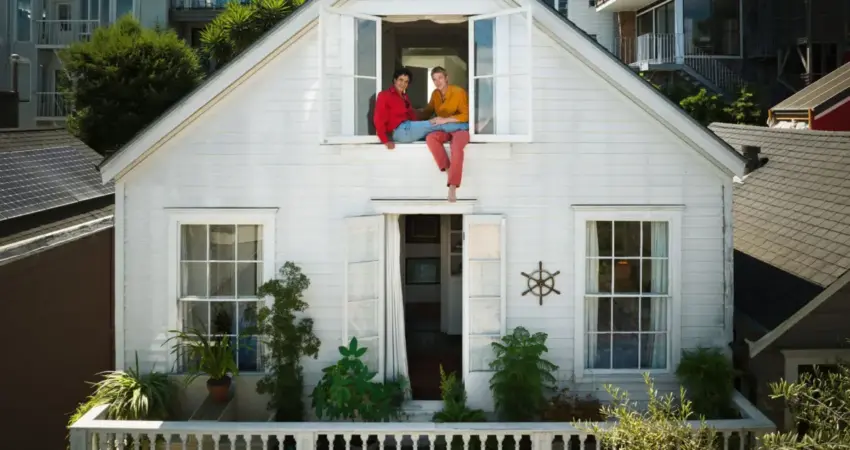
The vibrant tapestry of San Francisco’s historic Telegraph Hill has a new, captivating thread: the charming rental cottage recently embraced by fashion luminary Zac Posen and his fiancé, ballet dancer turned actor Harrison Ball. This dynamic duo, known for their distinctive style and creative pursuits, have transformed a seemingly unassuming dwelling into a personal sanctuary, a testament to their shared aesthetic and a harmonious blend of historical character and contemporary flair. The story of their San Francisco sojourn, and the subsequent reimagining of their living space, offers a compelling narrative of artistic vision meeting a beloved urban landscape.

The couple’s journey to the West Coast began approximately two and a half years ago, precipitated by a significant professional milestone for Posen. He was appointed executive vice president and creative director at Gap Inc., a role that also placed him as chief creative officer at Old Navy, necessitating a relocation to the company’s San Francisco base. This transition marked a new chapter for the couple, who have been engaged for four years, a period playfully described by Ball as characteristic of their "kind of gays" who might remain engaged for an extended duration.
The relocation itself was an epic undertaking. While Posen dove into his new role at Gap’s corporate offices, Ball embarked on a cross-country drive with his father, their two miniature poodles, Tsuki and Bizet, a unique painting of a man on a horse discovered in Pennsylvania, and essential luggage. Posen described the move as being "in the spirit of the pioneers," evoking a sense of venturing "West, discovering the unknown." Concurrently, Ball was transitioning from a distinguished career as a principal dancer at the New York City Ballet to an acting career, with notable performances, including a role in "Brokeback Mountain" at the Chicago Shakespeare Theater earlier this year. This period of professional evolution underscored the couple’s shared commitment to artistic exploration and adaptability.

A Serendipitous Discovery on Telegraph Hill
The search for a San Francisco residence was a pivotal part of their relocation. While nearing a decision on a different property, Ball, a self-proclaimed "Zillow queen," stumbled upon a listing that immediately captured his imagination. It was an 1850s captain’s cottage, boasting coveted views of the San Francisco Bay. "I knew before I saw it that this was it: by the sea, a metropolitan New York feeling but on island time," Ball recounted. His connection to the property was deeply personal, drawing parallels to his childhood visits to Robin Hood’s Bay in Yorkshire, a place that evoked a sense of homecoming. He immediately contacted Posen, conveying his profound sense of discovery.

Posen, too, was captivated by the cottage’s unique allure. The higgledy-piggledy architecture and rich history of the dwelling resonated with his appreciation for narrative and character. The house, he learned, had a storied past, having been home to a Russian aristocrat after the original captain, and later serving as a club during Prohibition. Its reputation extended through the community, with whispers of notable former residents and visitors, including Joan Baez, Martha Stewart, and author Armistead Maupin, who lived on the street while writing his seminal "Tales of the City" series. However, upon their initial viewing, the cottage presented itself as somewhat neglected, bearing "an Airbnb vibe" with a neglected garden and pervasive moss.
The transformation of this "vaguely tired rental cottage" into a vibrant living space was not a solitary endeavor. A chance encounter at a dinner party shortly after their arrival led to a pivotal collaboration. Fashion designer Zac Posen and ballet dancer turned actor Harrison Ball, a couple often described as among America’s "cooler couples," found themselves seeking guidance from renowned designer Ken Fulk. Posen recalled meeting Fulk years prior during a trunk show in San Francisco when he was just 22. Upon seeing the cottage, Fulk was reportedly enthusiastic about assisting the couple in realizing their vision.

A Design Philosophy Rooted in Imperfection and Character
Ken Fulk, speaking from his distinctive beach house in Provincetown, articulated a design approach that diverged from conventional methods for this particular project. Eschewing mood boards, concept presentations, and lengthy meetings, Fulk embraced the inherent character of the cottage. "The cottage is delightfully imperfect," he stated, emphasizing its "great bohemian quality" that evokes a sense of escape and theatricality. He described the home as a "junk shop meets Central Saint Martins student bedsit," a description that perfectly encapsulates its charmingly eclectic aesthetic. Fulk’s philosophy for the space was centered on authenticity, aiming for a home that "looks like someone actually lives there. Like they’ve been there forever already." This approach championed the "anti-decorator’s decorator’s house," a deliberate departure from the pursuit of sterile perfection.

The couple’s personal contributions are evident throughout the home. Harrison Ball, a passionate gardener, has revitalized the backyard, transforming it into a lush oasis bursting with pink begonia, Brugmansia, Ligularia, coyote mint, and tumbling ferns, much of which was sourced locally and planted by him. This verdant extension of the home provides a serene counterpoint to the more curated interior spaces.
Inside, the design is a deliberate, yet seemingly effortless, amalgamation of the couple’s diverse influences and Posen’s artistic sensibilities. The living room, for instance, is anchored by striking blue velvet armchairs from Les Trois Garçons and a red velvet sofa from Banana Republic Home, surrounding a vintage burl-wood coffee table. Dominating the space is an artwork by Stephen Posen, Zac’s father, adding a personal and artistic layer to the room. The kitchen, preserved with its vintage charm, retains its original cabinetry and appliances, including a 1950s O’Keefe & Merritt stove, a nod to the home’s enduring character. Posen’s own office space, described as "tented," features a vintage milk-glass pendant and a 19th-century English tufted leather chair, complemented by a painting by David McDermott and Peter McGough.

The "crow’s nest" guest room at the top of the house, with its whitewashed beams and sloping ceilings, evokes the rustic feel of a well-loved beach shack, reminiscent of Montauk. The primary bedroom, offering water views, is distinguished by a 1930s faux-bamboo bed and exudes the ambiance of an old-fashioned English country house, complete with untidy bookcases, a Persian rug, and another painting by Stephen Posen. The aesthetic throughout the home is a deliberate collection of objects gathered from local vintage stores, creating a sense of history and personal narrative.
A Harmonious Blend of Vintage and Contemporary Elements

The interior design narrative is further enriched by a thoughtful integration of vintage finds and contemporary pieces, often with a direct connection to the couple’s professional lives. The primary bedroom features a vintage faux-bamboo-and-cane bed from Show Pony Palm Beach, dressed with a Libeco Home coverlet and vintage kilim pillows. A Pottery Barn x Ken Fulk Collection Leather Pommel bench sits at the foot of the bed. In the dining room, a vintage pendant light sparkles above a space enveloped in Gregorius Pineo’s Madagascar Basketweave wallpaper. The table is adorned with a Summerill & Bishop cloth and set with dinnerware and a candelabra by Ken Fulk, artfully mixed with vintage pieces.
The design process itself embraced serendipity. Draped walls in the office, for example, were created using leftover canvas that Posen and Fulk had been testing for a Banana Republic pop-up concept. The living room’s scarlet velvet sofa was sourced from a Banana Republic furniture line, as was a rust-colored Moroccan rug. Even the dressing room, with its old Persian rug and a "deeply unfashionable mahogany desk," possesses a certain "coolness" precisely because of its unconventionality. Campaign desks, a subtle homage to the cottage’s seafaring origins, are thoughtfully placed alongside an array of ornate lamps, whimsical chandeliers, extravagant vases, patchwork tablecloths, and peculiar cushions – all curated treasures discovered by the couple, described as "magpies constantly on the lookout for treasure."

A testament to the cottage’s enduring appeal and the couple’s relaxed approach to design, many of the original elements have been preserved. The kitchen, for instance, retains its vintage cabinetry and appliances, including the aforementioned O’Keefe & Merritt stove. Ball even humorously recounted painting over a yellow scalloped border installed by Fulk’s team, regretting the color choice but embracing the "mistake" as part of the home’s unique character. This sentiment underscores their philosophy: the imperfections and perceived "mistakes" are integral to the home’s charm and authenticity.
A Collaborative Spirit and a Vision of "Home"

The collaboration between Posen, Ball, and Fulk exemplifies a modern approach to interior design, one that prioritizes personality and lived experience over strict adherence to trends. Fulk’s involvement, though significant, was characterized by a deep respect for the existing structure and the couple’s personal style. He recognized that the cottage already possessed a layered aesthetic, accumulated over decades, which most homeowners strive to create. The result is a space that feels lived-in, authentic, and deeply personal.
As Harrison Ball aptly put it, "The cottage is not, like, particularly fancy. I don’t really love overdone stuff. It’s a rental, so there’s only so much we can do." This pragmatic yet heartfelt statement encapsulates the essence of their approach. The home is not about ostentation or perfection; it is about creating a comfortable, inspiring, and deeply personal sanctuary. The couple’s engagement with their San Francisco home reflects a broader trend in design, where authenticity, character, and the embrace of imperfection are increasingly valued. It is a space that tells a story, a testament to the creative journey of its inhabitants and the enduring allure of a historic dwelling. The story of Zac Posen and Harrison Ball’s Telegraph Hill cottage is a compelling example of how personal history, artistic vision, and a touch of serendipity can coalesce to create a truly magical home.

0 Comments