
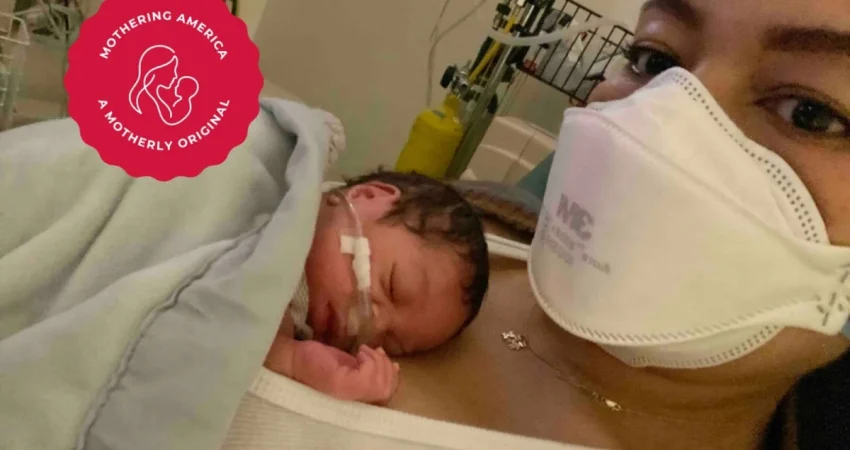
The journey of motherhood, often envisioned as a joyous progression, can abruptly transform into an harrowing test of endurance, particularly when faced with the premature birth of a child. This profound challenge, fraught with medical complexities and emotional turmoil, frequently exposes deep fissures in the American social safety net, highlighting a critical need for systemic reform. Stephanie Roberson’s personal odyssey—from the sudden onset of premature labor to her son Myles’s precarious fight for life in the Neonatal Intensive Care Unit (NICU)—serves as a poignant testament to these struggles and has ignited her fervent advocacy for comprehensive maternal support nationwide. Her story, while extraordinary in its outcome, mirrors the silent battles waged by countless families navigating the complexities of preterm birth in a country where adequate parental leave, affordable childcare, and robust maternal mental healthcare remain elusive.
The Unforeseen Crisis: A Mother’s Premonition and a Race Against Time
Stephanie Roberson’s second pregnancy had unfolded without incident, a seemingly textbook progression of ultrasounds and reassuring test results. Yet, in an instant, the normalcy shattered. At just 24 weeks pregnant, while putting her two-year-old son to bed, her water broke. This sudden rupture, far too early in gestation, plunged her into a terrifying unknown, a situation that medical professionals refer to as Preterm Premature Rupture of Membranes (PPROM). PPROM, occurring in approximately 2-4% of singleton pregnancies, significantly increases the risk of preterm birth and its associated complications, including infection, umbilical cord compression, and placental abruption. The immediate medical directive was clear: seek urgent care at a hospital equipped with a high-level NICU, capable of handling the specialized needs of an extremely premature infant.
The gravity of the situation was underscored by a visceral memory: "I have this core memory of stepping off the towel, and it was completely soaked except for two dry footprints where I was standing," Roberson recalls. With her husband away on business, the logistical and emotional burden fell heavily on her. A neighbor provided immediate childcare for her older son, while her mother, fortuitously visiting, drove her to the hospital. Panic, a natural response to the sudden, life-threatening turn of events, warred with her instinct to protect her son from fear. The immediate question looming was chilling: "How would a baby survive being born right now?"
Upon admission, Roberson was placed on strict bed rest, a common intervention aimed at prolonging gestation and allowing the fetus more time to develop critical organs, particularly the lungs. This period of forced inactivity, however, was far from restful. A neonatologist presented the stark realities of preterm birth survival rates. For an infant born around 25 weeks, the survival rate hovers around 80%, a statistic that, while offering a glimmer of hope, also laid bare the 20% chance of profound loss. Roberson immersed herself in the grim possibilities: a child who might not live, a medically fragile infant, or one grappling with a high likelihood of lifelong vision, hearing, or lung issues, coupled with suppressed immunity. "Your mind is focused on survival," she reflects, "but also how will your life change if you have a child who is going to have all of these additional needs?"
As a self-described planner, Roberson immediately sought control through knowledge, devouring books on prematurity, medical terminology, and potential long-term outcomes. This intensive self-education was driven by a powerful maternal instinct: "I was just trying to learn as much as I possibly could, to be the best advocate that I could for him." Beyond the medical uncertainties, she wrestled with profound emotional distress, battling feelings of shame and self-blame, a common psychological burden for mothers facing complications. The insidious question, "Had her body failed her son?" gnawed at her. After 13 days of agonizing bed rest, Roberson went into labor at 25 weeks and 6 days. The birth was swift, a mere 14 minutes from the time she exited her room, a blur of medical urgency and nascent hope.
The Crucible of the NICU: An 87-Day Fight for Life
Myles’s arrival was met by a full NICU team, a testament to the high-risk nature of his birth. A faint cry, "so tiny that it sounded like a baby a couple of rooms away," was the first reassuring sound. His strong Apgar scores—a quick assessment of a newborn’s physical condition—offered further encouragement. A brief, cherished moment of skin-to-skin contact, "They smooshed him against my cheek," preceded his whisking away to the sterile, high-tech environment of the NICU. This immediate separation, though medically necessary, marks the beginning of a unique form of parental trauma for many NICU families.
The NICU became Myles’s home for 87 days, a period punctuated by constant medical vigilance and emotional rollercoasters. A common complication of prematurity, apneic episodes—where a baby stops breathing—occurred multiple times a day for 77 days. These episodes are often a result of an underdeveloped brain struggling to regulate breathing patterns and are typically treated with caffeine to stimulate the central nervous system. Sometimes, physical stimulation was required to prompt Myles to breathe again. Roberson describes this period as an "unknown," a relentless uncertainty about her child’s future. The cacophony of beeping monitors, the hushed consultations, and the palpable fear of other families created an atmosphere of pervasive stress. "You’re hearing everything that’s going on, and you wind up sitting in a whole lot of grief," she recounted, recalling the heartbreaking sight of a family bringing in extended relatives to bid farewell to a baby who would not survive.
Despite the myriad challenges, Myles proved to be remarkably resilient. He never required intubation, a critical intervention for respiratory failure, nor did he undergo any surgeries. On his discharge day, the chief of neonatology declared him "a one-in-a-million miracle baby." By his first birthday, Myles had not only caught up on all developmental milestones but was ahead on some. Today, he is a thriving four-year-old, a vibrant testament to modern medicine and parental devotion.
However, Roberson’s relief was quickly tempered by a stark realization: her family’s positive outcome was deeply intertwined with their socio-economic advantages. A supportive partner, stable employment, and access to paid family and medical leave were privileges, not universal rights. She understood that without these foundational supports, her story—and Myles’s—could have tragically unfolded very differently.
The Systemic Failures: Economic Burden and Insufficient Support
Roberson’s time in the NICU provided a distressing window into the systemic inequities plaguing American maternal and infant healthcare. She witnessed mothers on the phone, reduced to tears, as insurance companies denied critical coverage. One mother, admitted on the same day as Roberson, had been visiting for Thanksgiving when she unexpectedly went into labor, now facing the impossible dilemma of returning home four hours away to an older child and a job, while her newborn remained hospitalized. "How do I do this?" Roberson remembered her asking, encapsulating the overwhelming burden placed on vulnerable families. "It sort of hits you from everywhere."
The financial ramifications of a NICU stay are astronomical. Myles’s medical care alone totaled nearly $1.5 million. While Roberson’s insurance covered all but $1,300 of her deductible, this level of comprehensive coverage is a luxury for many. Data from the Health Care Cost Institute shows that infants admitted to the highest-level NICU incur average out-of-pocket spending exceeding $3,000 in their first two years, even with private insurance. This figure, however, dramatically underestimates the true cost. It excludes non-medical expenses like parking fees, which can accumulate to hundreds of dollars a day, childcare for older siblings, hotel stays for families living far from the hospital, and meals purchased under stressful circumstances. These hidden costs disproportionately burden low-income families, often leading to medical debt, bankruptcy, and devastating economic insecurity. A study published in Pediatrics highlighted that NICU families can incur hundreds of dollars per day in non-medical expenses.
Beyond the immediate medical costs, the absence of robust paid family leave policies in the United States creates an insurmountable barrier for many. Roberson was fortunate enough to take nine and a half months of combined medical, maternity, and state-funded family leave to recover physically and emotionally, and to care for Myles. This extended leave, however, is an anomaly in the U.S. Only 14 states and Washington, D.C. have enacted state-level paid family and medical leave policies, leaving the vast majority of workers without this crucial support. Nationally, only about 27% of workers have access to paid family leave. The federal Family and Medical Leave Act (FMLA) offers 12 weeks of unpaid leave for eligible workers, a provision that often proves insufficient for NICU parents who may exhaust most or all of it while their infant is still hospitalized, leaving them with no protected time off once their child comes home. The U.S. remains the only industrialized nation without a federal paid family and medical leave policy, a stark contrast to global norms. This lack of support forces parents to choose between their jobs and caring for their critically ill children, often leading to lost wages, job insecurity, and profound stress.
The Silent Battle: Perinatal Mental Health in NICU Parents
The emotional toll of a NICU experience extends far beyond the hospital walls, often manifesting as severe mental health challenges. NICU parents face an increased risk for perinatal mental health conditions, including postpartum depression, anxiety, and, as in Roberson’s case, post-traumatic stress disorder (PTSD). The constant threat to their child’s life, the sterile and overwhelming environment, the relentless uncertainty, and the disruption of typical bonding experiences can leave indelible psychological scars. Research indicates that mothers of preterm infants are up to 70% more likely to experience postpartum depression compared to mothers of full-term infants, and rates of PTSD can be as high as 40%.
Roberson candidly shares that she processed her experience through months of therapy, a critical intervention for her recovery. Yet, access to mental healthcare is another significant hurdle for many. The U.S. faces a severe shortage of trained mental health providers specializing in perinatal conditions, particularly in rural and underserved areas. Compounding this, insurance barriers, including high deductibles and limited coverage for mental health services, leave approximately 75% of mothers with perinatal mental health conditions untreated. This systemic failure has cascading negative impacts on families, workplaces, and the broader economy, as untreated mental health conditions can impair parental functioning, strain family relationships, and reduce productivity.
Roberson’s growing awareness of these disparities was a catalyst for action. "I could recognize the privilege that I had in the situation," she states, "It really sort of tore something open, seeing how that didn’t apply to everyone." This profound realization ignited a powerful sense of responsibility and a determination to advocate for change.
A Call to Action: The Genesis of Advocacy with Chamber of Mothers
Inspired by the collective power of organized mothers, Roberson discovered the Chamber of Mothers in 2024, a national nonpartisan nonprofit dedicated to driving systemic change. The organization’s mission resonated deeply with her personal experience: securing paid leave, affordable and accessible childcare, and improving maternal outcomes for all Americans. "I just knew that I wanted to be doing something that would change things for moms and babies," she affirmed.
Her commitment quickly propelled her to a leadership role; in July, Roberson became the chair of the board, steering the organization’s efforts to ensure that every mother and family in the U.S. has access to the care and support they need. The Chamber of Mothers operates through a decentralized, grassroots model, boasting 52 chapters across the country where mothers gather to transform their lived experiences into tangible cultural and policy changes. This network amplifies individual voices, turning personal struggles into a collective force for political and social transformation.
The organization’s advocacy has yielded tangible results at the state level. Colorado and Illinois, for instance, have taken progressive steps by specifically incorporating NICU leave into their state-funded paid leave policies, recognizing the unique and extended needs of these families. This legislative progress offers a blueprint for other states and underscores the effectiveness of organized maternal advocacy.
Building on this momentum, Roberson joined the Chamber of Mothers in Washington, D.C., during the past winter to champion drafted federal legislation aimed at providing dedicated NICU leave to parents. This proposed bill seeks to establish a national standard, ensuring that all families, regardless of their state of residence or socio-economic status, have the necessary time and financial security to care for their critically ill newborns without jeopardizing their livelihoods. The economic benefits of such policies extend beyond individual families, contributing to improved public health outcomes, enhanced workforce participation, and a more stable economy.
Broader Implications: Investing in Families, Strengthening Society
The experiences of mothers like Stephanie Roberson and the tireless advocacy of organizations like the Chamber of Mothers underscore a fundamental truth: investing in maternal and infant health is not merely a compassionate act, but a strategic imperative for societal well-being. When families are adequately supported—through comprehensive paid leave, affordable childcare, accessible mental healthcare, and robust insurance coverage—they are better equipped to thrive. This, in turn, leads to healthier children, a more productive workforce, and a stronger economy.
The lack of comprehensive support for NICU families has far-reaching consequences. It exacerbates health disparities, particularly among racial and ethnic minority groups who disproportionately experience preterm births and face greater barriers to healthcare access and economic stability. It contributes to parental burnout, relationship strain, and long-term health issues for both parents and children. Conversely, policies that provide adequate leave, financial stability, and mental health resources empower parents to provide optimal care, fostering stronger parent-child bonds and improving developmental outcomes for premature infants.
Roberson’s journey, from a terrified mother facing an unimaginable crisis to a leading advocate for systemic change, exemplifies the transformative power of personal experience channeled into collective action. Her message is clear and universal: "There are basic things that we all deserve to have. Once my eyes were open to it, I couldn’t unsee it, and it pushed me hard to say: Everybody deserves better."
The Chamber of Mothers continues its vital work, operating at local, state, and federal levels to reshape laws and cultural norms. By uniting mothers across the country, it strives to ensure that the story of struggle and privilege experienced by families like Roberson’s becomes a relic of the past, replaced by a future where every mother and baby in America receives the foundational care and support they need to be well. The ongoing fight for paid leave, affordable childcare, and historic investments in maternal health is not just about individual families; it is about building a more just, equitable, and resilient society for all.

0 Comments