
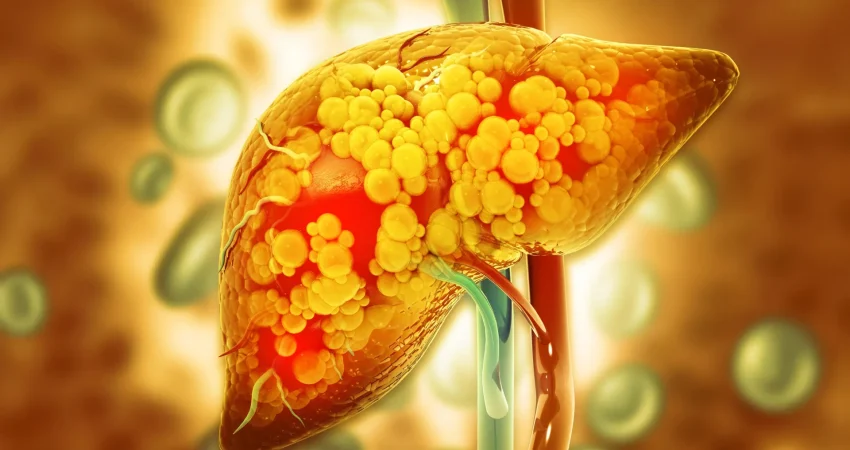
Researchers co-led by Cedars-Sinai Health Sciences University have identified an enzyme that may help protect the liver from the damage that can occur as the most common form of liver disease becomes more severe. The findings, from a preclinical study published in Nature Metabolism, could eventually support new strategies for preventing serious liver injury and progression toward liver failure. This groundbreaking discovery offers a glimmer of hope in the fight against a global health crisis affecting millions, providing a deeper understanding of the intricate mechanisms driving liver disease and paving the way for novel therapeutic interventions.
The Escalating Burden of Metabolic Dysfunction-Associated Steatotic Liver Disease
Metabolic dysfunction-associated steatotic liver disease (MASLD), previously known as nonalcoholic fatty liver disease (NAFLD), has emerged as a silent epidemic, profoundly impacting public health worldwide. In the United States alone, an estimated 100 million individuals are affected, according to the American Liver Foundation. This widespread condition is characterized by the excessive accumulation of fat in the liver, often linked to metabolic derangements such as obesity, type 2 diabetes, and dyslipidemia. While MASLD itself can lead to discomfort and impaired liver function, a significant concern is its potential to progress to more severe forms of liver disease.
A critical threshold is crossed when MASLD evolves into metabolic dysfunction-associated steatohepatitis (MASH), a more aggressive and damaging manifestation. Roughly 20% to 25% of individuals with MASLD develop MASH, a condition where the excess liver fat is compounded by chronic inflammation, hepatocellular injury, and the insidious development of fibrosis, or scarring. This scarring can progressively impair the liver’s ability to perform its vital functions, potentially leading to cirrhosis, liver failure, and an increased risk of hepatocellular carcinoma, the most common type of liver cancer. The economic and social burden of MASH is substantial, encompassing increased healthcare costs, reduced quality of life for patients, and a growing demand for liver transplantation.
The Challenge of MASH Treatment: A Current Landscape
The therapeutic landscape for MASH remains a significant clinical challenge. Current management strategies primarily focus on addressing the underlying metabolic risk factors and mitigating further liver insult. This often involves comprehensive lifestyle modifications, including dietary changes aimed at weight loss and improved glycemic control, coupled with increased physical activity. For patients with elevated lipids or diabetes, pharmacologic interventions targeting these conditions are also employed.
However, these interventions, while crucial for managing MASLD and potentially slowing progression, do not directly cure MASH. The availability of approved medications specifically for MASH is limited, and existing treatments often focus on managing symptoms or addressing co-existing metabolic conditions rather than directly reversing the liver damage. This underscores the urgent need for novel therapeutic targets and treatment modalities that can effectively halt or even reverse the pathological processes driving MASH progression. The development of effective treatments for MASH is not only a scientific imperative but also a critical public health goal, given the increasing prevalence of the disease and its devastating consequences.
Unraveling the Molecular Mechanisms: The Role of Mitochondria
Recent scientific endeavors have illuminated the intricate cellular pathways that contribute to the pathogenesis of MASH. A growing body of research has pointed towards the dysfunction of mitochondria, the powerhouses of the cell, as a key player in the development and advancement of MASH. Damaged or dysfunctional mitochondria can lead to an imbalance in cellular energy production, increased oxidative stress, and the release of inflammatory signals, all of which can exacerbate liver injury.
The multicenter study, spearheaded by Cedars-Sinai researchers, delved into these molecular mechanisms, seeking to identify specific factors that could either promote or protect against MASH progression. Their investigation centered on the role of enzymes within liver cells, hypothesizing that alterations in their levels or activity could correlate with disease severity.
The Discovery of UBE2N: A Promising Protective Enzyme
Through meticulous preclinical research, the Cedars-Sinai team identified a critical enzyme, UBE2N, whose levels appear to dwindle as MASH advances. This observation served as a pivotal turning point in their research, suggesting that UBE2N might play a protective role against the inflammatory and degenerative processes characteristic of MASH.
Dr. Ekihiro Seki, Professor of Medicine and Biomedical Sciences at Cedars-Sinai and co-corresponding author of the study, elaborated on the significance of their findings. "The UBE2N enzyme appears to protect the liver from the inflammation and damage associated with MASH by helping remove damaged mitochondria and supporting the breakdown of fat," Dr. Seki explained. This dual action – managing cellular waste through mitochondrial quality control and facilitating lipid metabolism – positions UBE2N as a multifaceted protector of liver health.
The researchers further elucidated the consequences of UBE2N deficiency. Their findings indicated that a decline in UBE2N levels directly correlates with an increase in damaged liver cells and overall liver injury. This inverse relationship highlights the enzyme’s crucial role in maintaining cellular integrity and preventing the cascade of events that lead to MASH. The implications of this discovery are profound, suggesting that restoring or enhancing UBE2N activity could be a viable therapeutic strategy.
Preclinical Validation: Restoring UBE2N Ameliorates Liver Damage in Animal Models
To rigorously test their hypothesis, the researchers proceeded to a crucial phase of their study: restoring UBE2N levels in laboratory mice afflicted with a condition mimicking MASH. The results of this intervention were highly encouraging and provided strong preclinical evidence for UBE2N’s therapeutic potential.
In the mice where UBE2N was brought back to normal levels, the researchers observed significant improvements in key indicators of liver health. Specifically, they noted a marked reduction in fat accumulation within the liver, a decrease in inflammatory markers, and a substantial amelioration of liver scarring, or fibrosis. These positive outcomes in an animal model strongly suggest that UBE2N acts as a protective agent, capable of reversing or mitigating the pathological hallmarks of MASH.
The implications of these findings extend beyond basic science, pointing towards tangible therapeutic avenues. The observed ability of UBE2N to counteract multiple facets of MASH progression—from fat buildup to inflammation and fibrosis—positions it as a compelling target for future drug development. This discovery could herald a new era in the management of fatty liver disease, shifting the focus from merely managing symptoms to actively restoring liver function and preventing irreversible damage.
Expert Perspectives and Future Directions
The scientific community has responded with enthusiasm to these findings, recognizing their potential to reshape the understanding and treatment of fatty liver disease. Dr. Shelly Lu, the Women’s Guild Chair in Gastroenterology and Director of the Karsh Division of Gastroenterology and Hepatology at Cedars-Sinai, emphasized the broader significance of the research.
"The identification of this enzyme’s role in regulating mitochondria in the liver is an important advance in understanding steatotic liver disease," Dr. Lu stated. "Future studies can test whether enhancing this protective pathway can complement existing treatments, identify patients most likely to benefit and lead to new therapeutic approaches for preventing advanced disease."
Dr. Lu’s remarks highlight the next critical steps in translating this discovery into clinical benefit. Future research will need to focus on developing safe and effective methods for enhancing UBE2N activity in humans, potentially through pharmacological agents or gene therapy. Furthermore, identifying specific biomarkers that indicate a deficiency in UBE2N or a heightened susceptibility to MASH progression will be crucial for patient stratification and personalized treatment approaches. The ultimate goal is to integrate UBE2N-targeted therapies into a comprehensive management strategy for MASLD and MASH, offering a more hopeful future for millions affected by these debilitating conditions.
Broader Impact and Implications for Global Health
The implications of this research extend far beyond the immediate scientific community. The identification of UBE2N as a key regulator in the progression of fatty liver disease offers a tangible and promising target for therapeutic intervention. Given the global epidemic of obesity and metabolic syndrome, the prevalence of MASLD and MASH is expected to continue to rise, placing an immense burden on healthcare systems worldwide.
A novel therapeutic strategy that can prevent the progression of MASLD to MASH, or even reverse existing damage, would have a profound impact on public health. It could potentially reduce the number of patients requiring liver transplantation, decrease the incidence of liver cancer, and significantly improve the quality of life for individuals living with these conditions.
The research also underscores the importance of continued investment in fundamental scientific inquiry. By unraveling the complex molecular pathways that underpin liver disease, scientists are paving the way for transformative medical breakthroughs. The collaborative nature of this study, involving researchers from multiple institutions, further emphasizes the power of interdisciplinary and multinational cooperation in tackling global health challenges.
The journey from a preclinical discovery to a widely available treatment is often long and arduous, involving rigorous clinical trials and regulatory approvals. However, the promising findings regarding UBE2N represent a significant stride forward, offering a beacon of hope in the ongoing battle against one of the most prevalent and impactful chronic diseases of our time. The continued exploration of this enzyme’s therapeutic potential holds the promise of transforming the lives of millions and alleviating the growing burden of liver disease on a global scale.
The study was supported by a consortium of funding bodies, reflecting the significant interest and investment in this critical area of research. These include grants from the National Research Foundation of Korea, the Regional Innovation System & Education (RISE) programme of Chungbuk, the Pinnacle Research Award of the American Association for the Study of Liver Diseases (AASLD), the San Diego Digestive Diseases Research Center (SDDRC) Pilot/Feasibility Grant, the National Institutes of Health, and the National Natural Science Foundation of China. This broad support highlights the international recognition of the importance of this research and its potential to yield significant clinical benefits.

0 Comments