
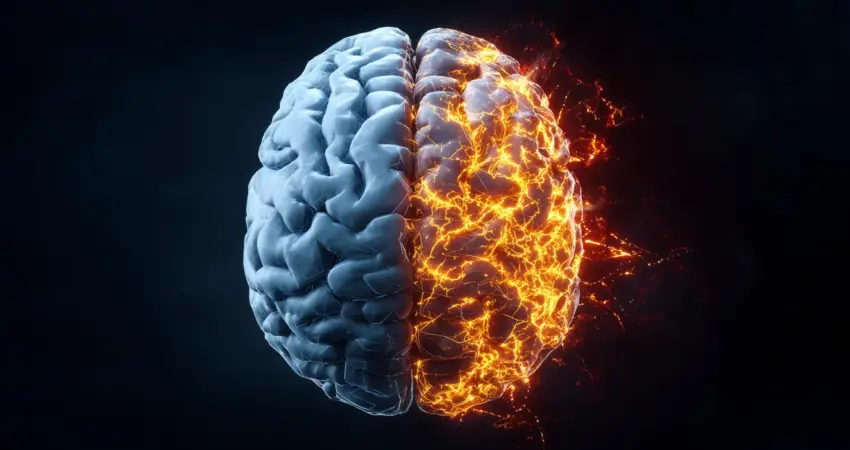
Scientists at the University of Birmingham have identified a promising new avenue for combating neuroinflammation, a critical factor in a wide spectrum of debilitating neurological and psychiatric disorders. Their groundbreaking research, published in the esteemed journal Brain, pinpoints the P2X7 receptor as a key instigator of harmful inflammation within the brain. Crucially, the study reveals that blocking this receptor significantly curtails inflammation in human brain tissue, offering a tantalizing prospect for repurposing existing drug therapies to treat conditions ranging from Alzheimer’s and Parkinson’s diseases to traumatic brain injury (TBI), depression, and psychosis.
Unlocking a Potential Therapeutic Pathway
The research, spearheaded by Professor Nicholas Barnes at the University of Birmingham’s College of Medicine and Health, represents a significant stride in understanding and potentially mitigating the damaging inflammatory processes that plague the central nervous system. Neuroinflammation, once considered a secondary consequence of brain injury or disease, is now recognized as a central driver in the progression of many neurological conditions. The ability to specifically target and reduce this inflammation, particularly through mechanisms already amenable to existing pharmaceuticals, could revolutionize treatment paradigms.
Professor Barnes elaborated on the significance of the findings: "This exciting discovery marks a major step toward repurposing existing therapeutics to combat neuroinflammation at its source. The identification of this receptor could have far-reaching implications for some of the most debilitating and widespread brain disorders such as Alzheimer’s Disease, Parkinson’s and Multiple Sclerosis, or inflammation-linked psychiatric conditions like schizophrenia and depression."
Delving into the Mechanism: The P2X7 Receptor’s Role
At the heart of this discovery lies the P2X7 receptor, a protein that plays a crucial role in initiating and amplifying inflammatory signaling cascades within the brain. The research team employed sophisticated methodologies, utilizing live cultures of human brain cells and meticulously prepared slices of human brain tissue obtained during neurosurgical procedures. Their investigations focused on how the P2X7 receptor orchestrates the release of cytokines, which are signaling proteins essential for regulating the body’s immune and inflammatory responses.
The study observed that the P2X7 receptor’s activation leads to an increased production and release of pro-inflammatory cytokines. When the researchers introduced a specific antagonist – a molecule designed to block the receptor’s activity – they witnessed a substantial reduction in the inflammatory cascade within the human brain tissue samples. This direct correlation between P2X7 receptor blockade and diminished inflammation underscores its pivotal role in driving neuroinflammatory processes.
The Crucial Role of Microglia: The Brain’s Resident Immune Cells
A cornerstone of this research involved a deep dive into the behavior of microglia, the brain’s primary resident immune cells. Microglia are vital for maintaining brain health, acting as sentinels that detect and respond to threats such as injury, infection, or cellular debris. In the context of neuroinflammation, microglia can become overactive, contributing to the very damage they are meant to combat.
To gain unprecedented insight into how human microglia respond to inflammatory stimuli, Professor Barnes’s team developed an innovative method to generate microglia-like cells from peripheral blood monocytes. Monocytes are a type of white blood cell that can be differentiated into various immune cells, including macrophages and, as demonstrated in this study, microglia. This novel approach bypasses some of the significant challenges historically associated with studying microglia, which tend to lose their characteristic functions when removed from their native brain environment.
The researchers’ methodology involved isolating human peripheral monocytes from blood samples and guiding their differentiation into cells that closely mimicked the characteristics of native microglia. These lab-generated microglia-like cells provided a robust and scalable platform for observing human microglial responses to inflammatory signals in a controlled setting.
"Studying human microglia has long been a major challenge: once removed from their native brain environment, they rapidly lose their defining characteristics, likely due to the absence of critical regulatory signals," Professor Barnes explained. "Our approach involved the use of monocyte-derived microglia which provide a powerful, scalable, and virtually unlimited platform for studying human microglial biology with unprecedented precision."
When these microglia-like cells were exposed to inflammatory triggers and the P2X7 receptor antagonist was applied, the researchers observed a significant interference with the signals released by the microglia, particularly as these cells experienced damage and initiated cell death. This finding further solidifies the P2X7 receptor’s central role in the inflammatory response mediated by microglia.
Bridging the Gap: From Lab Models to Human Brain Tissue
The success of the experiments using cultured microglia-like cells provided a strong foundation for validating these findings in more complex biological systems. The team then proceeded to test their hypotheses on actual human brain tissue. This critical step involved utilizing tissue samples obtained from individuals undergoing neurosurgical procedures. The ability to replicate the observed effects of P2X7 receptor blockade on inflammation in these human tissue samples lent substantial weight to the study’s conclusions.
The successful translation of findings from the in-vitro models to ex-vivo human brain tissue is a significant achievement, paving the way for future clinical applications. It validates the P2X7 receptor as a viable therapeutic target and strengthens the rationale for developing clinical trials to assess the efficacy of P2X7 receptor blockers in patients suffering from neuroinflammatory conditions.
Professor Barnes emphasized the importance of this translational step: "Having identified the response in the human monocyte-derived microglia, this provided the impetus to translate these findings with human brain obtained following neurosurgical procedures. This successful translation means the next stage for this research is the development of clinical trials in patients with neurodegenerative conditions and patients with TBI where there are no effective pharmacological treatments to reduce the neuroinflammation and arising damage."
Potential Implications Across a Spectrum of Brain Disorders
The implications of this research are far-reaching, given the pervasive role of neuroinflammation in a multitude of neurological and psychiatric disorders.
-
Neurodegenerative Diseases: Conditions such as Alzheimer’s disease, Parkinson’s disease, and Multiple Sclerosis are characterized by chronic neuroinflammation that contributes to neuronal dysfunction and loss. Targeting the P2X7 receptor could potentially slow disease progression and alleviate symptoms in these devastating illnesses. For instance, studies have indicated elevated levels of inflammatory markers, including cytokines, in the brains of individuals with Alzheimer’s disease, and microglial activation is a hallmark of Parkinson’s pathology.
-
Traumatic Brain Injury (TBI): Following a TBI, a robust inflammatory response is mounted by the brain, which can exacerbate initial damage and contribute to long-term cognitive and functional deficits. The ability to modulate this inflammatory response through P2X7 receptor blockade could offer a critical therapeutic window to mitigate secondary injury. The U.S. Centers for Disease Control and Prevention (CDC) estimates that TBI contributes to approximately 30% of all injury-related deaths in the United States, highlighting the significant public health burden.
-
Psychiatric Disorders: Emerging research increasingly points to the role of neuroinflammation in conditions like depression and psychosis. Chronic low-grade inflammation has been linked to altered neurotransmitter systems and mood regulation. The P2X7 receptor’s involvement in cytokine release suggests a potential mechanism by which inflammation could contribute to the pathophysiology of these disorders, opening avenues for novel antidepressant or antipsychotic therapies. For example, studies have reported increased levels of certain inflammatory cytokines in the cerebrospinal fluid of individuals with major depressive disorder.
The Landscape of Existing Therapeutics
A particularly encouraging aspect of this discovery is the potential to repurpose existing drugs. The P2X7 receptor is a known target for several classes of drugs already in use or under development for other conditions. For example, some immunosuppressants and anti-inflammatory agents interact with purinergic receptors, including P2X7. This existing pharmacological landscape could significantly accelerate the translation of these findings into clinical practice, potentially reducing the time and cost associated with developing entirely new drug entities.
Historically, the development of drugs targeting neuroinflammation has been challenging due to the complexity of the brain’s immune system and the potential for off-target effects. However, the specific identification of the P2X7 receptor as a key mediator provides a more precise target. The University of Birmingham’s research team has effectively demonstrated that a targeted blockade can yield significant anti-inflammatory effects without apparently disrupting essential brain functions, based on their in-vitro and ex-vivo studies.
Future Directions and Clinical Translation
The successful validation of the P2X7 receptor as a target for neuroinflammation in human brain tissue marks a pivotal moment. The next logical step, as articulated by Professor Barnes, is the initiation of clinical trials. These trials would aim to assess the safety and efficacy of P2X7 receptor antagonists in human patients diagnosed with neurodegenerative diseases or TBI.
The research team’s innovative method for generating microglia-like cells also holds promise for further pre-clinical research. This scalable platform allows for more comprehensive drug screening and mechanistic studies, potentially accelerating the identification of the most effective P2X7 receptor blocking agents for various neurological conditions.
The journey from laboratory discovery to patient benefit is often lengthy and complex, involving rigorous testing and regulatory approvals. However, the clear identification of a well-defined target, coupled with the potential to leverage existing drug classes, positions this research as a particularly promising contender for future therapeutic breakthroughs in the fight against brain inflammation and its associated debilitating diseases. The scientific community will be closely watching as this research progresses towards clinical application, offering a beacon of hope for millions affected by neurological and psychiatric disorders worldwide.

0 Comments