
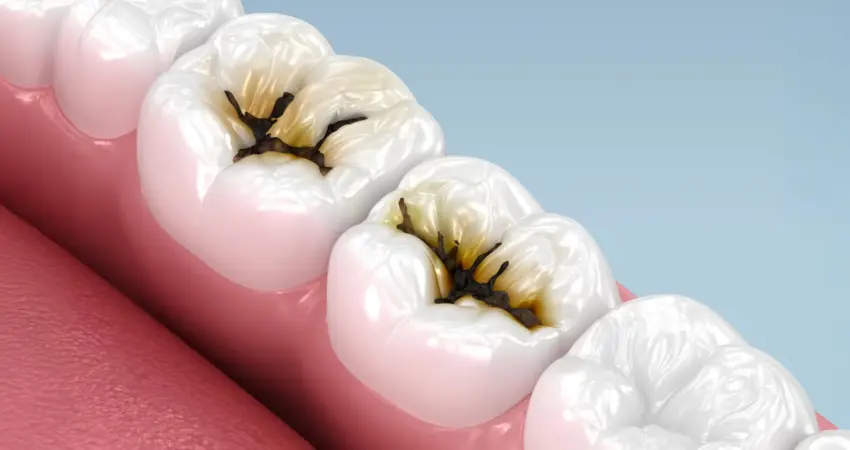
A groundbreaking clinical trial has provided robust evidence that a readily available and cost-effective liquid can effectively halt tooth decay in young children, potentially averting painful infections, the need for emergency room visits, and even extensive dental surgery. Silver diamine fluoride (SDF), a treatment requiring mere seconds to apply, offers a non-invasive alternative to traditional drilling and filling methods, promising to revolutionize childhood dental care.
Breakthrough in Pediatric Dentistry: SDF Halts Cavity Progression
The findings, published in the prestigious journal JAMA Pediatrics, stem from a large-scale Phase III clinical trial led by researchers at the University of Michigan. This extensive study involved 830 children under the age of six, recruited from dental clinics, pediatric medical practices, and federally supported Head Start and Early Head Start programs across Michigan, New York, and Iowa. The trial meticulously examined the efficacy of a 38% silver diamine fluoride solution in arresting tooth decay in baby teeth, administered at six-month intervals.
The results are compelling: SDF successfully stopped the progression of decay in over half of the affected primary teeth. This process, known as arresting tooth decay, means the damaged area ceases to deteriorate. Unlike conventional fillings, which remove and replace lost tooth structure, SDF acts as a protective agent, preventing existing decay from worsening.
"This is a very effective and safe treatment — even in children as young as 1," stated Margherita Fontana, professor of dentistry at the University of Michigan School of Dentistry and the study’s lead investigator. Professor Fontana emphasized the critical need for rigorous evidence to support widespread adoption of this accessible treatment.
The Growing Crisis of Childhood Tooth Decay
Tooth decay remains the most prevalent chronic disease among children in the United States, impacting more than 40% of the nation’s youth. While initial cavities may present with few noticeable symptoms, untreated decay can escalate into severe toothaches, debilitating infections, and significant disruptions to a child’s ability to eat, sleep, and attend school. The downstream effects often lead to missed educational opportunities and repeated, costly medical interventions.
For very young children, conventional dental treatments pose unique challenges. Many lack the ability to remain still for extended procedures, while others experience significant fear and anxiety, making invasive treatments a formidable hurdle. This is where SDF emerges as a potential game-changer. Its rapid application, requiring no drilling, injections, or sedation, bypasses many of the obstacles associated with traditional pediatric dental care.
A Timeline of Innovation and Evidence
The journey of silver diamine fluoride from a long-standing clinical practice in other parts of the world to a widely recognized treatment in the United States is marked by decades of use and a recent surge in robust clinical validation. Dentists have utilized SDF to manage cavities in numerous countries for many years.
In the United States, the Food and Drug Administration (FDA) initially approved SDF in 2014, but its designation was as a medical device for treating tooth sensitivity. Dentists subsequently began using it "off-label" to arrest tooth decay, meaning they applied an approved product for a purpose beyond its original intended use. While this practice demonstrated clinical utility, the absence of large-scale, U.S.-based clinical trial data specifically for arresting caries was a significant gap.
The University of Michigan-led trial, initiated in 2018 and continuing through the disruptions of the COVID-19 pandemic, was specifically designed to fill this void. "If we want more children and families to benefit from this treatment, we need rigorous evidence showing both that it works and that it’s safe," Professor Fontana explained. "From a public health perspective, if we want broader implementation across the United States, including in medical settings, we need carefully collected data in U.S. populations, and we now have that."
How Silver Diamine Fluoride Works
The efficacy of SDF lies in the synergistic action of its two primary components: silver and fluoride. The silver ions possess potent antimicrobial properties, effectively combating the bacteria responsible for initiating and perpetuating tooth decay. Simultaneously, the fluoride ions work to remineralize and strengthen the tooth’s enamel structure, making it more resistant to future acid attacks and further degradation.
The application process is remarkably simple. Using a tiny sponge-tipped applicator, a dentist or trained healthcare professional paints the liquid directly onto the cavity. This quick procedure can be performed in a standard dental operatory or potentially in other clinical settings.
Broader Implications and Accessibility
The potential benefits of SDF extend far beyond young children. Professor Fontana highlighted that older adults, individuals with developmental or physical disabilities, those experiencing severe dental anxiety, and patients who face significant barriers to obtaining conventional dental care could all find SDF to be a valuable treatment option.
One notable aspect of SDF treatment is its cosmetic trade-off: it permanently darkens the decayed portion of the tooth. This discoloration, while primarily cosmetic, can be more noticeable on anterior (front) teeth and may influence patient and family preferences. However, for many, the ability to avoid pain, drilling, and more invasive procedures may outweigh this aesthetic consideration.
The prospect of broader SDF availability, particularly within pediatric medical settings, is significant. Young children often establish relationships with pediatricians years before their first dental appointment. "In medicine, clinicians want high-quality evidence before changing practice," Fontana noted. "It is important to have data they can refer to because young children often see pediatricians years before they ever visit a dentist. Broader acceptance could allow many more cavities to be treated while a referral to a dental home is successful, and before they become painful, infected or require surgery." A "dental home" signifies an ongoing relationship with a dental care provider offering comprehensive preventive and restorative services.
The Path to FDA Approval and Enhanced Access
The comprehensive clinical trial was a collaborative effort involving researchers from the University of Michigan, New York University, the University of Iowa, and Indiana University. Funding for this crucial research exceeded $12 million, primarily provided by the National Institute of Dental and Craniofacial Research, a division of the National Institutes of Health. The specific product tested was Advantage Arrest 38% SDF, supplied by Elevate Oral Care.
The robust findings from this trial are intended to support a manufacturer’s application for FDA approval of SDF as a drug specifically for arresting dental caries. Such regulatory approval would be a significant step towards increased utilization. Amr Moursi, a professor of pediatric dentistry at New York University College of Dentistry and a co-principal investigator on the study, emphasized the transformative potential of this regulatory shift.
"Our results support FDA approval of SDF for managing arrest of tooth decay in young children," stated Dr. Moursi. "Removing SDF from off-label status would be an important innovation which could lead to increased utilization by providers, enhanced payments by insurers and more consistent product quality."
For some children, periodic SDF applications every few months could be sufficient to manage decay until the affected baby tooth naturally exfoliates. Adults could also benefit, using SDF to control decay over extended periods or as a temporary measure until more permanent restorative solutions are feasible or affordable.
While SDF is not a panacea for all dental caries and does not eliminate the need for future dental interventions in all cases, its ability to arrest decay and prevent infection and pain with a minimally invasive, seconds-long procedure holds immense promise. The implications for public health are substantial, offering a more accessible and less traumatic pathway to managing a widespread childhood disease, thereby reducing the burden of pain, infection, and the need for complex surgical procedures. This research marks a pivotal moment, potentially ushering in an era where preventing extensive dental work becomes a reality for millions.

0 Comments