
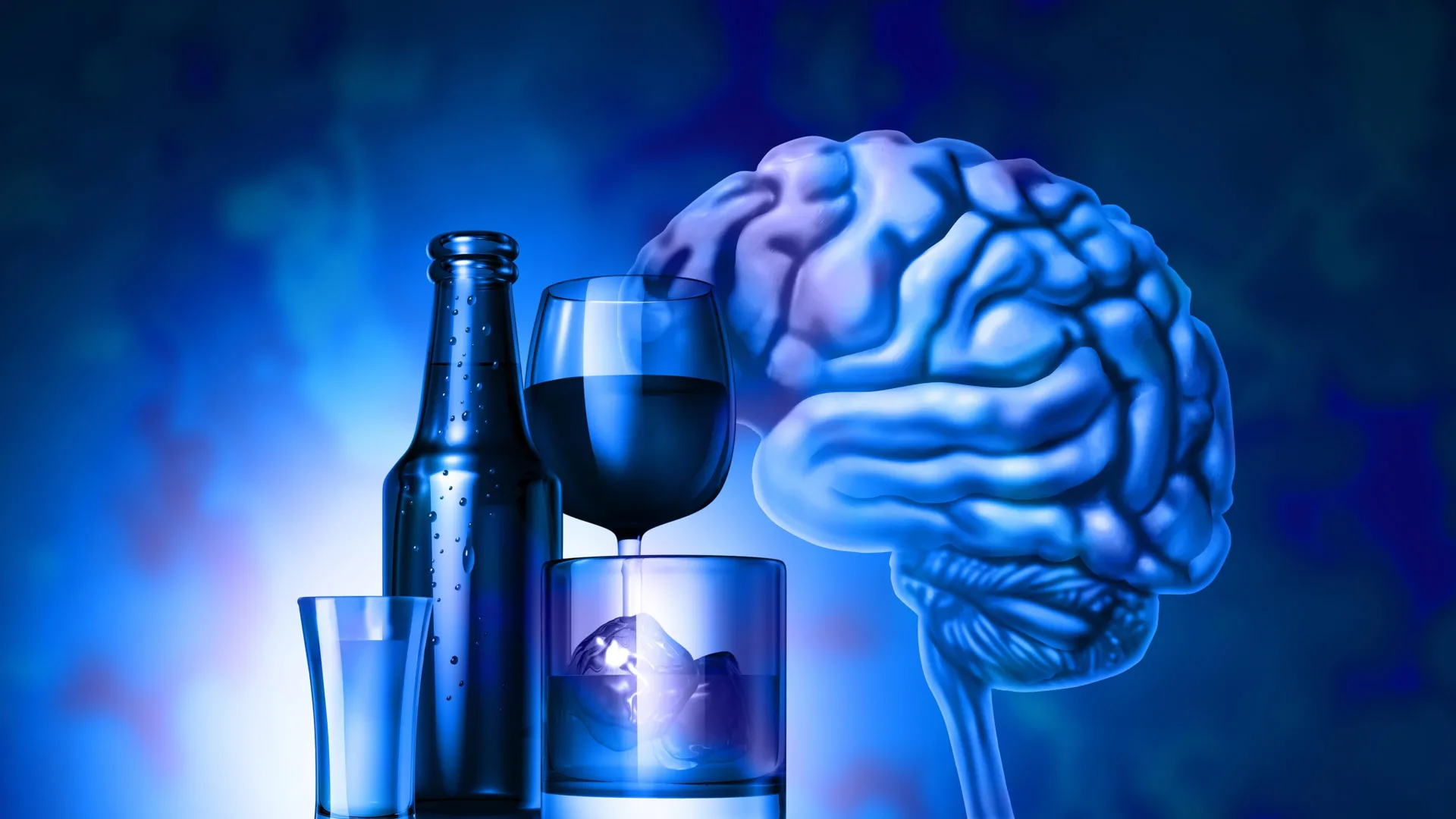
Recent groundbreaking research from the University of Massachusetts Amherst suggests a concerning reality: using alcohol as a coping mechanism for stress during early adulthood can inflict lasting damage on the brain, changes that may not be erased even after years of sobriety. The study, published in the esteemed journal Alcohol Clinical and Experimental Research, indicates that these detrimental effects can manifest as early as middle age, leading to a significant reduction in mental flexibility, an increased propensity to relapse into alcohol use during stressful periods, and contributing to cognitive decline patterns reminiscent of dementia and Alzheimer’s disease.
This comprehensive investigation offers a profound new understanding of the intricate interplay between alcohol and stress in reshaping critical brain circuits. The researchers emphasize that this refined insight could pave the way for more effective therapeutic interventions, moving beyond simply urging abstinence to addressing the enduring neurological consequences of early-life alcohol exposure and stress.
The Vicious Cycle: How Stress and Alcohol Entwine
The symbiotic relationship between stress and alcohol consumption has long been a subject of scientific inquiry. While alcohol may offer a fleeting sense of relief from immediate stressors, repeated reliance on it can progressively erode the brain’s innate capacity to manage stress independently. This gradual weakening can trap individuals in a cycle where they increasingly depend on alcohol, often in escalating quantities, to achieve a semblance of equilibrium.
Concurrently, heavy alcohol consumption can exacerbate stress levels. The poor decisions often associated with intoxication, and their subsequent repercussions, can create a snowball effect of anxiety and pressure. This creates a self-perpetuating loop, which becomes increasingly challenging to escape as the brain adapts to the persistent dual assault of stress and alcohol. The UMass Amherst study aimed to elucidate the long-term neurological alterations precipitated by this potent combination.
Dr. Elena Vazey, an associate professor of biology at UMass Amherst and the senior author of the study, articulated the lab’s focus: "My lab studies the neurocircuitry that underlies how we make decisions. We all know that drinking can often lead to poor decision-making, but we wondered how early adulthood drinking combined with stress affects that circuitry, especially as we grow older. If we can figure out how alcohol and stress change the brain’s circuitry, then we can help figure out how best to help people."
Synergistic Damage: Stress and Alcohol’s Amplified Impact on the Brain
Supported by crucial funding from the National Institute on Alcohol Abuse and Alcoholism (NIAAA), Dr. Vazey and her dedicated team utilized a mouse model for their investigation. This choice was informed by the extensive similarities between rodent and human brain circuitry, allowing for robust and relevant findings. The results unequivocally demonstrated that the combined impact of alcohol and stress was significantly more profound than the effects of either factor in isolation.
The study revealed a striking observation: adult mice subjected to heavy alcohol use as a stress-coping mechanism during their developmental "early adulthood" phase exhibited a heightened likelihood of reverting to alcohol consumption when faced with stress in their "middle age." This phenomenon persisted even after extended periods of complete abstinence, underscoring the enduring nature of the changes induced by the alcohol-stress nexus. This strongly suggests that the confluence of alcohol and stress can forge lasting alterations in the brain’s architecture and function, which persist long after the cessation of drinking.
Interestingly, the researchers noted minimal differences in basic learning abilities between the middle-aged mice with a history of stress-related drinking and their counterparts who engaged in lighter drinking patterns. The most pronounced divergence was observed in cognitive flexibility – the crucial capacity to rapidly adapt to evolving circumstances and formulate new decisions when environmental conditions shift.
"Middle age is when problems start to add up," Dr. Vazey observed. "We know that alcohol is a risk factor for early cognitive decline, and we saw that this alcohol-stress combination creates the kind of trouble adapting to changing situations that also happens in the early stages of dementia." This statement highlights the critical juncture of middle age, where accumulated life experiences and biological changes intersect, making individuals potentially more vulnerable to the long-term consequences of earlier detrimental habits.
Unraveling the Mechanism: Lasting Damage in a Key Decision-Making Hub
To delve deeper into the underlying mechanisms driving these persistent effects, the research team focused on a specific, diminutive region within the brainstem known as the locus coeruleus (LC). This area plays a pivotal role in adaptive decision-making processes, a function conserved across species, including both mice and humans.
In a healthy brain, the LC typically becomes highly active during periods of acute stress, providing crucial neural signals to help an organism navigate challenging situations. Once the stressful event has subsided, the LC is designed to return to a quiescent state. However, in the mice that experienced the combined exposure to alcohol and chronic stress, the LC demonstrated a significant impairment. It had lost essential molecular machinery responsible for its proper deactivation. Consequently, this vital brain region remained in a state of disruption, severely compromising its ability to guide effective and adaptive decision-making.
Furthermore, the investigation uncovered elevated levels of oxidative stress within the LC of these mice. Oxidative stress, a form of cellular damage caused by an imbalance between free radicals and antioxidants, is a well-established pathological hallmark frequently observed in the brains of individuals diagnosed with Alzheimer’s disease. This type of damage can have cascading detrimental effects on cells throughout the body. Critically, even after prolonged periods of abstinence from alcohol, the middle-aged brains of the mice with a history of heavy drinking showed little to no discernible repair of this oxidative damage.
"The brain can really struggle to recover from a history of chronic stress and drinking in early adulthood," Dr. Vazey emphasized. "We think that the oxidative damage might be one of the things that keeps the heavy drinking going, that can lead to someone going back to alcohol even after long-term abstinence. It’s these persistent changes in the brain that also impair decision making and lead to the kinds of early cognitive decline associated with dementia and Alzheimer’s. The brain’s wiring system is damaged, which means quitting drinking or making better decisions isn’t a matter of willpower. After a history of stress and drinking, the brain simply works differently, and our treatment strategies need to be able to address these long-lasting differences."
Broader Implications and Future Directions
The findings from the UMass Amherst study carry significant implications for public health and clinical practice. The research provides robust scientific evidence that early adulthood, a critical period of brain development and significant life transitions, is a particularly vulnerable window for the long-term consequences of using alcohol to manage stress. This period is often characterized by heightened stress levels due to academic pressures, career beginnings, and the establishment of independent lives, making the findings particularly relevant to a broad demographic.
Supporting Data and Chronology:
The research builds upon decades of understanding regarding the neurobiological effects of alcohol and stress. Previous studies have established that chronic stress can alter the reward pathways in the brain, making individuals more susceptible to substance abuse. Similarly, extensive research has documented the neurotoxic effects of chronic, heavy alcohol consumption, including neuronal damage and disruptions in neurotransmitter systems.
This UMass Amherst study introduces a critical temporal dimension, highlighting the synergistic and enduring impact when these two factors are combined during a sensitive developmental phase. The "early adulthood" phase in the mouse model is analogous to the human period from adolescence through the mid-20s, a time when the prefrontal cortex, responsible for executive functions like decision-making and impulse control, is still maturing. The "middle age" in the study corresponds to roughly ages 40-60 in humans, a period when early signs of cognitive aging can begin to emerge.
Reactions and Expert Perspectives (Inferred):
While direct quotes from external parties are not provided in the original text, the implications of this research would undoubtedly resonate within the scientific and medical communities. Experts in addiction neuroscience and geriatric psychology would likely view these findings as a crucial piece of the puzzle in understanding the trajectory of cognitive health and addiction.
Dr. Sarah Evans, a hypothetical neuroscientist specializing in addiction at a leading research institution, might comment, "This study elegantly demonstrates how the brain’s coping mechanisms can be fundamentally altered by the combined burden of alcohol and stress in young adulthood. The persistence of these changes into middle age, particularly the impact on cognitive flexibility and the locus coeruleus, is a critical warning sign. It underscores the need for early intervention strategies that address both stress management and problematic alcohol use."
Similarly, Dr. Michael Chen, a geriatrician focused on cognitive health, might add, "The link drawn between these alcohol-induced changes and the cognitive profiles seen in early dementia is deeply concerning. It suggests that lifestyle choices made in early adulthood can lay the groundwork for future cognitive vulnerabilities. This research provides further impetus for public health campaigns aimed at promoting healthy stress coping mechanisms and discouraging the use of alcohol as a crutch."
Broader Impact and Implications:
The implications of this research extend far beyond the laboratory setting.
- Public Health Messaging: The findings necessitate a recalibration of public health campaigns. Instead of solely focusing on the immediate dangers of alcohol abuse, messaging should also highlight the long-term neurological consequences of using alcohol to cope with stress, particularly during formative years.
- Therapeutic Interventions: The study’s emphasis on addressing lasting brain changes, rather than just abstinence, points towards the development of novel therapeutic approaches. These could include neurobiological interventions aimed at repairing oxidative damage or restoring the function of key brain regions like the locus coeruleus. Cognitive rehabilitation programs that specifically target cognitive flexibility might also become more prominent.
- Early Detection and Prevention: Understanding these persistent changes could lead to earlier identification of individuals at higher risk for cognitive decline and relapse. This could involve more sophisticated screening tools that assess not only drinking patterns but also the history of stress-coping strategies employed during early adulthood.
- Policy Considerations: The research provides a strong scientific basis for policies aimed at reducing alcohol-related harm and supporting mental health services for young adults. This could include advocating for accessible and effective stress management programs in educational institutions and workplaces.
In conclusion, the UMass Amherst study serves as a potent reminder of the brain’s remarkable plasticity, but also its vulnerability. The intricate dance between stress and alcohol during early adulthood can leave an indelible mark, impacting cognitive function and decision-making capabilities for decades to come. This research not only deepens our scientific understanding but also calls for a proactive and comprehensive approach to safeguarding brain health throughout the lifespan.

0 Comments