
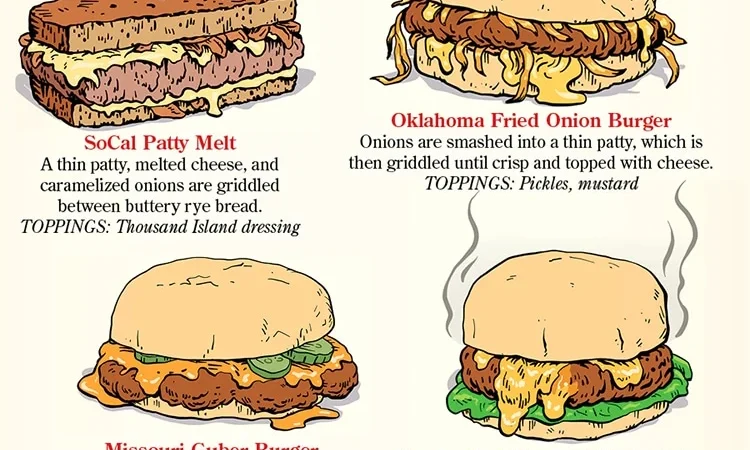
The American hamburger, once a simple staple of roadside diners and backyard grills, has evolved into a complex map of regional identities, reflecting the diverse culinary geography of the United States. While the basic composition—a ground beef patty served on a bun—remains constant, the variations found from the Atlantic coast to the Pacific shore reveal deep-seated traditions, historical economic necessities, and local agricultural influences. According to recent comprehensive surveys of American foodways, these regional iterations are defined less by rigid ingredient lists and more by specific preparation methodologies and signature components that serve as cultural touchstones for their respective communities.
From the steamed chests of central Connecticut to the onion-laden griddles of Oklahoma, the hamburger serves as a medium for regional expression. This guide examines the primary styles that define the American burger landscape, analyzing the technical specifications, historical origins, and the socio-economic factors that allowed these distinct varieties to flourish in an era of increasing culinary homogenization.
The Evolution of the American Burger: A Chronology
The transition of the hamburger from a niche immigrant dish to a national icon occurred over more than a century of innovation. Understanding the timeline of these regional developments provides context for why certain styles predominate in specific areas.
- 1885–1891: Various claims emerge regarding the "birth" of the hamburger, including "Hamburger Charlie" Nagreen in Wisconsin and the Menches brothers in New York, who reportedly substituted ground beef for pork sausage at a county fair.
- 1904: The St. Louis World’s Fair introduces the "hamburger steak" on a bun to a massive national audience, solidifying its place in the American diet.
- 1921: White Castle is founded in Wichita, Kansas, introducing the "slider" and standardizing the hamburger as a fast, affordable, and safe-to-eat product.
- 1920s–1930s: The Great Depression drives the creation of "filler" burgers, such as the Oklahoma Onion Burger and the Mississippi Slugburger, which utilized cheap ingredients to stretch meat supplies.
- 1948: In-N-Out Burger opens in California, pioneering the "Double-Double" and the West Coast style characterized by fresh produce and "special sauce."
- 1954: The "Jucy Lucy" is reportedly invented at either Matt’s Bar or the 5-8 Club in Minneapolis, marking a shift toward burgers defined by internal architecture rather than just toppings.
- 2000s–Present: The "Gourmet Burger" movement sees regional styles elevated in high-end dining, with chefs focusing on heritage beef blends and artisanal recreations of classic regional methods.
Technical Methodologies: Steaming, Smashing, and Stuffing
The primary differentiator in regional burger styles is often the application of heat and the manipulation of the beef. Unlike the standardized flame-broiled or flat-top methods used by national chains, regional specialties often rely on unconventional physics.
The Connecticut Steamed Cheeseburger
In the Connecticut River Valley, specifically in Meriden and Middletown, the "steamed cheeseburger" remains a localized phenomenon. Unlike almost every other burger style, this version avoids the Maillard reaction—the browning of meat that creates a crust. Instead, the beef is placed in individual stainless steel trays and cooked in a specialized steam chest. The cheese, typically a sharp white cheddar, is steamed in separate trays until it reaches a molten, liquid consistency and is then poured over the patty. This method results in an exceptionally moist burger that retains its original volume, as the fat is rendered differently than on a dry griddle.
The Oklahoma Fried Onion Burger
Born out of the economic hardships of the 1920s, the Oklahoma Onion Burger is a masterclass in culinary efficiency. To stretch expensive beef, cooks in El Reno, Oklahoma, began smashing a massive quantity of thinly sliced white onions directly into the patty on the griddle. As the meat sears, the onions caramelize and steam simultaneously, infusing the beef with flavor while adding significant bulk. The technical key to this burger is the "smash," which ensures a high surface-area-to-volume ratio for maximum browning.
The Minnesota Jucy Lucy
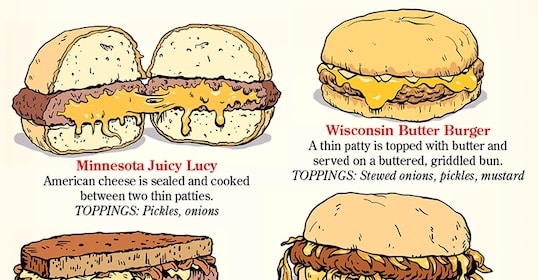
The Jucy Lucy (often spelled without the "i" in the Minneapolis tradition) is defined by its internal structure. Rather than placing cheese on top of the meat, two thin patties are sealed around a core of American cheese. During the cooking process, the cheese melts into a pressurized, liquid center. This style presents a unique challenge for the consumer; the "molten lava" effect requires a specific waiting period to avoid thermal injury to the palate. It represents a shift from topical garnishes to integrated engineering.
Regional Garnishes and Cultural Identity
Beyond cooking methods, several regional burgers are defined by a singular, often polarizing ingredient that reflects local agricultural output or immigrant influences.
The New Mexico Green Chile Cheeseburger
In the Southwest, the hamburger is a vehicle for the region’s most famous crop: the Hatch green chile. To be considered authentic, the chiles must be roasted, peeled, and chopped before being spread liberally over a cheeseburger. The heat levels vary, but the acidity and smoke of the chile provide a counterpoint to the richness of the beef and cheese. This style is so culturally significant that the state of New Mexico established an official "Green Chile Cheeseburger Trail" to promote culinary tourism.
The Utah Pastrami Burger
A product of the Greek-American community in Salt Lake City, the Pastrami Burger—popularized by establishments like Crown Burgers—combines two distinct deli traditions. A standard quarter-pound patty is topped with a generous pile of thinly sliced, spice-rubbed smoked pastrami. This "meat-on-meat" approach reflects the fusion of traditional American fast food with the Mediterranean-influenced delis of the mid-20th century.
The Mississippi Slugburger
The "Slugburger," found in northeast Mississippi (particularly Corinth), is a historical artifact of the Depression. The name derives not from the gastropod, but from the slang for a metal token or nickel, which was the original price of the sandwich. The patty consists of a mixture of beef and a significant amount of soy or breading as a filler. The mixture is deep-fried rather than grilled, resulting in a unique, crispy texture that remains a nostalgic favorite in the Deep South.
Economic Data and Market Impact
The hamburger industry is a cornerstone of the American economy. According to data from the National Cattlemen’s Beef Association, Americans consume approximately 50 billion burgers annually, which translates to roughly three burgers per week per person.
The market for regional burgers has seen a resurgence in the "fast-casual" sector. While the global hamburger market was valued at approximately $160 billion in 2023, the growth is increasingly driven by consumers seeking "authentic" or "artisanal" experiences. Analysts note that regional styles provide a sense of place and narrative that standardized national chains cannot replicate. This has led to the "exportation" of regional styles; for instance, the "smash burger" technique, once a Midwestern staple, is now the dominant preparation method for high-growth chains nationwide.
Analysis of the "Regional" vs. "Global" Tension
The survival of these regional burger styles is a testament to the resilience of local food cultures. In the mid-20th century, the rise of the Interstate Highway System and the subsequent standardization of fast-food franchises threatened to erase local variations. However, the late 20th and early 21st centuries saw a counter-movement.
Food critics and historians suggest that the regional burger acts as a form of "edible geography." As digital platforms like Instagram and TikTok prioritize visually distinct and "destination-worthy" foods, the Connecticut steamed burger or the Jucy Lucy have become viral sensations, drawing tourists to towns that might otherwise be bypassed.
Furthermore, the regional burger provides a blueprint for the future of the industry. As plant-based alternatives and lab-grown meats enter the market, manufacturers are looking to these regional profiles—the smokiness of the New Mexico chile or the texture of the Oklahoma onion—to provide the "soul" that basic protein substitutes often lack.
Conclusion: The Enduring Legacy of the Regional Burger
America’s best regional hamburgers are more than mere sustenance; they are historical records of the communities that created them. Whether it is the peanut butter-slathered "Guber Burger" of the South or the butter-soaked patties of Wisconsin, these variations highlight a national penchant for innovation and a refusal to accept a "one size fits all" approach to the most iconic of American foods.
As the culinary landscape continues to evolve, the essential character of these regional styles remains anchored in specific techniques and ingredients. For the enthusiast, the journey through America’s regional burgers offers a deeper understanding of the country’s diverse heritage—one patty at a time. The continued popularity of these styles ensures that while the hamburger is a global commodity, it will always have a local home.

0 Comments