
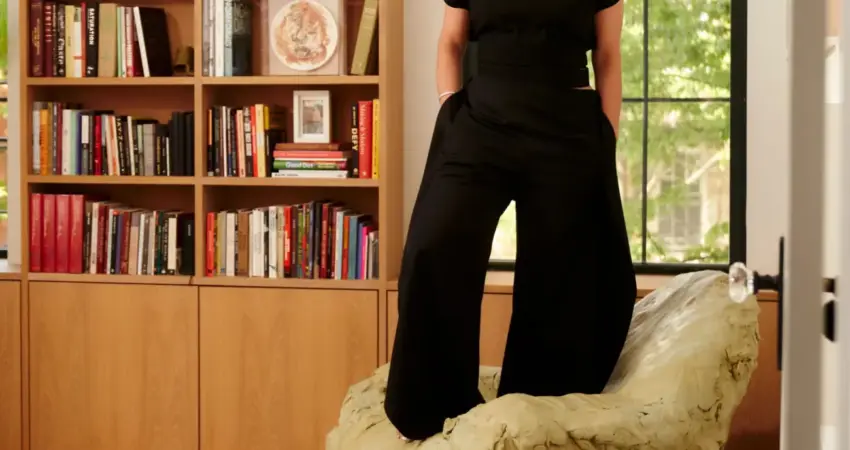
The arrival of expansive mirrors into Joeonna Bellorado-Samuels’ Clinton Hill apartment was not without its dramatic flair, echoing the careful, sometimes challenging, installation of significant artwork within a gallery. The logistical hurdles involved mismeasured stairwells and the eleventh-hour erection of scaffolding to maneuver approximately ten-foot glass panes through a window. "The neighbors were not used to that," she recounts with a characteristic laugh. This memorable episode, however, encapsulates a core tenet of Bellorado-Samuels’ home: it is fundamentally conceived as a platform for the viewing experience.

Bellorado-Samuels’ professional journey began within the hallowed halls of the Studio Museum in Harlem, a pivotal institution for Black artists. She later transitioned to Jack Shainman Gallery, where she ascended to the role of senior director. This trajectory has cultivated an appreciation for, and indeed an appetite for, friction – a quality that profoundly informs both her personal space and her professional endeavors. This same impulse, evident in her itinerant gallery project, "We Buy Gold," which deliberately engages with the intersection of art and commerce, also informs her unconventional approach to interior design. Rejecting the conventional comfort of sofas, she favors chairs that are sculptural and possess a distinct character, highlighting a dynamic tension between the desire for repose and the inherent visual interest of provocative forms.

The Art of Living: A Curated Collection and Thoughtful Design
The apartment itself, a meticulous renovation spanning four years, prioritizes the aesthetic and conceptual over pure comfort. This philosophy is immediately apparent in the striking wall of mirrors that graces one end of the open-plan living area, masterfully expanding the sense of space and reflecting the room’s carefully curated contents. In the secondary bedrooms, the pursuit of exhibition space led to a deliberate sacrifice of storage, emphasizing the desire for pristine backdrops for artworks. Bellorado-Samuels’ personal sanctuary is equally dedicated to art; her television is discreetly housed beneath the bed, making way for prominent display of works by artists such as Barkley Hendricks, Sadie Barnett, and Charisse Pearlina Weston. The second bedroom has been transformed into a bespoke bookshelf, a testament to a ten-month collaboration with millworker Paul Finsterwald, whom she connected with through her gallery network.

This deliberate curation of meaningful objects and pieces with sentimental value is deeply rooted in Bellorado-Samuels’ upbringing in San Francisco. Her father, Joe Sam, was a politically engaged artist who frequently incorporated found materials into his work. "We would go to the train tracks and collect things for his art that would end up on the kitchen table," she reminisces. This upbringing instilled a profound appreciation for objects and the care required to live harmoniously with them, a philosophy she encapsulates with the adage, "All you need is a little bit of restraint and you’re golden."

A Building with a Past: From Infirmary to Artistic Haven
Bellorado-Samuels’ connection to this particular apartment building is steeped in personal history and a fascination with its layered past. Her childhood tradition with her mother of touring open houses was revived one Mother’s Day, leading her to discover this Brooklyn residence. The building itself offers a rich narrative. Its front section dates to approximately 1850, with the rear addition constructed around 1900. Originally serving as a women’s home, the rear portion was designed as an infirmary. After years of vacancy and a period as the Bull Shippers Inn, the property eventually fell into disrepair, acquiring an almost spectral aura. Subsequently acquired and renovated, it was divided into twenty-six distinct apartment units.

Bellorado-Samuels is particularly drawn to the architectural remnants of these former lives. The original facade, an inexplicable small window, and even the ostensibly flawed patchwork of exposed brick, which she confesses to disliking aesthetically, contribute to the apartment’s unique character. "People who know brick tell me it’s a really terrible patch job, but I love how ragtag and random it is," she observes. These architectural nuances add a vital texture to the viewing experience, transforming the apartment from a mere repository for art into a considered proposition for living with it.

The Viewing Experience: An Apartment as a Living Gallery
Ultimately, Bellorado-Samuels’ home functions less as a private gallery and more as an active participant in the display and contemplation of art. The apartment does not recede behind her collection; instead, it actively engages with it, amplifying, complicating, and occasionally challenging the viewer’s perception. "I like that in this space you can see all kinds of different art," she states. "People think they can’t live with sculpture – I love living with sculpture. Do you just want paintings of flowers? That’s fine, but there are other things." This sentiment underscores her commitment to pushing boundaries and embracing diverse forms of artistic expression within a domestic setting. The apartment, in its deliberate design and thoughtful curation, serves as a compelling testament to the power of art to shape and inform our lived experiences.

Key Design Elements and Artworks: A Closer Look
- The Library: Features a striking urethane foam, wood, and steel chair by Urs Fischer and a side table by Saint Heron. The Turkish Kilim rug adds a layer of warmth and history, sourced from Etsy. The walls are painted in Benjamin Moore’s Decorator’s White, providing a neutral yet sophisticated backdrop.
- The Living Area: Dominated by a wall of mirrors from HMH Architectural Metal and Glass, which visually expands the space. The daybed is from CB2, complemented by a vintage armchair by Rodolfo Bonetto for Driade. Artwork by Sadie Barnette is prominently displayed, alongside a unique side table from Bedford Galleries, once a Brooklyn school classroom. This table is adorned with an antique women’s cowry shell and fiber wedding veil from Papua New Guinea and a light sculpture by Nandi Loaf.
- The Bedroom: Works by Barkley Hendricks, Sadie Barnett, and Charisse Pearlina Weston are given pride of place, with the television discreetly concealed.
- The Second Bedroom: Transformed into a custom bookshelf, a testament to a significant design and fabrication process.
- The Dining Area: Anchored by a captivating artwork by Lynette Yiadom-Boakye. The dining table, designed by Bellorado-Samuels in collaboration with millworker Paul Finsterwald, is surrounded by vintage chairs by Afra & Tobia Scarpa, acquired from 1stdibs. Additional artworks include pieces by Barkley Hendricks and a sculpture by Charisse Perlina Weston.
- The Hallway: Features a sculpture by Malick Sidibé and artwork by Kerry James Marshall, nestled amongst Bellorado-Samuels’ extensive book collection. A sheepskin from Guild adds a touch of texture to a stool. A glass box on the shelf holds wishbones from family Thanksgivings and a collection of rocks gathered from various travels, highlighting personal history.
- Personal Touches: A wood carving by Bellorado-Samuels’ father, a poignant Valentine’s Day gift to her mother, is a cherished item. Another significant piece is a wood carving by artist Toyin Ojih Odutola, brought back from Lagos, Nigeria.
The renovation process, spanning four years, reflects a deep commitment to realizing a singular vision. The challenges encountered, such as the complex installation of the mirrors, underscore Bellorado-Samuels’ dedication to achieving her desired aesthetic, even when faced with logistical hurdles. The apartment’s design philosophy prioritizes the viewing experience, making it a dynamic and thought-provoking environment that celebrates the intersection of art, design, and personal narrative. Bellorado-Samuels’ approach demonstrates a sophisticated understanding of how space can both frame and be informed by artistic expression, creating a home that is both a sanctuary and a curated exhibition.

0 Comments