
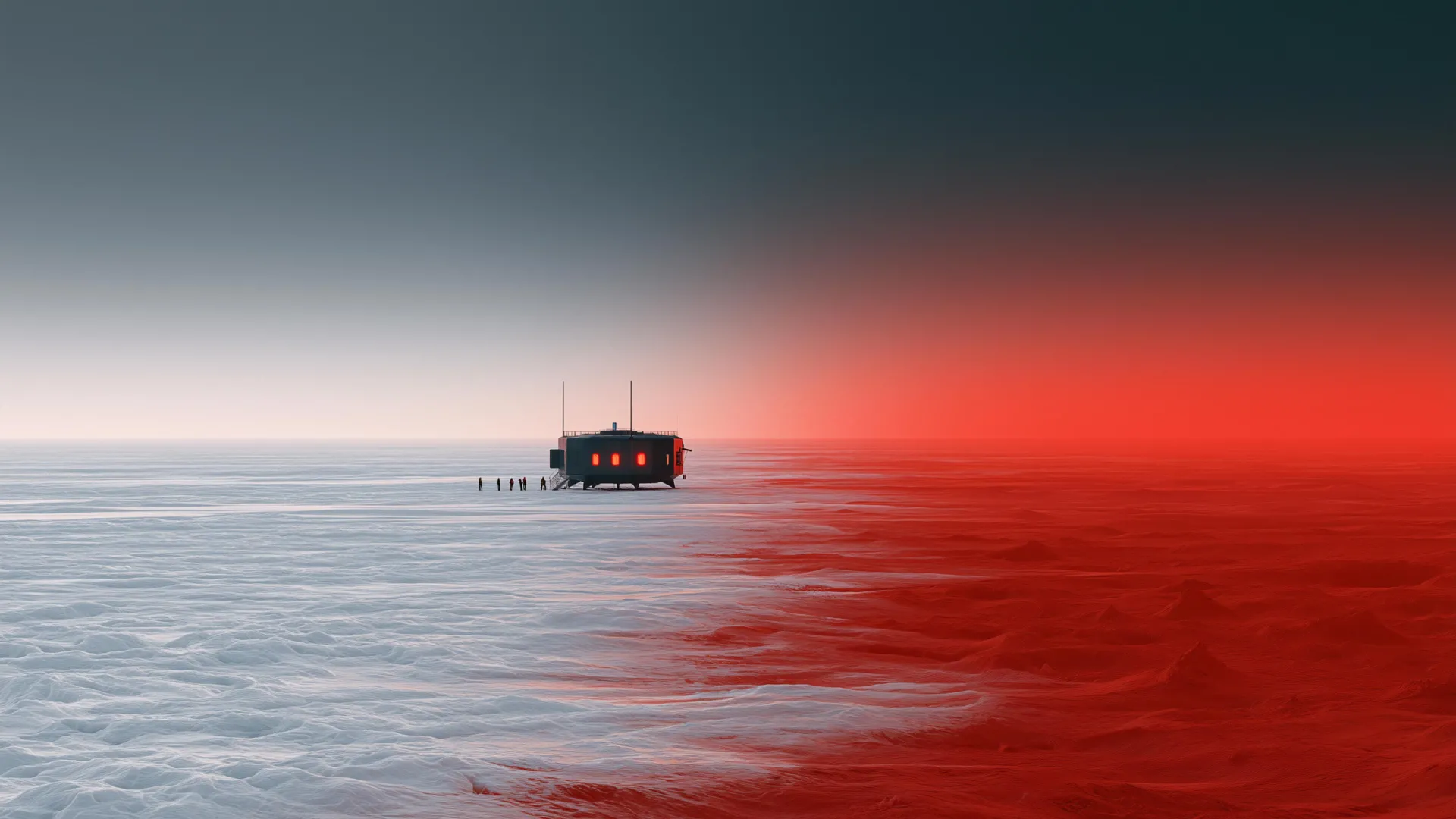
Long space missions, a hallmark of humanity’s ambition to explore the cosmos, present a unique set of challenges far beyond the vacuum of space and the vast distances from Earth. For the small, tightly knit crews tasked with venturing to the Moon or Mars, the psychological and social pressures can be as formidable as any technical hurdle. To gain crucial insights into how these extreme conditions forge or fracture teamwork, an international consortium of researchers turned to one of Earth’s most isolated and unforgiving environments: Concordia Station in Antarctica. Their ten-month overwintering study, meticulously documented and analyzed, has yielded surprising findings that could fundamentally alter our approach to crew selection and support for future deep-space endeavors.
The research, spearheaded by Professor Jan Schmutz of the Department of Psychology at the University of Zurich and Andrea Cantisani, a psychiatrist and research associate at the University of Bern, utilized Concordia Station as a potent terrestrial analog for prolonged space missions. This remote outpost, perched on the Antarctic plateau, subjects its inhabitants to brutal winter temperatures that can plummet to a staggering minus 80 degrees Celsius (-112 degrees Fahrenheit). The sheer inaccessibility and prolonged periods of complete darkness during the Antarctic winter create an environment of profound isolation, mirroring the conditions astronauts would face on extended voyages. This makes Concordia an invaluable natural laboratory for understanding human resilience and group dynamics under duress.
The Concordia Expedition: A Microcosm of Deep Space Challenges
The study focused on a crew of 12 individuals who endured the ten-month overwintering period at Concordia Station. This duration was carefully chosen to encompass the most challenging phases of isolation, including the months when external contact is virtually impossible due to the harsh weather. The research methodology was multifaceted, aiming to capture a holistic view of the crew’s social and psychological landscape.
At four distinct intervals throughout the ten-month mission, participants completed comprehensive questionnaires designed to assess their subjective experiences. These surveys delved into critical aspects of team functioning, including levels of loneliness, trust in fellow crew members, the prevalence and nature of interpersonal conflicts, the quality of social relationships, overall team cohesion, and their perception of the team’s performance.
Complementing these self-reported data were objective measurements gathered through wearable sensors. Each crew member was equipped with devices that continuously monitored their physical proximity to other team members and the duration of these close encounters. This innovative approach allowed researchers to correlate objective behavioral data with subjective psychological states, providing a richer and more nuanced understanding of the crew’s interactions.
Counterintuitive Findings: More Contact Doesn’t Always Mean Better Outcomes
One of the most striking and counterintuitive findings from the Concordia study challenged long-held assumptions about the benefits of increased social interaction in confined, isolated environments. The researchers discovered that spending more time in close proximity to other crew members was not consistently associated with improved social outcomes. In fact, participants who reported more frequent contact with their colleagues were paradoxically more likely to also report increased feelings of conflict, greater mistrust, and a diminished perception of their team’s performance.
This observation suggests that in environments where privacy is severely limited and social interactions are unavoidable, constant closeness can, in itself, become a significant source of psychological strain. While the isolation from the outside world is a primary challenge, the lack of personal space and the inescapable nature of interpersonal dynamics can create a different, yet equally potent, form of pressure.
"In small teams under extreme conditions, more contact doesn’t automatically equate to social support, but can actually increase tensions," stated Jan Schmutz, emphasizing the complex interplay between proximity and well-being. This highlights a critical nuance: the quality and nature of interaction, rather than mere quantity, are paramount in fostering positive social dynamics.
The research team, however, was careful to acknowledge the correlational nature of their findings. They cautioned that while strong associations were observed, direct cause-and-effect relationships could not be definitively established. For instance, individuals experiencing heightened feelings of loneliness might have actively sought out more social interaction, even if those encounters did not ultimately provide the support they were seeking. This self-selection bias could contribute to the observed correlation between increased contact and negative outcomes.
The Emergence of Social Subgroups: A Double-Edged Sword
The data from the wearable sensors also revealed a significant trend in the crew’s social structure over time. As the ten-month mission progressed, the crew members began to gravitate towards smaller, more defined social subgroups. This separation was often based on shared languages or nationalities, indicating a natural human tendency to seek comfort and familiarity in shared cultural backgrounds when under stress.
These emergent social connections can serve as a vital source of psychological support, helping individuals feel grounded and less overwhelmed during the demanding periods of isolation and confinement. The familiarity and shared understanding within these smaller groups can foster a sense of belonging and reduce feelings of alienation.
However, this same phenomenon carries a potential downside. The formation of distinct subgroups, particularly along lines of language or nationality, can inadvertently encourage social divisions within a culturally diverse team. While providing individual comfort, these divisions could, in the long run, weaken overall team unity and cohesion, potentially hindering collective problem-solving and operational effectiveness, especially on missions where a diverse range of skills and perspectives is crucial.
Implications for Future Space Exploration and Beyond
The findings from the Concordia Station study hold profound implications for the planning and execution of future long-duration space missions, particularly those targeting the Moon and Mars. Astronauts on these extended voyages will experience unprecedented levels of isolation, with limited or no communication with Earth and a severe lack of personal privacy. Understanding the delicate balance between necessary social interaction and the potential for interpersonal friction is therefore paramount.
The research suggests that mission planners must move beyond simply ensuring crew members have sufficient contact with each other and instead focus on fostering environments that support both meaningful connection and the opportunity for individual respite. This could involve carefully curated team composition, robust psychological support mechanisms, and potentially architectural designs within spacecraft or habitats that allow for greater personal space and privacy.
Furthermore, the lessons learned at Concordia are not confined to the realm of space exploration. The study’s insights are equally applicable to other demanding and isolated environments on Earth. This includes the confined quarters of submarines, the remote outposts of offshore oil platforms, and other research stations operating in extreme conditions. In all these contexts, maintaining effective teamwork and psychological well-being in the face of prolonged isolation is a critical factor for success and safety.
"The results show how important it is to identify social dynamics early on and provide teams with targeted support," reiterated Professor Schmutz. This underscores the need for proactive strategies, rather than reactive interventions, in managing team dynamics in high-stakes, isolated settings.
Technological Innovation: Wearable Sensors in Extreme Environments
A secondary but significant outcome of the study was the successful validation of wearable proximity sensors in a harsh, extreme environment. The devices proved to be reliable and capable of operating effectively under the challenging conditions of Concordia Station, including extreme cold and extended periods of darkness.
Crucially, these sensors allowed researchers to monitor and analyze subtle changes in everyday social patterns without substantially disrupting the crew’s routines or requiring constant manual data collection. This unobtrusive approach to data gathering is essential for maintaining the authenticity of the observed behaviors and minimizing any potential Hawthorne effect, where individuals alter their behavior simply because they know they are being observed.
The successful deployment of these wearable technologies opens up new avenues for future research. By providing continuous, objective data on social interactions, these devices can enable more granular analysis of the factors that contribute to both positive and negative team dynamics.
Moving Forward: Deeper Dive into Social Interaction Dynamics
The researchers are eager to build upon these foundational findings. Future studies are planned to delve deeper into the specific types of social interactions that are most effective in relieving stress versus those that may inadvertently exacerbate it. This could involve categorizing interactions based on their content, duration, and the emotional valence conveyed, providing a more sophisticated understanding of the nuances of human connection under pressure.
The Concordia Station overwintering mission has provided a compelling glimpse into the intricate social tapestry that binds and sometimes strains small crews in extreme isolation. Its findings serve as a vital cautionary tale and a practical guide for future endeavors, reminding us that while the technical challenges of space exploration are immense, the human element remains perhaps the most critical factor in achieving our interstellar ambitions. By prioritizing a deeper understanding of team dynamics and implementing targeted support strategies, we can better equip future explorers for the profound journey ahead.

0 Comments